
In the first article in the All4shooters Basics we explain the differences between metric and Imperial caliber designations, the meaning behind the various suffixes and abbreviations, and how to make sense of what can often seem like a confusing world of cartridge nomenclature. Before we begin, one important disclaimer: covering every individual caliber and special loading in detail would require an entire reference book rather than a single article. Our goal here is to explain the principles behind caliber designations. Once you understand those principles, it becomes much easier to interpret the naming conventions of most modern cartridges, many of which have evolved over time or were named after their inventors or manufacturers. So, please bear with us, as this article is still quite long! Interestingly, the word caliber itself has a long history. English adopted the term around the beginning of the seventeenth century from the French calibre, which in turn traces its origins even further back, ultimately deriving from the Arabic qālib
What Does "Caliber" Actually Mean?
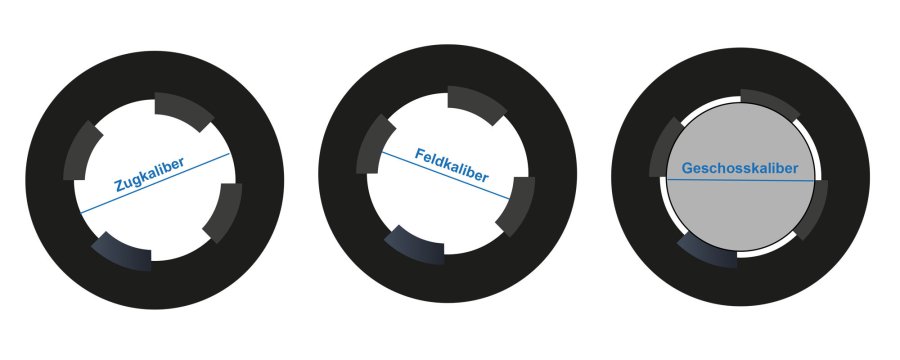
In firearms terminology, caliber generally refers to the internal diameter of a firearm's barrel and, by extension, to the diameter of the projectile fired through it. For rifled barrels, those found in rifles and most handguns, the situation is slightly more complex. Two different measurements are involved:
Land diameter, measured across the tops of the lands inside the bore.
Groove diameter, measured across the bottoms of the rifling grooves.
This distinction explains one of the first apparent contradictions encountered by new shooters. Because a bullet must engage the rifling to stabilize in flight, its actual diameter is normally very slightly larger than the land diameter, allowing it to be engraved by the rifling as it travels down the bore. The resulting spin is what stabilizes the projectile after it leaves the muzzle.
Muzzleloading firearms follow a different principle. Their projectiles—typically round lead balls—must be loaded from the muzzle and therefore are intentionally slightly smaller than the bore. A lubricated cloth or paper patch fills the remaining space, seals the expanding gases behind the projectile and ensures that the ball engages the rifling properly during firing.
It All Started with Cannons

The concept of caliber originated with artillery. When the first cannons appeared in Europe during the mid-14th century, there was little concern for standardization. Early guns fired whatever was available, including fieldstones and river rocks, so the exact diameter of the bore was of little importance.
That changed around the beginning of the 15th century, when carefully shaped stone cannonballs became common. Standardizing projectile diameters quickly became a logistical necessity. Without it, every cannon would have required its own uniquely sized ammunition, making transportation and battlefield resupply a nightmare.
By the early 16th century, cannon barrels were being precision-bored, and Georg Hartmann, a vicar from Nuremberg, developed one of the first practical caliber classification systems. Rather than measuring the bore directly, caliber was defined by the weight of a stone ball that would fit the barrel. Large artillery pieces were therefore identified by the weight of their projectile rather than by a dimensional measurement.
Although this system later evolved as lead and iron projectiles replaced stone, the basic principle remained in use for centuries. One complication, however, was that different countries used slightly different definitions of a "pound," meaning that nominal caliber designations were not always directly comparable across Europe.
From Cannonballs to Shotgun Gauges
The British eventually standardized their own system using the Imperial pound of 453.6 grams as the reference weight. That historical approach survives today in the familiar shotgun gauge system.
A 4-gauge shotgun, still occasionally encountered for dangerous-game hunting, originally fired a lead ball weighing one-quarter of a pound. A 12-gauge, by far the most common shotgun chambering today, corresponds to a lead sphere weighing one-twelfth of a pound. The larger the bore diameter, the smaller the gauge number—a convention that often surprises new shooters.
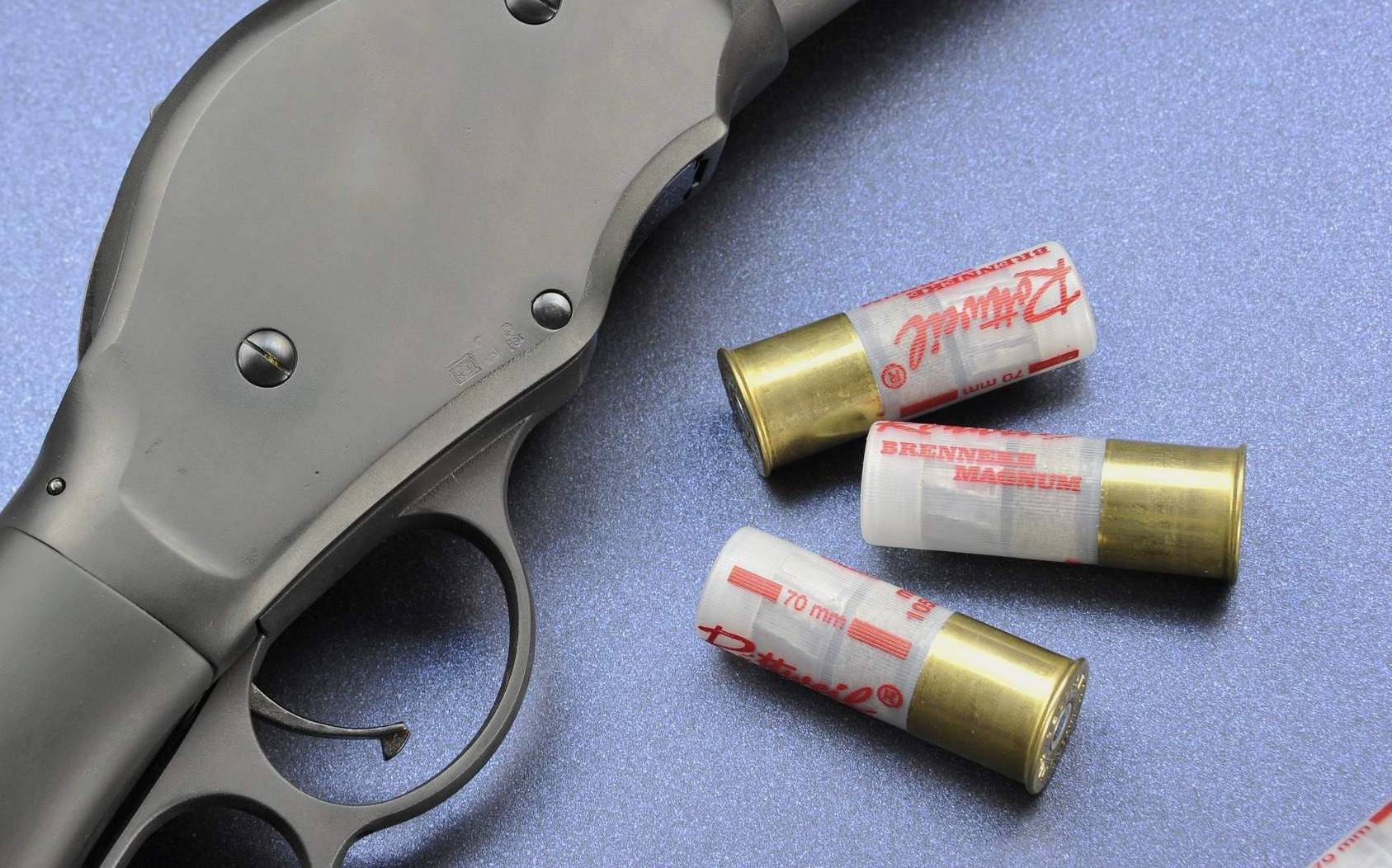
Modern shotgun designations include a second number indicating the case length of the shell after firing. Thus, a 12/70 shell has a fired case length of 70 mm, while a 12/76 has a fired case length of 76 mm.
Because of this, 12/70 ammunition can safely be fired in a 12/76 chamber, whereas the reverse is unsafe. A longer shell fired in a shorter chamber may not have enough room to unfold properly after ignition, potentially creating dangerous pressure levels.
Designations such as Magnum (12/76 Magnum) and Super Magnum (12/89 Super Magnum) indicate cartridges designed to operate at higher pressures. Firearms intended for these loads must be specifically proof-tested and rated for their use.
One notable exception to the gauge system is the .410 bore. Rather than representing a gauge, its designation refers directly to the bore diameter—0.410 inch—making it the only common shotgun caliber identified using the Imperial measurement system instead of the traditional gauge numbering.
In American terminology, the word gauge is used almost exclusively for shotgun bore sizes, whereas caliber refers to rifles and handguns.
Shotgun calibers and the corresponding barrel bores
| Caliber: | 4 | 8 | 10 | 12 | 16 | 20 | 24 | 28 | 32 | .410 |
| Bore diameter in mm | 26,73 | 21,22 | 19,69 | 18,53 |
16,84
|
15,63
| 14,71 | 13,97 | 13,37 | 10,4 |
Metric vs. Imperial: Two Systems, One Purpose


Unlike shotgun gauges, caliber designations for rifles and handguns are far less standardized. Around the world, two measurement systems coexist: the metric system, used throughout most of Europe and many other countries, and the Imperial (inch-based) system, which remains dominant in the United States and is still widely encountered in the English-speaking firearms world.
In the metric system, caliber is expressed in millimeters, often followed by the cartridge case length. Familiar examples include 9 mm Luger (9×19 mm), 7.65 mm Browning, or 8×57 IS, where the second number indicates the case length in millimeters.
The Imperial system works differently. Instead of millimeters, caliber is expressed in fractions of an inch. Since one inch equals 25.4 millimeters, a .45 caliber bullet measures approximately 0.45 inch in diameter, while a .22 caliber projectile measures roughly 0.22 inch.
One characteristic feature of American cartridge designations is the omission of the leading zero. Instead of writing 0.45 inch, the caliber is simply written as .45. Likewise, 0.30 becomes .30, 0.22 becomes .22, and so on. These are often referred to simply as "point calibers."
This shorthand occasionally leads to amusing misunderstandings outside the firearms community. Journalists unfamiliar with firearms terminology sometimes hear references to a ".45" or a ".22" and mistakenly assume the figures refer to millimeters, giving rise to technically impossible descriptions such as a "45 mm caliber handgun."
Converting between the two systems is relatively straightforward. Multiplying an Imperial caliber by 25.4 provides its approximate metric equivalent, while dividing a metric caliber by 25.4 yields the corresponding value in inches. Thus:
- .22 ≈ 5.6 mm
- .30 ≈ 7.62 mm
- .50 ≈ 12.7 mm
It is important to remember, however, that these are nominal designations, not precise dimensional specifications. As we'll see in the next section, a cartridge's official caliber designation does not always correspond exactly to the actual diameter of either the bullet or the barrel.
Another practical difference is the way barrel lengths are specified. In the United States, firearm barrel lengths are traditionally expressed in inches, whereas most of Europe uses millimeters or centimeters.
Theory vs. Reality: Nominal Caliber, Land Diameter and Groove Diameter
If only it were as simple as measuring a barrel with a caliper. In reality, the caliber designation printed on a cartridge box or stamped on a cartridge case may refer to one of several different dimensions. Depending on the cartridge, it can indicate the bullet diameter, the land diameter (measured across the tops of the lands), or the groove diameter (measured across the bottoms of the rifling grooves). To make matters even more interesting, the published figure is often rounded rather than representing the exact measurement.
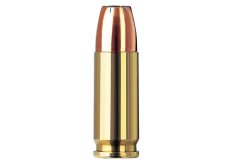
With modern metallic cartridges, the bullet diameter is always slightly larger than the land diameter, allowing the rifling to engrave the projectile and impart the spin required for stable flight. One source of confusion—even in otherwise authoritative publications—is the tendency to use the terms caliber, cartridge and load interchangeably. Technically, however, they describe three different things. A caliber simply identifies the nominal diameter of the bullet or bore. Examples include .22, .30, .38, 9 mm or 8 mm. A cartridge, on the other hand, combines a specific caliber with a case of defined dimensions and geometry. Thus, 9 mm Luger, .357 Magnum and .460 Weatherby Magnum are all cartridge designations, not calibers. Strictly speaking, there is no such thing as a ".38 Special caliber." The caliber is .38; .38 Special is the name of the cartridge.
Continental European rifle cartridges are typically designated by bullet diameter × case length, sometimes followed by additional identifying information. Examples include 5.6×57, 7×66 Vom Hofe SE, or 8×57 IS.
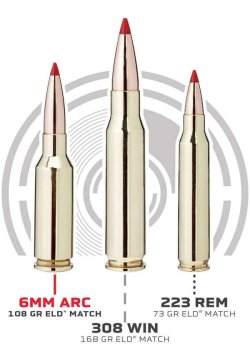
American cartridge nomenclature follows a different tradition. In addition to the nominal caliber, cartridge names frequently include the inventor, manufacturer, firearm, intended purpose or simply a proprietary trade name. Familiar examples include .308 Winchester, 7 mm Remington Magnum, .22 Hornet, and .45 Long Colt.
Some cartridge names also preserve historical references. The well-known .30-06 Springfield, for example, originated as the .30 Government Model of 1906, with the "06" indicating the year of adoption.
Many modern cartridges likewise reveal their parent case in their designation. The .25-06 Remington was developed from the .30-06 Springfield, the 7mm-08 Remington from the .308 Winchester, and the .22-250 Remington from the .250-3000 Savage. That somewhat unusual "3000" suffix wasn't a caliber at all—it was an advertising claim highlighting the cartridge's original muzzle velocity of 3,000 feet per second, approximately 915 m/s.
When Caliber Names Don't Match Reality
If you've made it this far, you've probably realized that caliber designations are not always as straightforward as they appear.
Before standardized manufacturing tolerances became the norm, especially during the black powder era of the nineteenth century, firearm and ammunition manufacturers often worked to their own dimensional standards. As a result, cartridges sharing the same nominal designation could differ noticeably in their actual bullet diameters.
A classic example is the .38 Long Colt, introduced in 1874. Depending on the manufacturer, its actual bullet diameter ranged from approximately .362 inch (9.19 mm) to .382 inch (9.70 mm). Similar variations existed among other historic .38-caliber cartridges such as the .38 Colt New Police, .38 Merwin & Hulbert, .38-40 WCF, and .380 Short CF.
In other words, early caliber designations were often little more than convenient reference points. Even after jacketed bullets and standardized production methods became widespread, much of the historical naming convention remained unchanged. Manufacturing tolerances became more precise, but the nomenclature itself often continued to reflect tradition rather than exact dimensions.
Modern cartridge design has moved toward greater consistency. The .357 Magnum, for example, uses a bullet measuring .357 inch (9.07 mm) in diameter, while the .257 Weatherby Magnum likewise reflects its actual bullet diameter. Other cartridges, however, still derive their designation from either the land diameter, the groove diameter, or a historical convention.
The familiar .308 Winchester, also standardized as the 7.62×51 mm NATO, provides an excellent example. The bullet measures approximately .308 inch (7.82 mm), while the bore's land diameter is approximately .300 inch (7.62 mm). The "51" simply identifies the cartridge case length in millimeters.
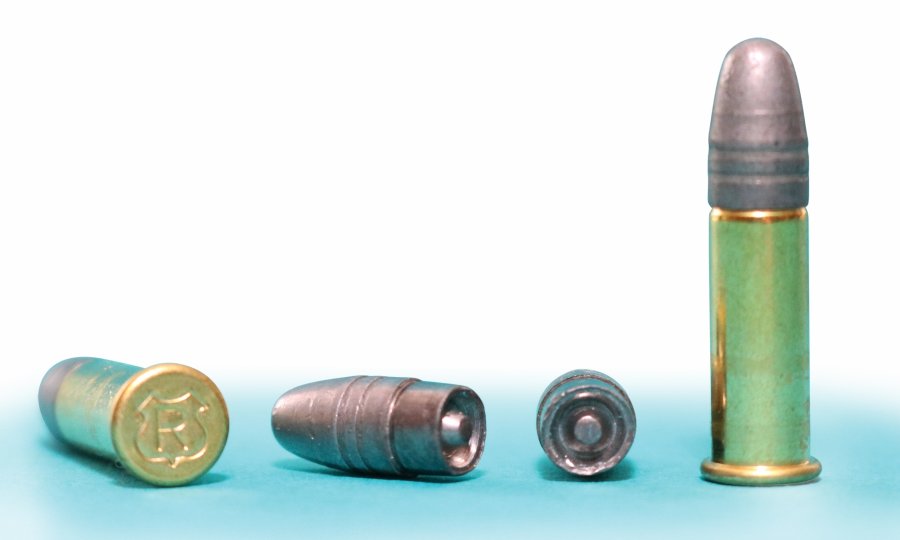
Why Can a .38 Special Be Fired in a .357 Magnum Revolver?
This is one of the questions most frequently asked by new shooters.
Despite the different names, the .38 Special and .357 Magnum share nearly identical bullet and barrel dimensions. The primary difference lies in the cartridge case: the .357 Magnum uses a slightly longer case specifically designed to prevent it from being chambered in revolvers intended only for the lower-pressure .38 Special.
A revolver chambered for .357 Magnum is therefore perfectly capable of firing .38 Special ammunition safely. The reverse, however, is intentionally prevented by the longer Magnum case, which will not chamber in a revolver built exclusively for .38 Special.
Modern Standards: C.I.P. and SAAMI
Today, cartridge standardization is governed by internationally recognized organizations.
Throughout most of Europe and many other parts of the world, cartridge and chamber specifications are established by the C.I.P. (Commission Internationale Permanente pour l'Epreuve des Armes à Feu Portatives). Every commercially manufactured cartridge and firearm must comply with these dimensional and pressure standards before entering the market.
In the United States, a similar role is performed by SAAMI (Sporting Arms and Ammunition Manufacturers' Institute), which publishes voluntary technical standards adopted by virtually every major American ammunition and firearm manufacturer.
Although the two organizations differ in their testing procedures and regulatory frameworks, their shared objective is the same: ensuring that firearms and ammunition manufactured to approved specifications can be used safely and interchangeably within their intended chamberings.
As new cartridges continue to appear—more than sixty have been introduced since the beginning of this century alone—understanding the logic behind caliber designations becomes increasingly valuable. Once the basic principles are understood, what initially appears to be a confusing collection of names and numbers begins to reveal a surprisingly consistent underlying system.