
After the .375 H&H Mag. (9.5x72mm) in Part 1, we will now look at the mighty .416 Rigby (10.5x73mm). When low-smoke powder (Cordite or Axite) was developed around 1860, the days when vast quantities of black powder had to be poured into thumb-thick barrels were over. The time when the black powder clouds made it impossible to see the game was also a thing of the past. Muzzle velocity could no longer be increased with black powder, no matter how much was poured in. The only parameter left in the kinetic energy calculation was mass: the bullet weight. However, as this parameter only affects performances linearly and not quadratically, like the bullet velocity, no significant improvement could be achieved with it. Cordite opened up completely new possibilities and approaches for the development of internal ballistics. Shortly after the turn of the 20th century, an arms race developed among cartridge developers, particularly on the British Isles. Rigby, Jeffery, Gibbs, Holland & Holland and Westley Richards, to name just the major players, did everything they could to offer customers and hunters new products. Many of the creations of that time still exist today, and rightly so.
The .416 Rigby – Made for the large Mauser Magnum action
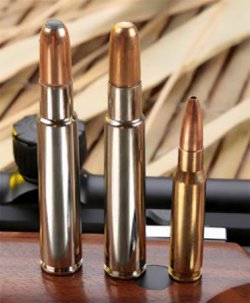
The Rigby company in England was the general importer for Mauser rifles and actions at the time. So what could be more obvious than to create a new cartridge for the large Mauser Magnum action? The case could be made large enough to accommodate as much cordite as possible. As cordite is extremely temperature-sensitive, the focus during development was not only on ballistic performance but also on gas pressure. Temperatures in the colonies of Africa and India were far higher than on the British Isles. The .416 Rigby was officially introduced in 1911. The design was outstanding. No annoying case belt, a tapered shape to prevent the risk of sticking in the chamber, and a low gas pressure. What more could a big-game hunter ask for? The only drawback, due to the overall length of over 95mm, was that these "cigars" only fitted Mauser magnum actions. The Rigby cartridge headspaces on the shoulder. The shoulder angle is almost 90°. On 29 August 1912, a memorable date for Rigby, the time had come. The first rifle was delivered to Colonel Sir Aubrey Wools-Sampson. The rifle weighed 4.6kg and had a 66-cm barrel. The order ledger recorded: Mauser Sporting Big Game. From then on, the cartridge case head was always marked with "RIGBY'S SPECIAL 416 BORE BIG GAME". The cartridge was to be a real all-rounder with sufficient stopping power for big game but also enough speed for follow-through shots in the open countryside, filling not only the trophy room but also the bellies of the hungry crew.
We had the opportunity to leaf through some of Rigby's original order books, in which you can discover the "who's who" of famous hunters as well as aristocratic clients. The documents include the bolt-action rifle in the unusual .369 Purdey caliber for the then Queen Elizabeth II, or the order from the Scottish adventurer and ivory hunter W.D.M. "Karamojo" Bell. Within a very short time, the .416 Rigby enjoyed an excellent reputation, which was not only due to the caliber, but also to the bullets used with it. Since the full metal jacket construction featured a steadily increasing wall thickness towards the nose, the bullets were very robust. They even withstood head-on impacts against elephant skulls. Competitors at the time were constantly struggling with bent bullets, a lack of penetration or bullet fragmentation in particularly tough game. This is where the .416 Rigby delivered, much to the delight of its proud owners. Famous hunters who really appreciated their .416 Rigby were Tony-Sanchez Arino, Harry Selby, John Taylor, Harry Manners and Buzz Charlton. When the Kynoch company completely stopped producing ammunition for this and other calibers in the 1960s, available packs were traded like gold dust.
Reloading the .416 Rigby
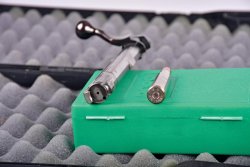
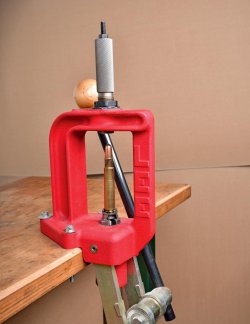
The purchase of new brass puts a dent in the reloader's budget: 50 cases from Norma cost €263, which works out to €5.26 each. Bullets in .416 are available in 350-grain and 400-grain from well-known manufacturers such as Barnes, Degol, Hornady, Nosler, Federal, Swift and Woodleigh. The die set is significantly cheaper compared to other Safari cartridge sets, starting at around 90 euros. There are several suppliers such as Lyman, Hornady, RCBS and Triebel. A press with a working window of at least 100mm is required. A Rock Chucker is not enough here, we use our Lee Classic Cast press for this. Progressive-burning propellants that achieve a high loading density are suitable.
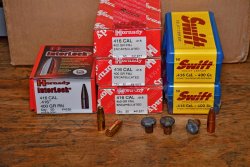
Norma recommends the MRP and the unfortunately no longer available MRP2, now designated 217. Vihtavuori has the N160 and N165. Hodgdon offers the RL 19, H-4350 and H-4831. For 90-grain powder charges and more, strong primers such as CCI 250 or Federal 215 M are recommended.
Factory ammunition in .416 Rigby
In the mid-1980s, Federal was the first supplier of fresh .416 Rigby ammunition, achieving phenomenal profits. Many other suppliers followed suit, including Barnes, Norma, Hornady, Swift and LFB. All of the listed manufacturers load the 400/410-grain version, except for Norma, which takes a mixed approach. While in previous years Woodleigh's soft-point and full metal jacket bullets were loaded in the same weight (450 grains), today only the heavier 450-grain Woodleigh soft-point is used, while Norma relies on its own 400-grain solid bullet for the full metal jacket version.
The .416 Rigby in our Ruger M77 Mark II Express Magnum test gun
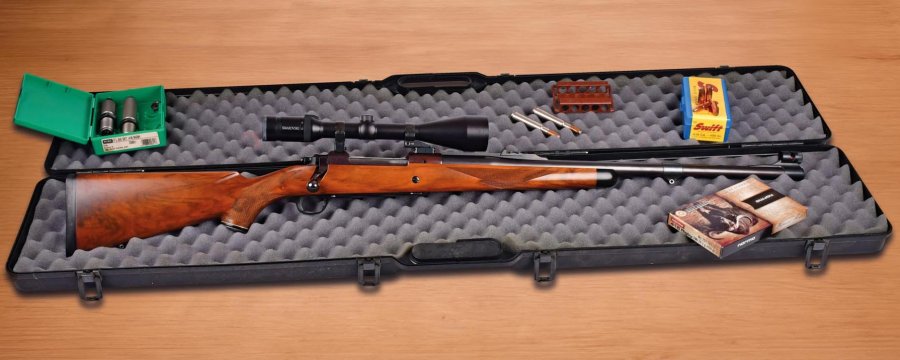
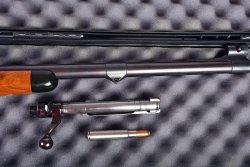
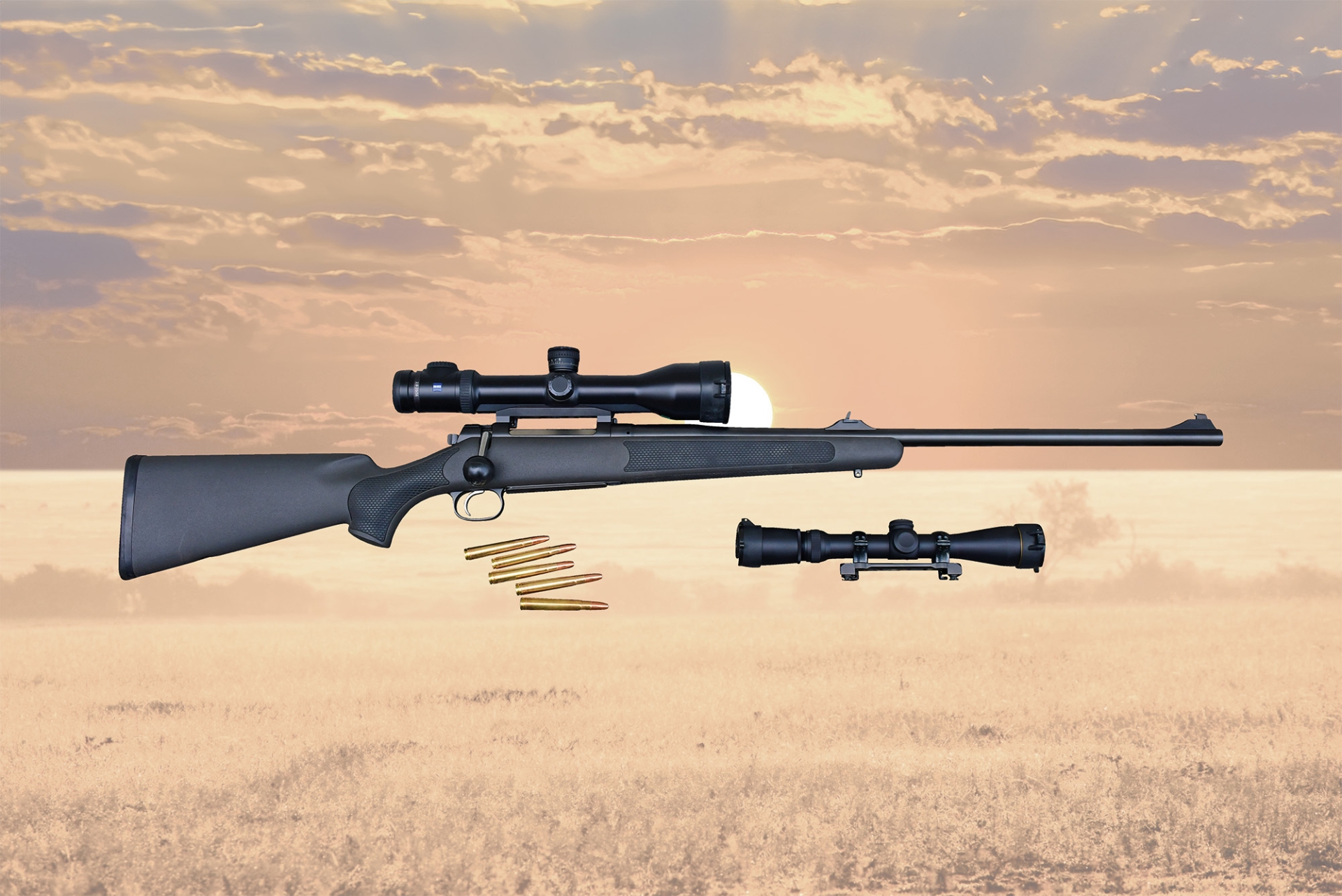
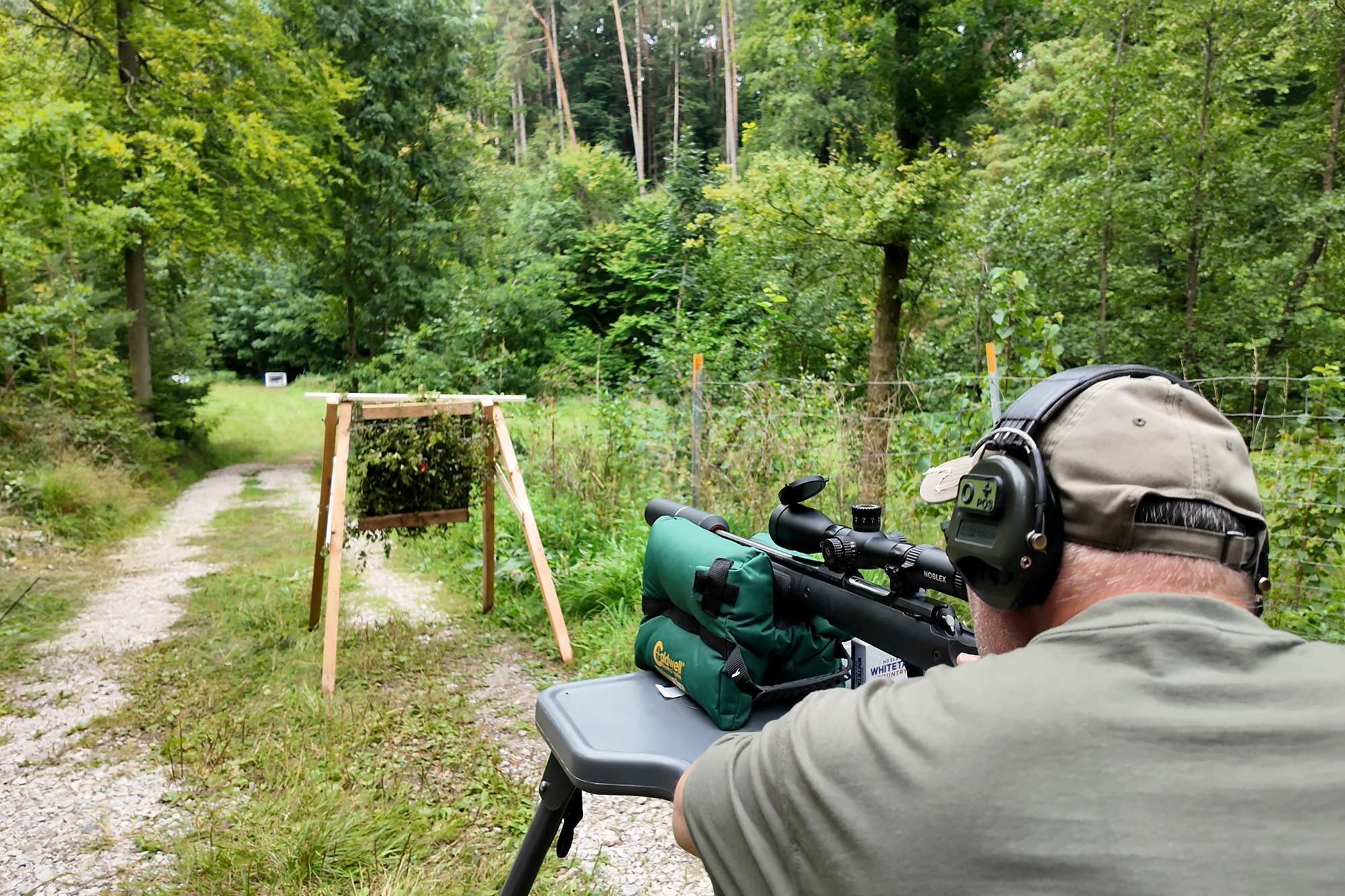
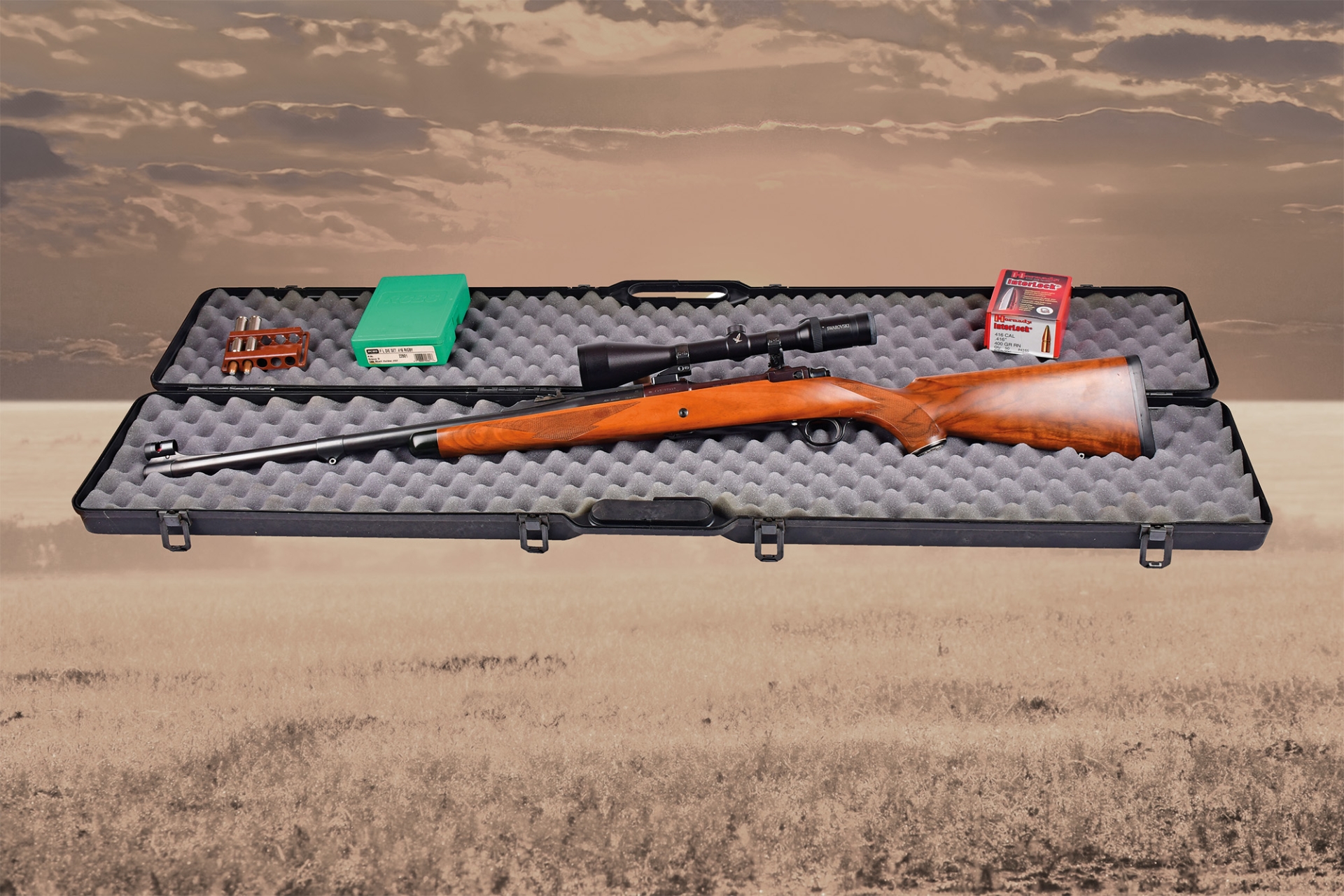
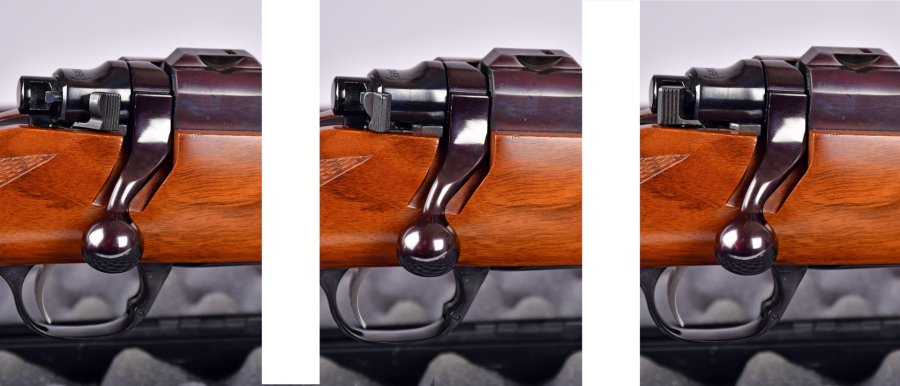
We were able to obtain a Ruger M77 Mark II Express Magnum in .416 Rigby modified by a gunsmith as a test gun. The magnum action with long extractor was polished and now cycles silky smooth. The horizontal 3-position safety was retained. A base with interchangeable front sight and sight protector was fitted over the barrel, along with a sling swivel stud. The factory-fitted rear sight was replaced by a milled Express model. The flanks were deliberately trimmed to provide to allow sufficient light on either side of the front sight. Two additional flaps for two further distances were also added. These were not adapted to the new front sight and therefore remained purely decorative. At 4,880 grams, the Ruger almost reached the ideal weight of 5 kilos. A 4-12x50 AV from Swarovski was fitted with Recknagel pivot mounts. As with all rifles from North America, the buttstocks are always far too short. This is also the case with this gun, with a modest 345-mm length. A 1" spacer needs to be fitted here. With our test rifle (Ruger M77 Mark II Express Magnum with 61-cm barrel) we were able to achieve an average velocity of 721 m/s with N160 and 400-gr Swift A-Frame bullets, remaining below the maximum allowable gas pressure of 3,200 bar. In contrast, the velocity with N560 was marginally slower. A little more power can be teased out with N165. CCI 250 magnum primers were used to ensure that the 93-grain powder column ignited cleanly. A powerful roll crimp is recommended to prevent bullet jump. Of course, a shot with a .416 Rigby can be felt in the shoulder, but the shooting behavior is not like a kick, but rather a tolerable backward push. In terms of bullet compatibility and accuracy, the .416 Rigby is insensitive. Regardless of whether soft-point or full metal jacket, whether 400-gr or 410-gr, the shots group together at 100 meters. 350-gr bullets are ideal for range practice. A mix of bullet weights should not be used for hunting, however, as experience has shown that the wrong bullet is guaranteed to be in the chamber at the very moment it is needed. With a little practice at the shooting range, a .416 Rigby can be shot accurately by anyone. It is even possible to zero the scope at 100 meters from a sitting position without suffering any injuries. In the author's opinion, it really is the all-round rifle when hunting big game. Professional hunters appreciate it when their hunting guests have practiced with and are familiar with their rifle. It's better to have a little less power and hit the target than to have hundreds of joules more at the muzzle and end up with nothing but air holes.
>>> All reloading data mentioned in this article are provided without warranty. Every reloader acts at his or her own risk and responsibility! <<<
Conclusion: Hunting with the .416 Rigby
Depending on the bullet weight, the .416 Rigby produces energies of around 6,300 to 6,900 joules, has ample power reserves, shoots accurately and – provided the hits are well placed – reliably brings down game. The versatility of the cartridge makes it possible to hunt large brown bears, big cats, buffalo and even stronger big game. However, brand-new bolt-action rifles from mass-production manufacturers are not readily available. The only option here is the second-hand gun market or a visit to established manufacturers and gunsmiths. The selection of factory rifles in .416 Remington Magnum is larger, which is why we will be focusing on this comparatively young cartridge in the next part of this series.