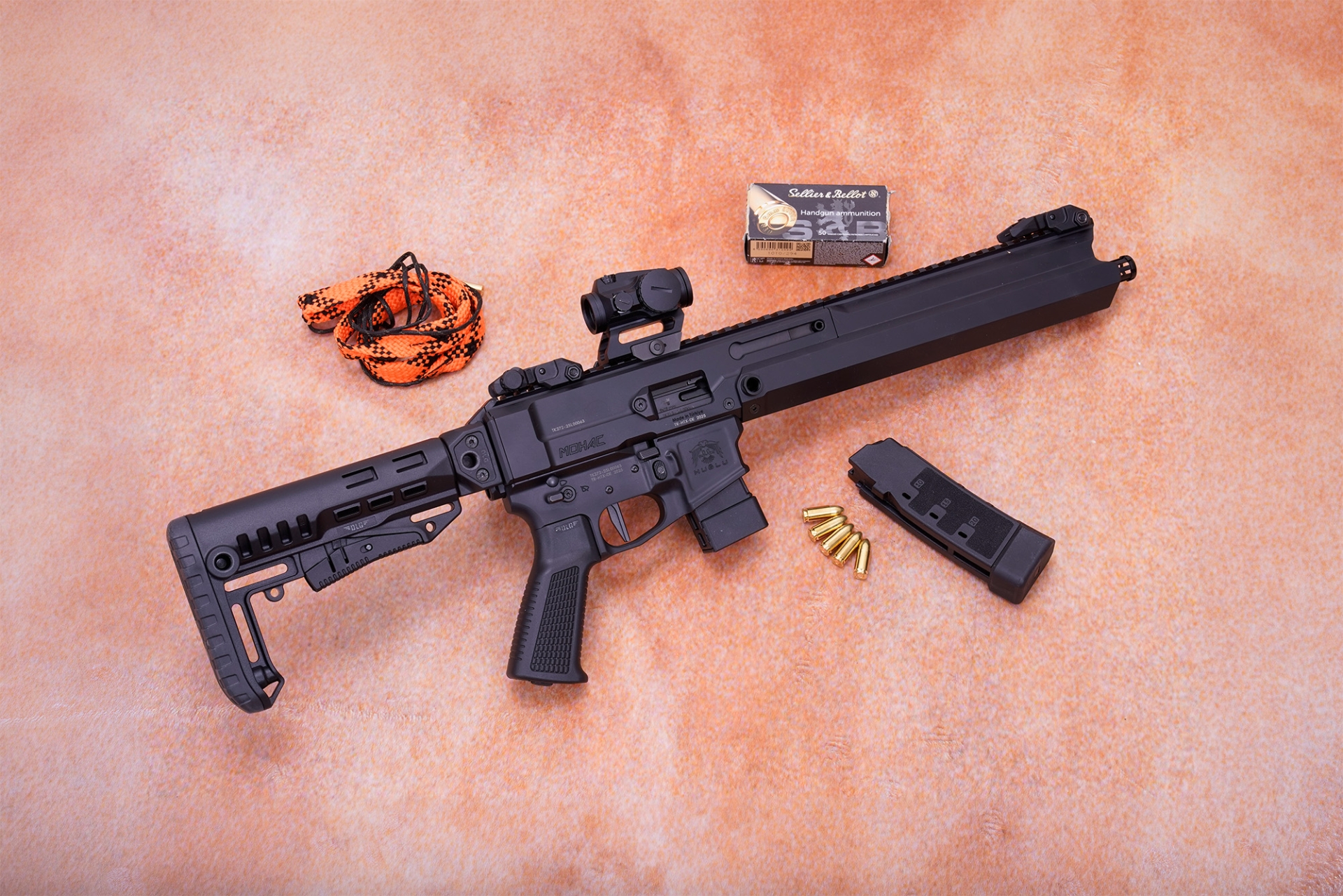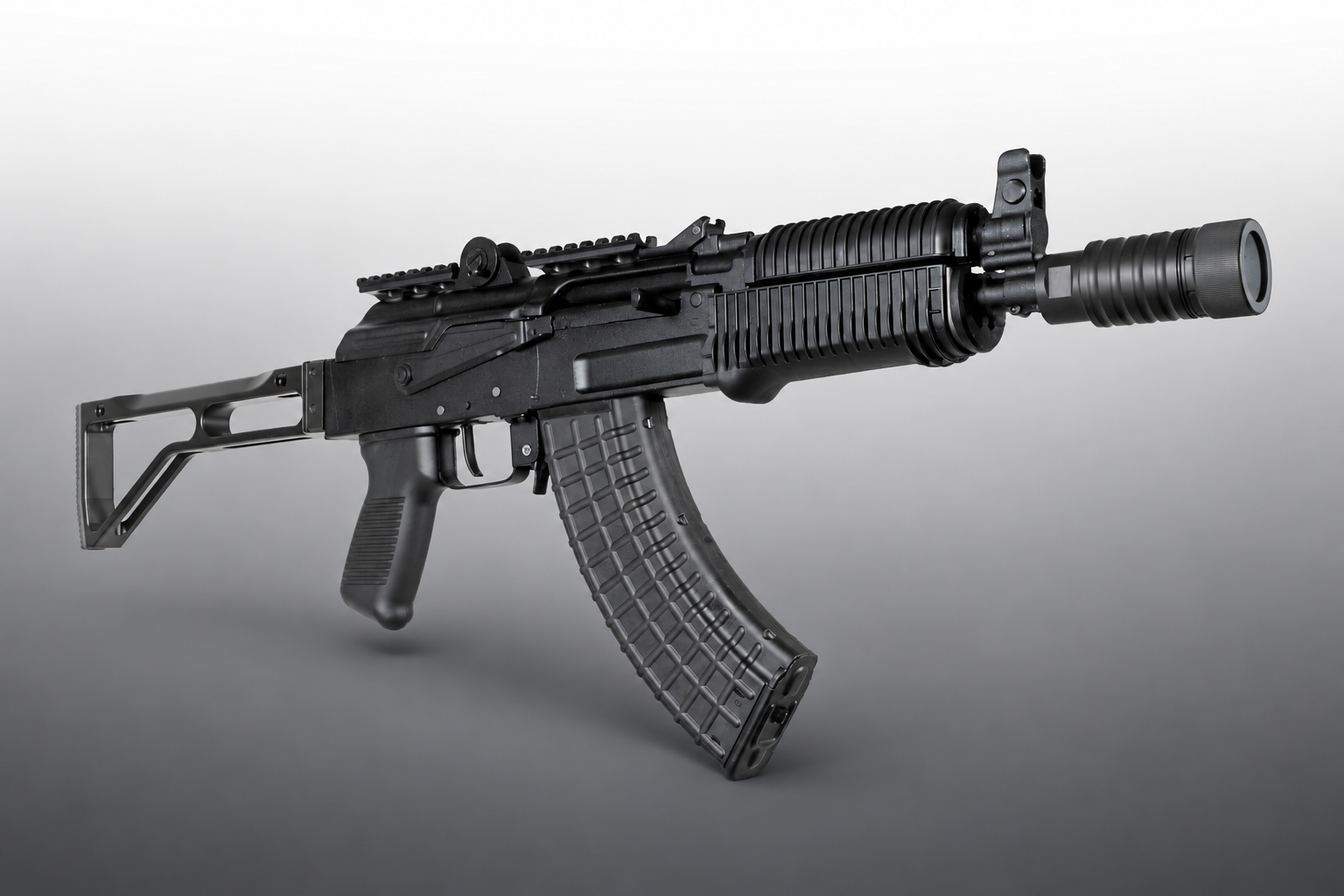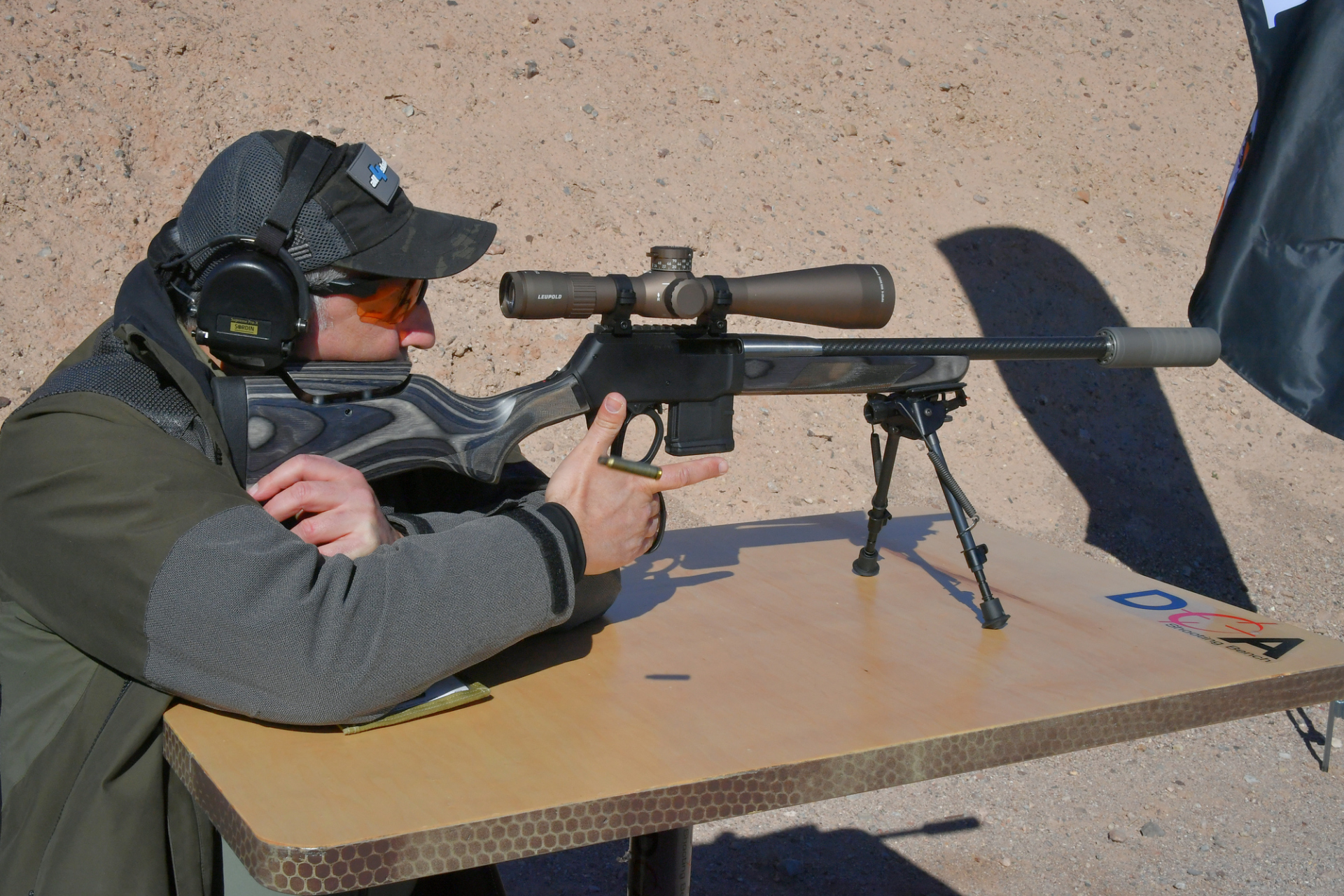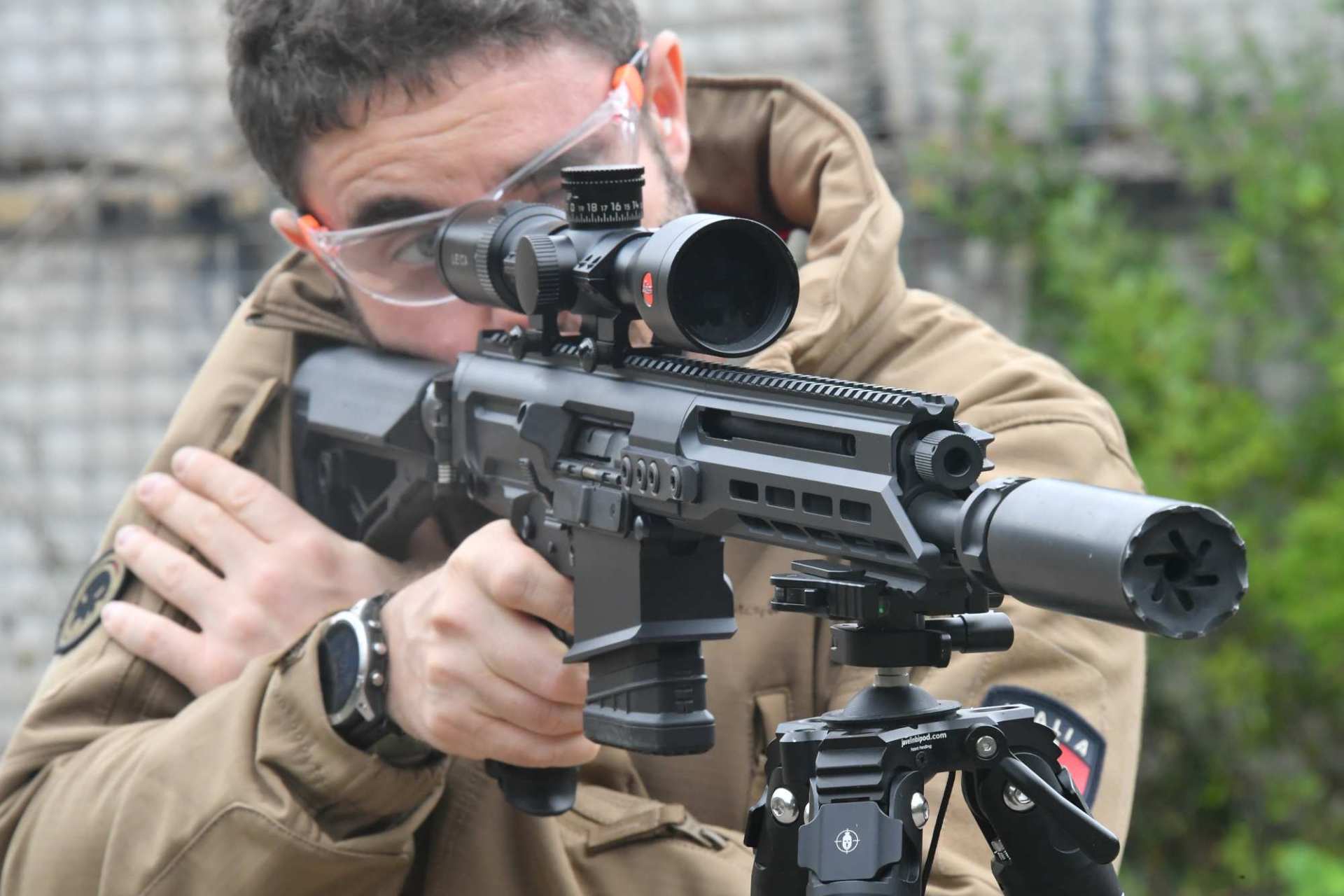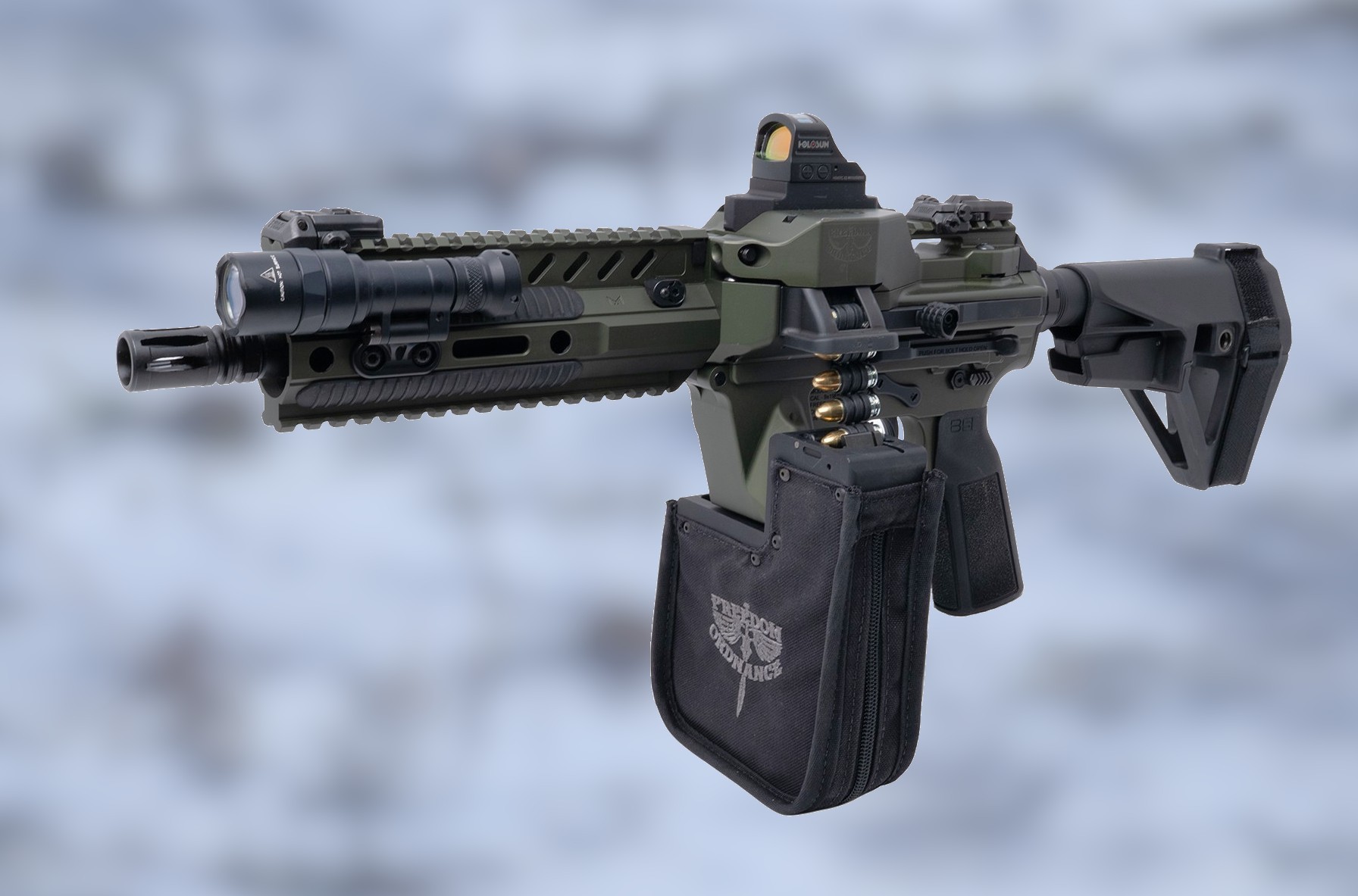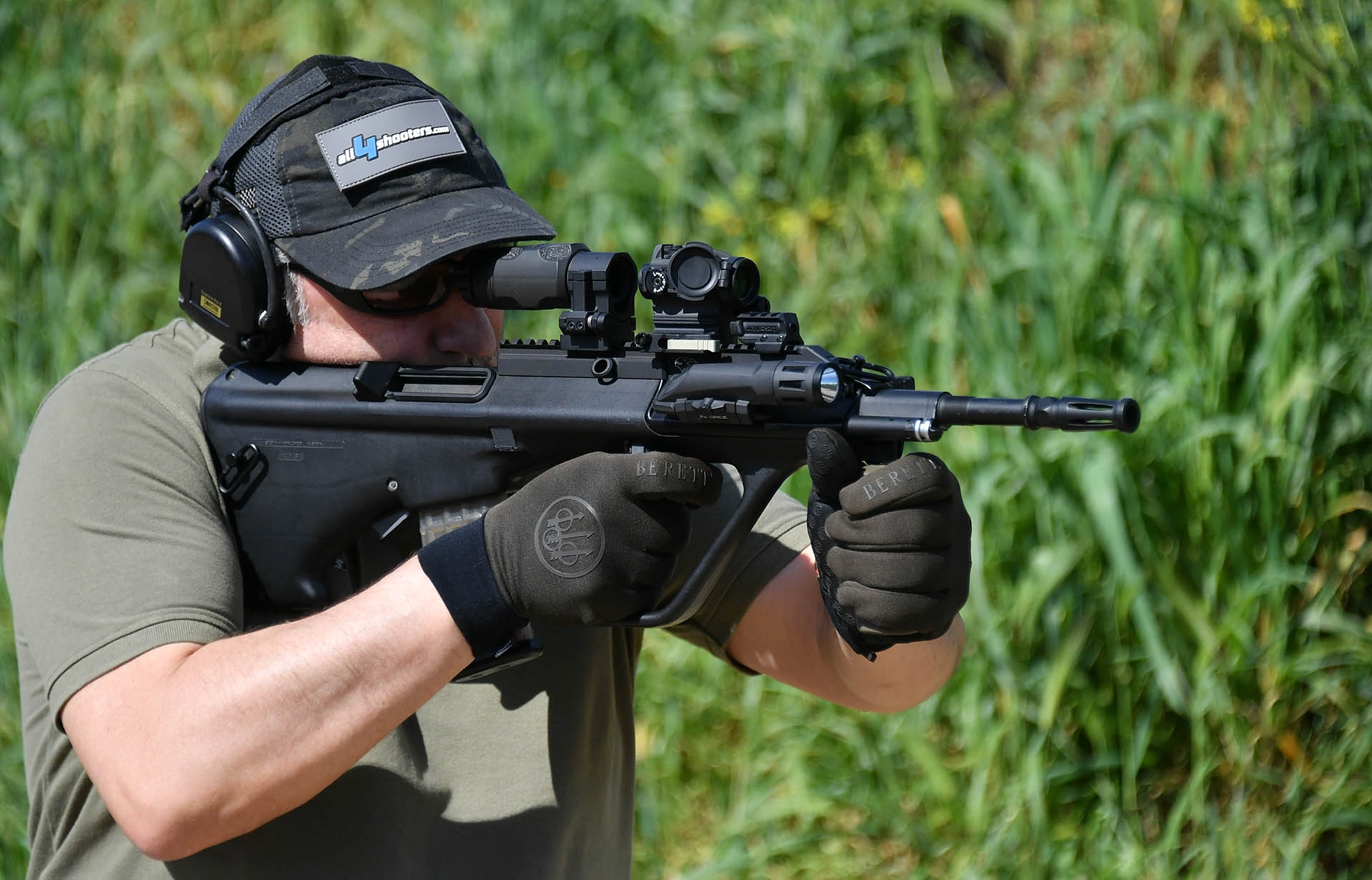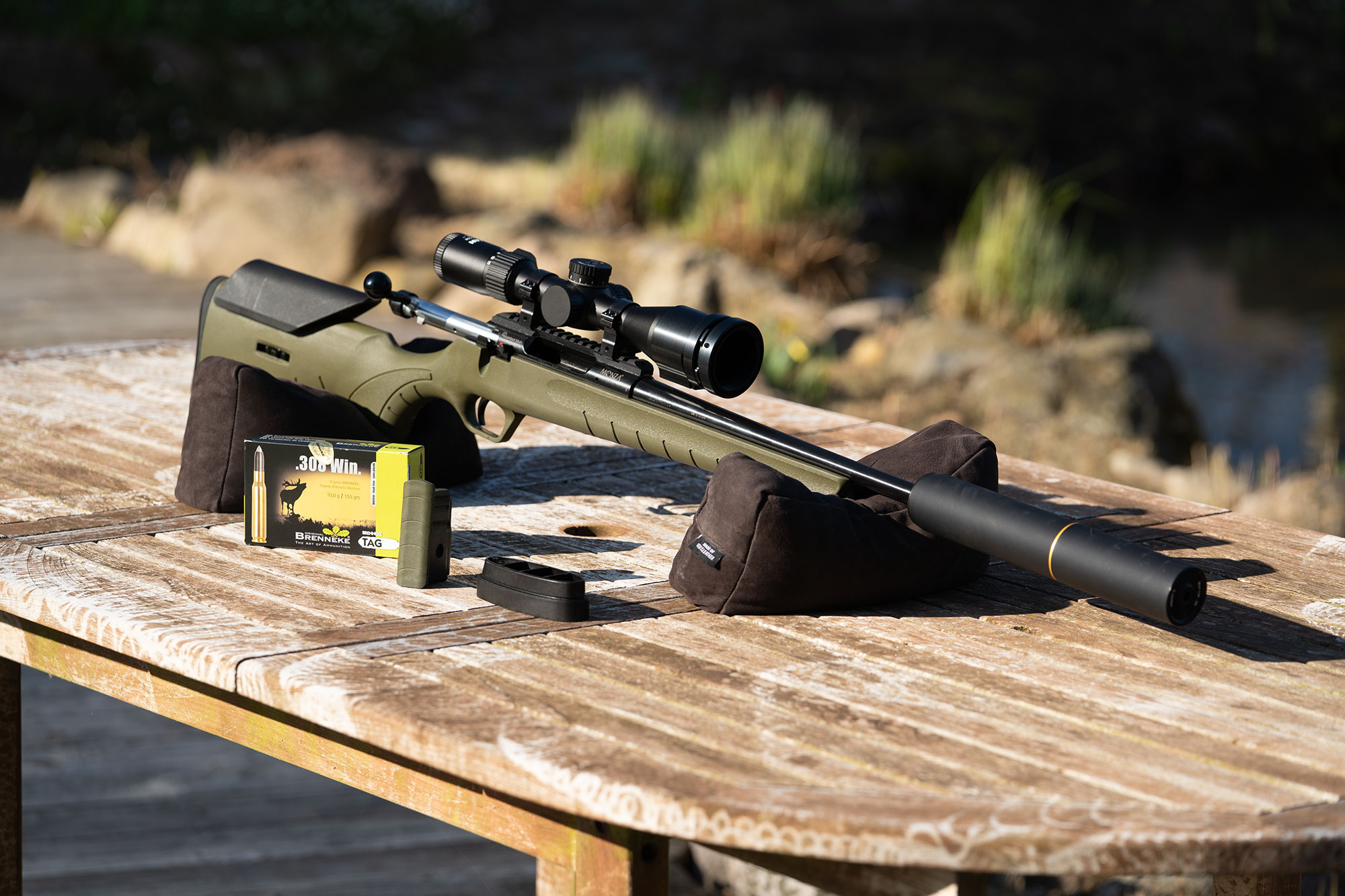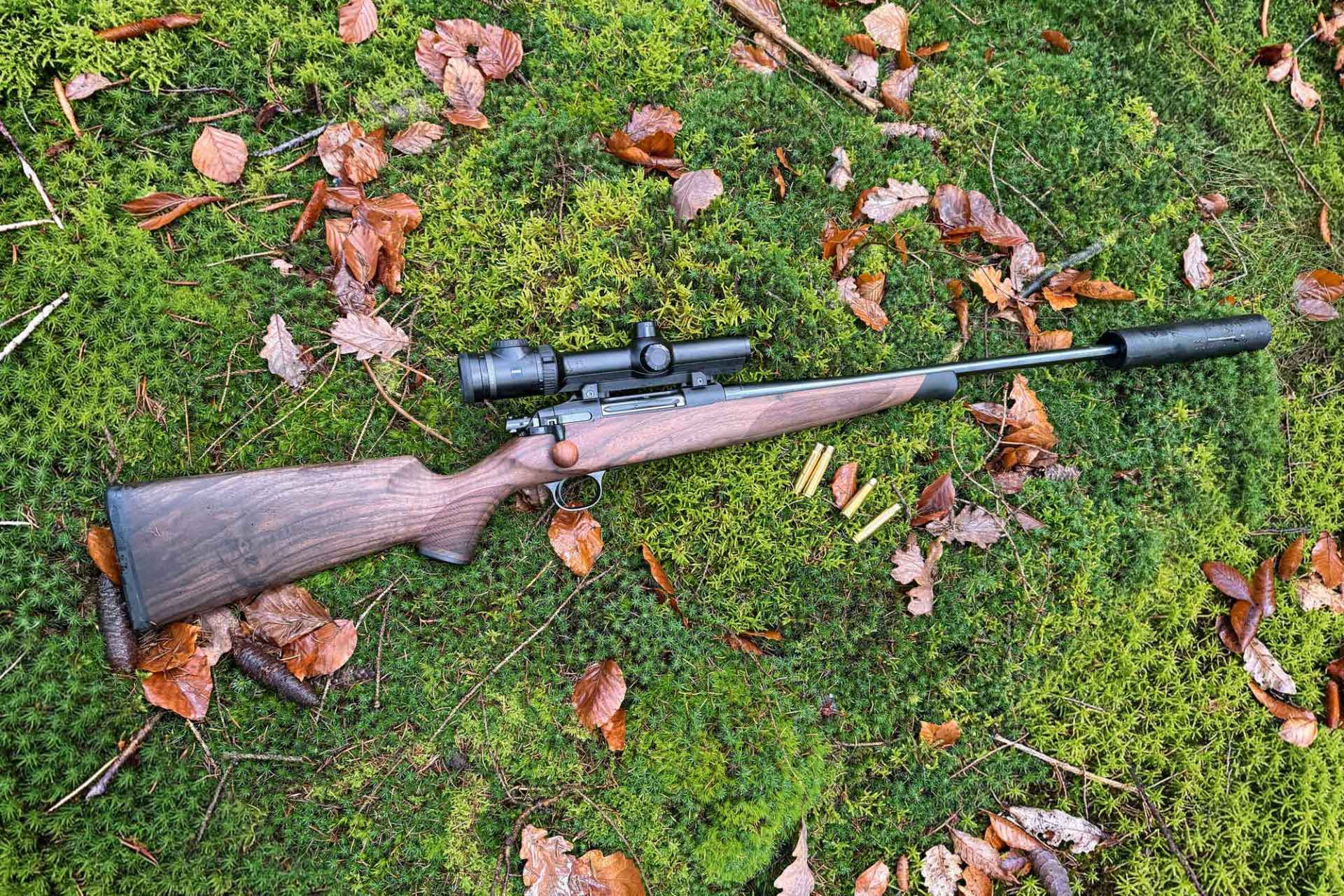

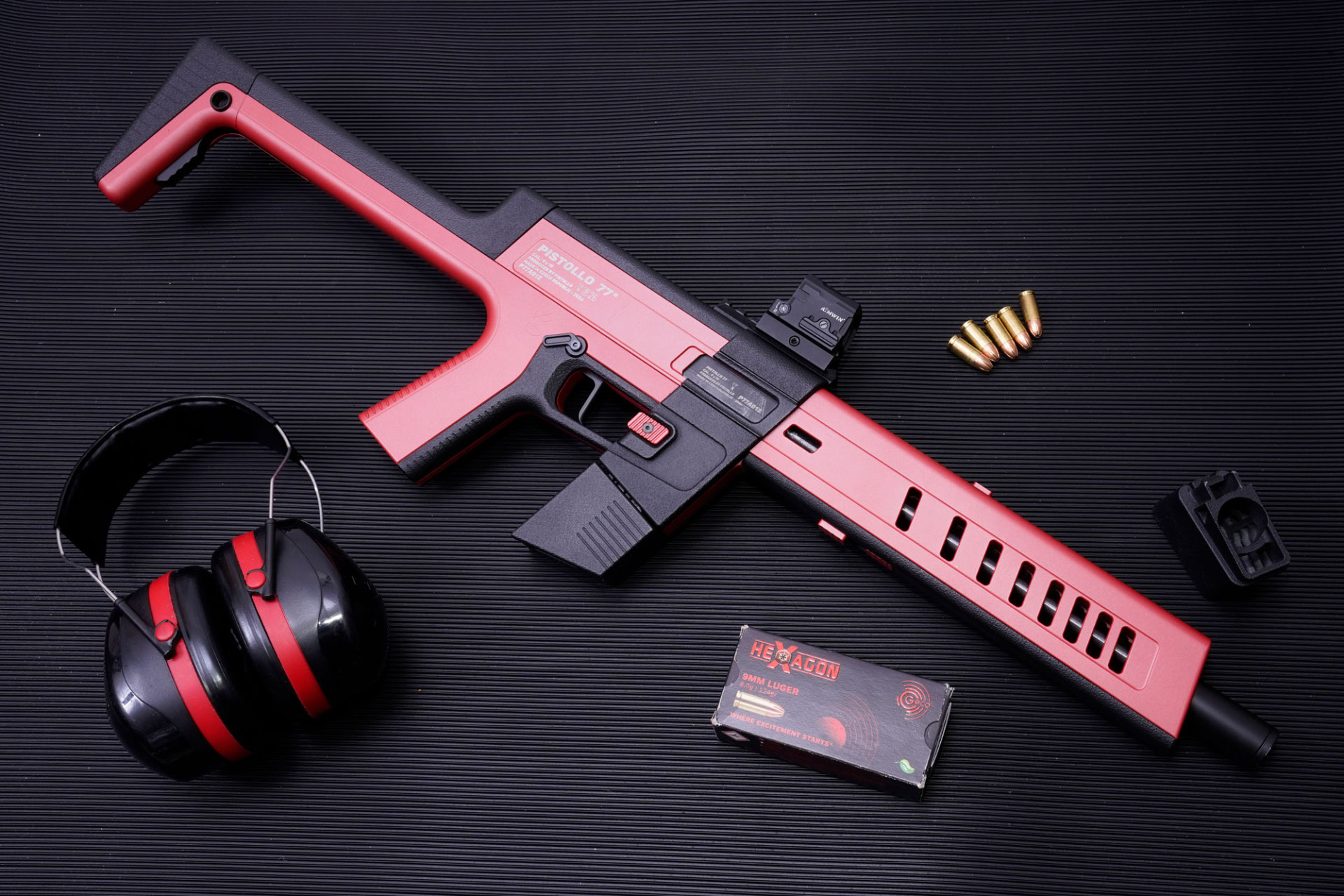
Most modern carbines built for PCC competition are based on the AR-15 platform, making many of them look remarkably similar. Typical examples include the 3G Sports Tec 9 Pro in its various configurations, the Just Right Carbines JRC9 Basic and Sporter, the Palmetto AR-V, the JP Enterprises JP-5, the Daniel Defense DD-PCC series, the CMMG Mk9 RDB, as well as the SIG Sauer MPX. Carbines that depart from the AR formula are considerably less common. Among them are the B&T APC9 Pro, CZ Scorpion EVO 3, Grand Power Stribog, Ruger PC Carbine and Springfield Armory Kuna. Even within this diverse group, however, the Pistollo 77°, introduced to the German market in 2025, is arguably the most unconventional design of them all.
Design and Features of the Pistollo 77°
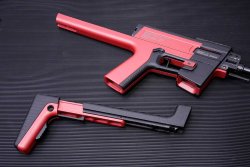
Constructed from steel, aluminum and high-strength polymer components, the 3.2 kg (7.1 lbs) Pistollo 77° features an angular, streamlined profile with virtually no protruding controls. Depending on the configuration, it is available with an integrated red dot sight protected by a distinctive cage-like housing, giving the firearm an appearance unlike anything else currently on the market - in a sense, very "Industrial Design Red DOT award worthy".
The receiver, bolt, 256 mm (10.1") barrel and parts of the trigger assembly are machined from steel, while the grip module, handguard and several smaller components are made from aluminum. The most distinctive feature is the polymer "Pistol Cover" center section, which visually connects the optic housing, magazine well and magazine into a single continuous design element. Additional polymer components include the receiver-top cover, stock cover and buttpad.
This center section is also responsible for the model's unusual name, as it is positioned at a 77-degree angle. From the factory, the rifle is supplied with a Holosun HS507K X2 micro red-dot sight featuring a solar panel and a green multi-reticle system offering a 2-MOA dot, a 32-MOA circle, or a combination of both.
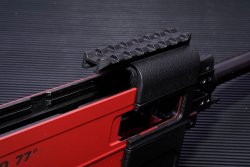
The Pistollo 77° is also available without the factory-installed Holosun optic, in which case it comes equipped with a MIL-STD-1913 Picatinny rail, allowing users to install the optic of their choice. The rail itself, however, is molded from polymer, so both the weight of the chosen optic and the mounting screw torque should be considered during installation.
The controls are equally unconventional and require a brief familiarization period. The charging handle is recessed into the top of the handguard and folds upward for operation. The bolt catch and the separate bolt release button are located on the underside of the handguard, while the safety selector and magazine release are fully ambidextrous.
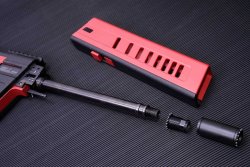
Another interesting feature is the 3D-printed muzzle cover, supplied with the rifle and designed to snap over the muzzle when the firearm is not in use, providing an additional safety measure
The Czech-designed PCC incorporates several other thoughtful safety features. In addition to the removable muzzle cover, it includes a firing pin safety, while extending the adjustable buttstock automatically disengages the safety, allowing the rifle to be brought into action immediately. The lightweight stock offers three locking positions with a total length-of-pull adjustment of 50 mm (2"). The Pistollo 77° feeds from Glock Gen4 magazines.
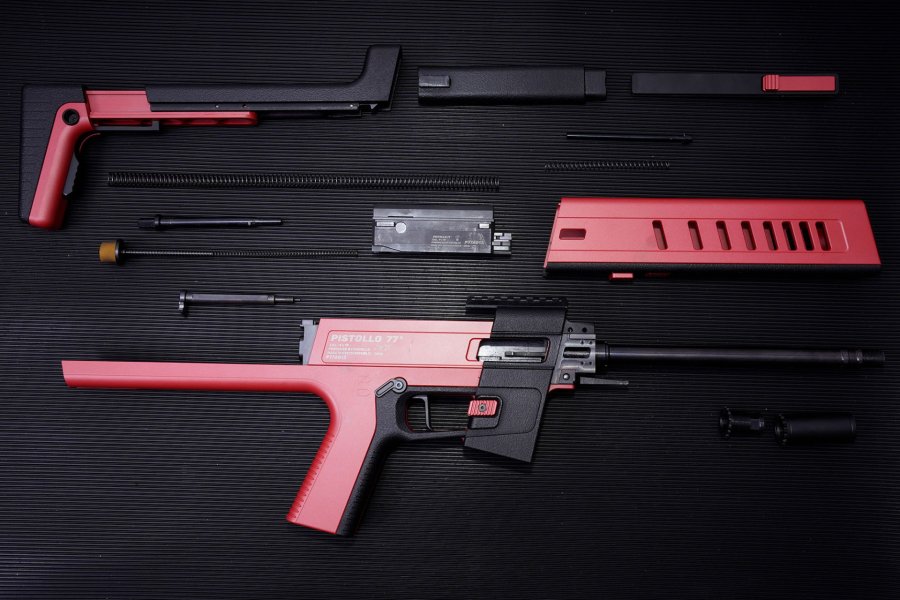
The designers also broke away from conventional PCC practice when developing the operating system, deserving credit for their ingenuity and innovation. Removing the stock is simple: extend it fully to its rearmost position and press the release button to separate the buttstock assembly from the receiver.
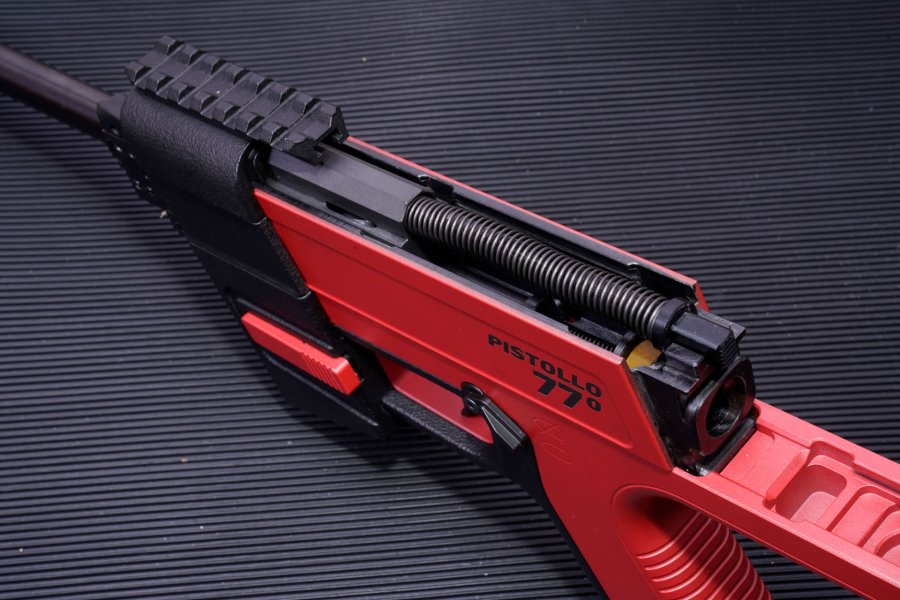
With the stock removed, the recoil system becomes fully accessible. A guide rod carries the primary recoil spring, while a second, heavier spring is incorporated into the firing pin assembly beneath it. Manually retracting the charging handle compresses the primary spring during the first half of bolt travel. Beyond that point, resistance increases noticeably as the secondary spring comes into play. During firing, both springs work together to absorb the bolt's rearward energy.
The bolt assembly also incorporates a locking element that is forced downward when the action is fully in battery. Upon firing, rearward pressure releases this locking piece, allowing the bolt to begin its rearward movement. This combination of spring-assisted resistance and mechanical delay proved exceptionally effective during testing, delivering completely reliable operation throughout the evaluation.
Range Performance: Testing the Pistollo 77°
The Pistollo 77° proved highly ergonomic. Fully ambidextrous controls—including the safety selector and magazine release—as well as the bolt catch and separate bolt release button located beneath the handguard, make the carbine equally comfortable for both left- and right-handed shooters. The handguard's angular profile and flat underside provide a stable platform when shooting from a rest. At the same time, it remains easy to wrap the support hand completely around it. Because the optics rail sits relatively high above the handguard, even a compact red dot sight does not obstruct the shooter's field of view. The single-stage trigger broke cleanly and consistently at an average pull weight of 1,650 g (3.64 lbs), making precise shot placement straightforward.
The innovative delayed blowback operating system keeps felt recoil to an absolute minimum. Muzzle rise is still noticeable, however, and the addition of a brake could further improve controllability, as the 10.1" barrel leaves sufficient gas pressure available for effective muzzle compensation.
Even with a non-magnified red dot sight, the Pistollo 77° made it possible to hold the 10-ring of an ISSF target at 50 meters (55 yards). To evaluate practical accuracy, we fired a few different factory loads along with one handload.
The smallest five-shot group of the test measured 36 mm (1.42") using GECO's 124gr Hexagon Match ammunition, while the largest group measured 58 mm (2.28") with Sellier & Bellot's 124gr FMJ load.
Technical specifications
Model: | Pistollo 77° |
| Manufacturer: | Pistollo S.R.O. |
| Importer in the USA: | Deluxe Imports - https://importsbydeluxe.com/ |
Operating system: | Delayed blowback |
Caliber: | 9 mm Luger |
Magazine: | Glock Gen4-pattern mags |
Barrel length: | 256 mm (10.1") |
Twist rate: | 1:10" (1:254 mm) |
Trigger: | Single-stage |
Trigger pull: | 1,650 g (3.64 lbs) |
Safety: | Ambidextrous 45-degree safety selector with firing pin safety |
Overall length: | 720-775 mm (28.3"-30.5") |
Weight: | 3.2 kg (7.1 lbs) |
Notes: | MSRP is only available for the Special Launch Edition first import model, priced at $4,377.77; the model featured in this article will be introduced to US shooters in the last quarter of 2026. |
| Standard features include a lightweight aluminum/polymer adjustable buttstock with three locking positions, a free-floating aluminum handguard, and Glock Gen4 magazine compatibility. | |
Conclusion: The Pistollo 77° in 9mm Luger
The Pistollo 77° is a thoroughly modern pistol caliber carbine with a truly distinctive appearance. More importantly, however, it is far more than an eye-catching design exercise. Beneath its unconventional styling lies an innovative operating system that reduces felt recoil to an absolute minimum while delivering flawless reliability.
The separate bolt catch and bolt release controls, located on the underside of the handguard, proved to be a well-conceived solution that quickly becomes intuitive during use. Throughout our evaluation, the carbine functioned flawlessly and delivered excellent practical accuracy.
Our only real criticism concerns the polymer optics rail. While perfectly adequate for lightweight optics, it inevitably limits the choice of heavier sights and requires some care during installation.
The Pistollo 77° is available with several Cerakote finishes, including Fire (red), Burnt Bronze, Navy (blue) and Sniper Gray. According to the manufacturer, buyers can further customize the rifle with different MIL-STD-1913 rail configurations, alternative stock options and other special finishes.
In EU the Pistollo 77° carries a suggested retail price of €2,900, although it is currently being introduced to the German market at a promotional price of €2,500.
Combining an unmistakable industrial design with genuinely innovative engineering, the Pistollo 77° stands apart from virtually every other PCC currently on the market. For shooters looking for something beyond the familiar AR-based formula, this Czech-designed carbine is well worth a closer look.
Last but not least, the Pistollo is coming to the USA!
Text: Stefan Perey and Michael Fischer
For further information, please visit the websites www.pistollo.com