
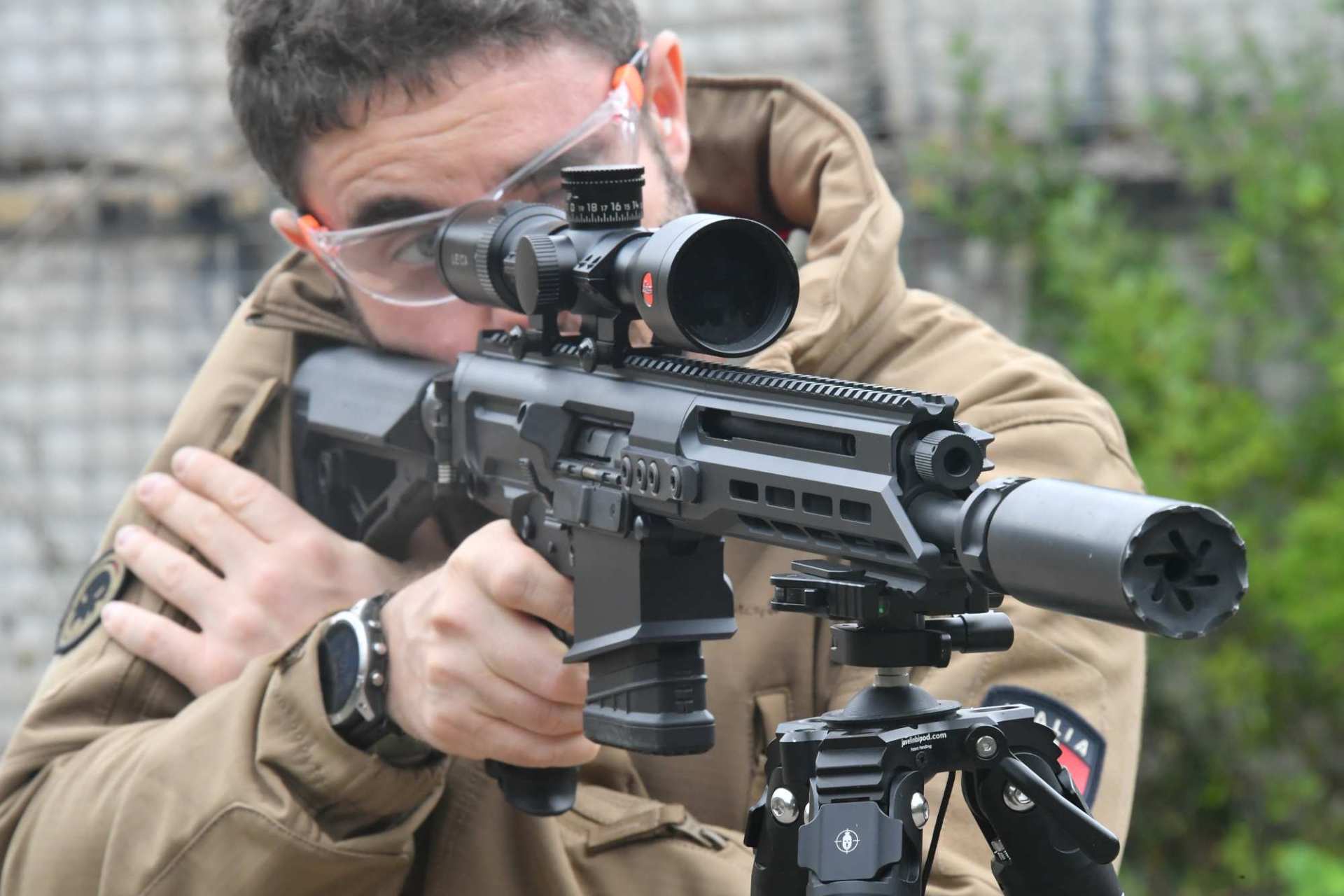
The Steyr DMR 762 is a semi-automatic rifle chambered in 7.62x51mm NATO/.308 Winchester, originally developed for Military, LE and professional use and only recently made available in small numbers to the European civilian market. Designed to meet the requirements of some of the world’s most demanding specialized units, it delivers sub-MOA accuracy with match-grade ammunition.
Video: testing the Steyr DMR 762 semi-automatic rifle
Back to basics: what is a DMR?
In military terminology, a DMR (Designated Marksman Rifle) is a semi-automatic rifle that fills the gap between the standard-issue assault rifle and the precision rifle used by a sniper. Its role is typically to engage targets at distances of 300-650 yd, and considerably farther in the case of this Steyr, while providing a higher rate of fire than the bolt-action rifles generally used at longer ranges.
The need for this type of weapon became especially obvious after the adoption of the 5.56mm cartridge as the NATO standard for assault rifles, especially in environments such as the Middle East, where engagements can take place across large, open areas.
Police precision shooting mostly takes place at much shorter distances than military engagements, in order to minimize risks of collateral damage in the densely populated urban environments in which police units typically operate. Bolt-action rifles are still used in this role, of course — the Remington 700 Police sports that name for a reason — but many tasks can be performed with self loading rifles specifically developed for precision shooting, a fact since the legendary Heckler & Koch PSG-1 was introduced.
A request Steyr couldn’t refuse
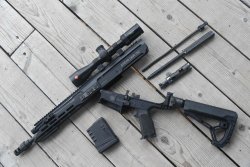
The version of the Steyr DMR 762 we tested today was originally developed — and we can now say so, since the information was made public after we shot the video — to meet the requirements of Einsatzkommando Cobra, the Austrian Police SWAT team responsible for high-risk missions including hostage rescue and counterterrorism. We had already breifly introduced the rifle at Enforce Tac 2025.
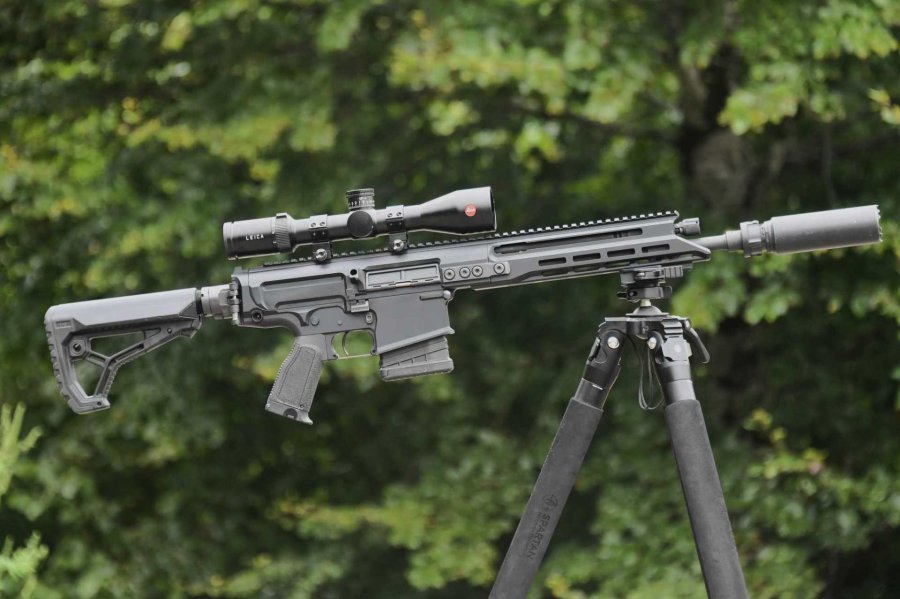
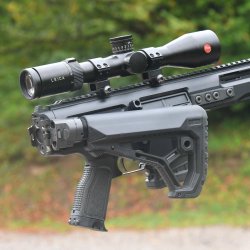
This distinguished pedigree explains several of the rifle’s distinctive features. Its relatively short barrel and folding stock make it easy to carry inside a backpack or deployment bag in urban environments, while also keeping overall length manageable in the far from unlikely event that a suppressor is fitted. If necessary, the rifle can also be fired with the stock folded.
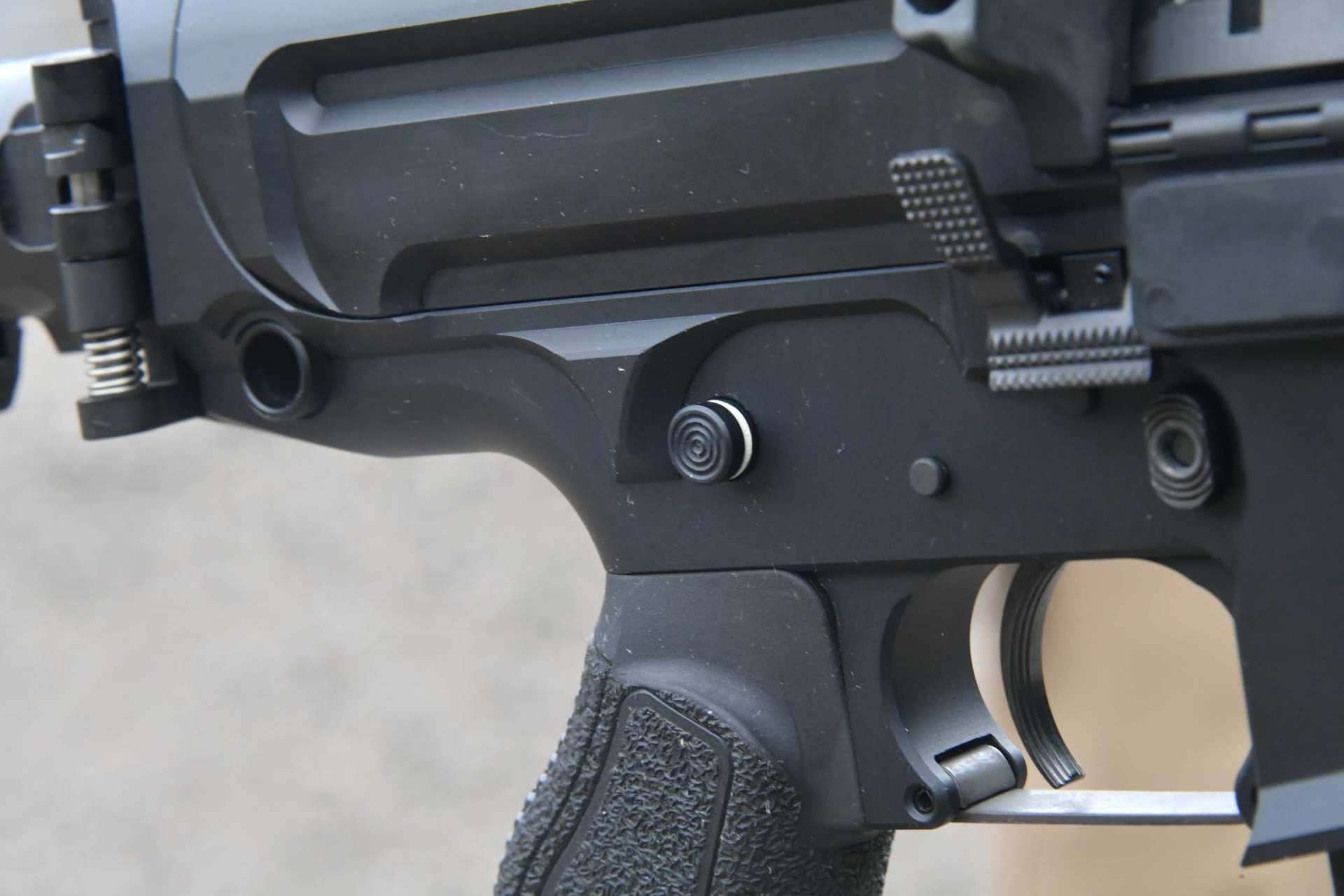
Most notably, it explains why the DMR 762 features the rather unexpected cross-bolt safety. Since Cobra operators already use the Steyr AUG, the unit wanted a similar control system to the one its personnel were accustomed to, preserving established muscle memory.
Accuracy built to last
The DMR 762 is built almost entirely from 7075 alloy and, thanks to a deliberate design choice, still manages to remain below 4 kg (8.8 lb) while delivering sub-MOA accuracy.
At the heart of the rifle is a short-stroke gas-piston system, with an adjustable gas regulator for normal and adverse conditions, and suppressed use. It is paired with a cold-hammer-forged barrel rated for at least 10,000 rounds without any significant degradation in accuracy. At the muzzle is a flash hider that also serves as a quick-mount interface for the suppressor.
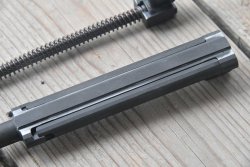
One particularly refined detail is the op rod inside the upper receiver, which incorporates two floating counterweights. Their purpose is to prevent bolt bounce as the action closes, reducing the risk of a failure to fire on the following shot and minimizing disturbances that could affect accuracy.
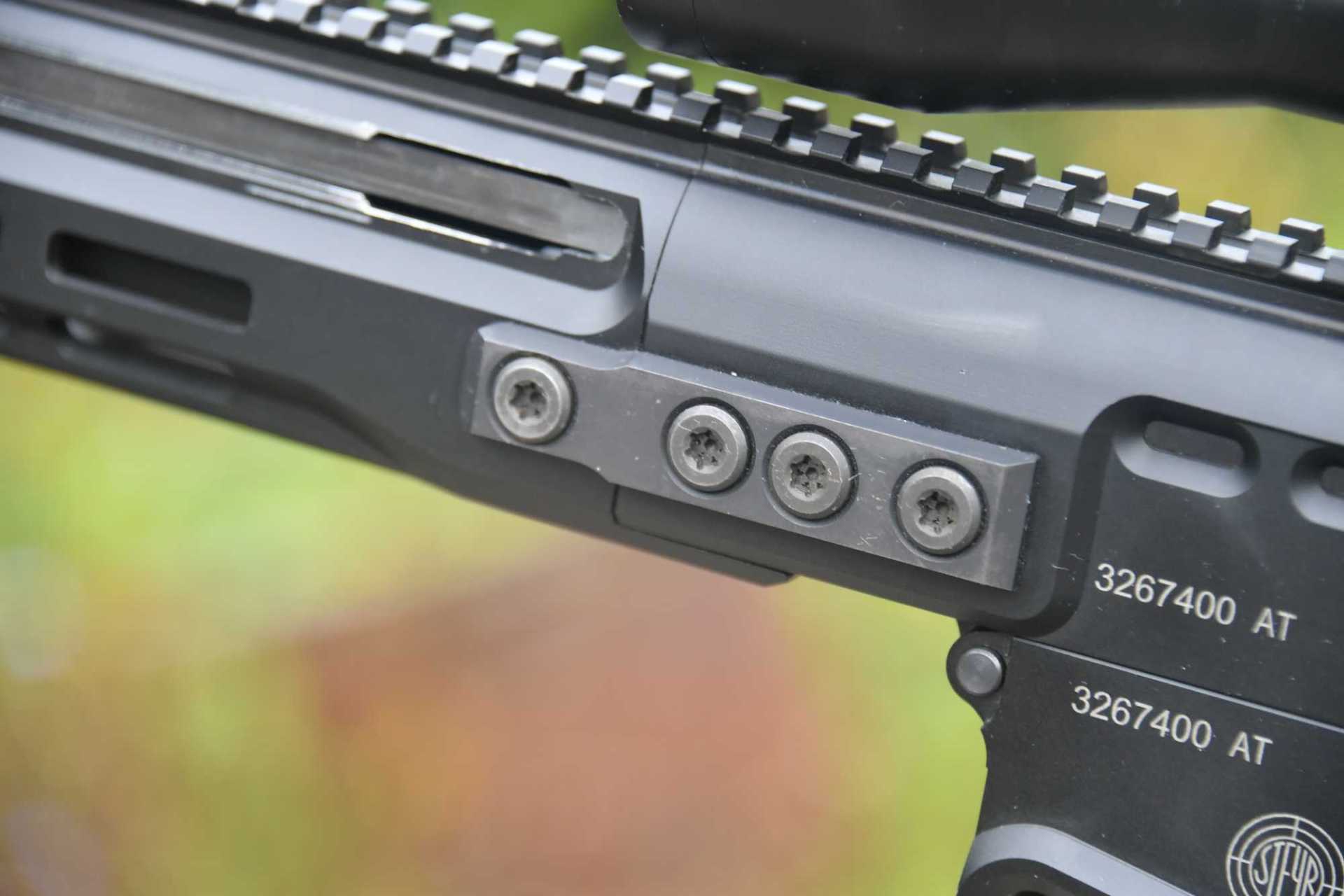
The upper receiver is not a monolithic design, but the handguard is very securely and rigidly mounted to the upper by no fewer than four transverse pins. All surfaces are treated to protect them against corrosion, impacts and abrasion, ensuring a long operational service life.
Tailored to the mission
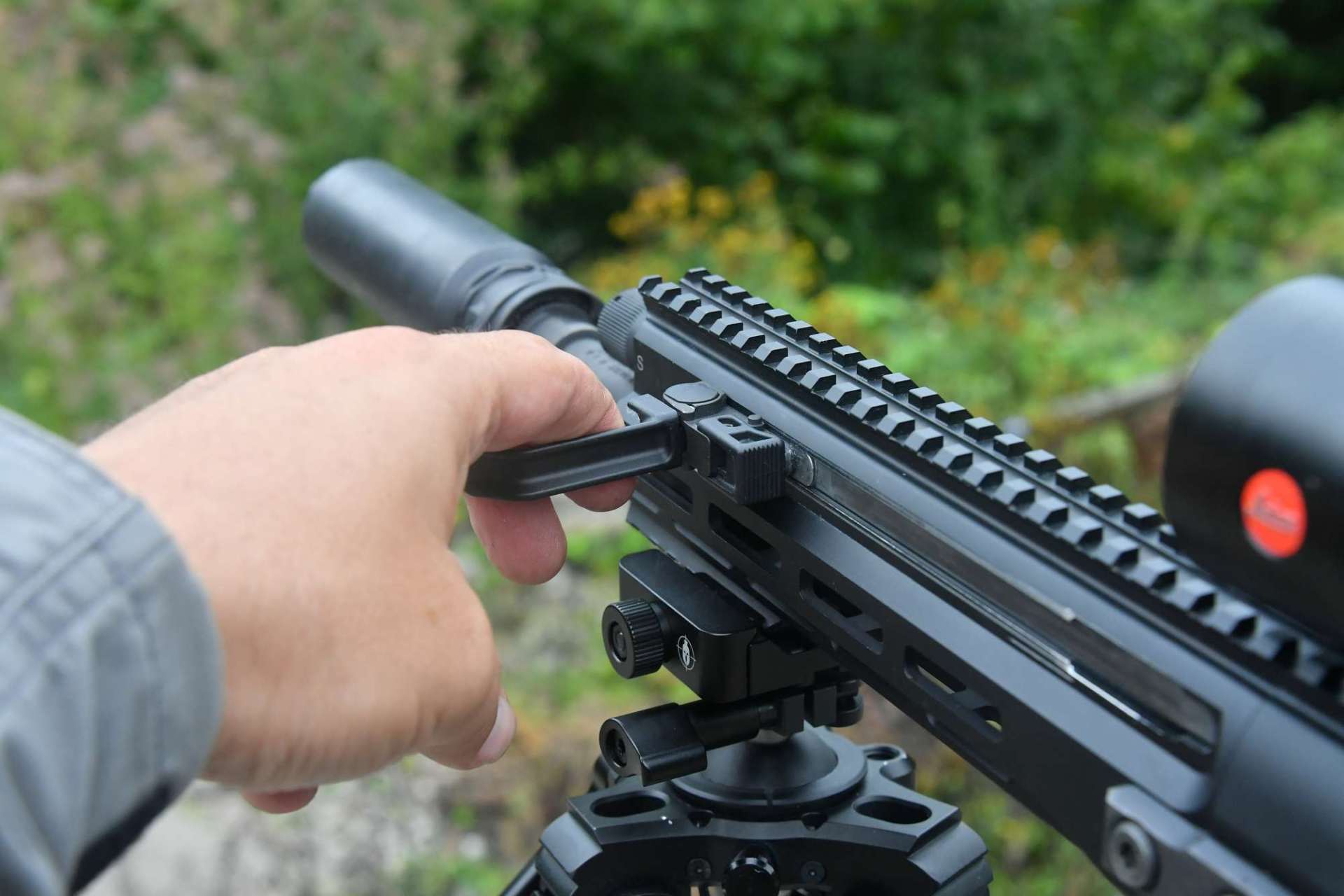
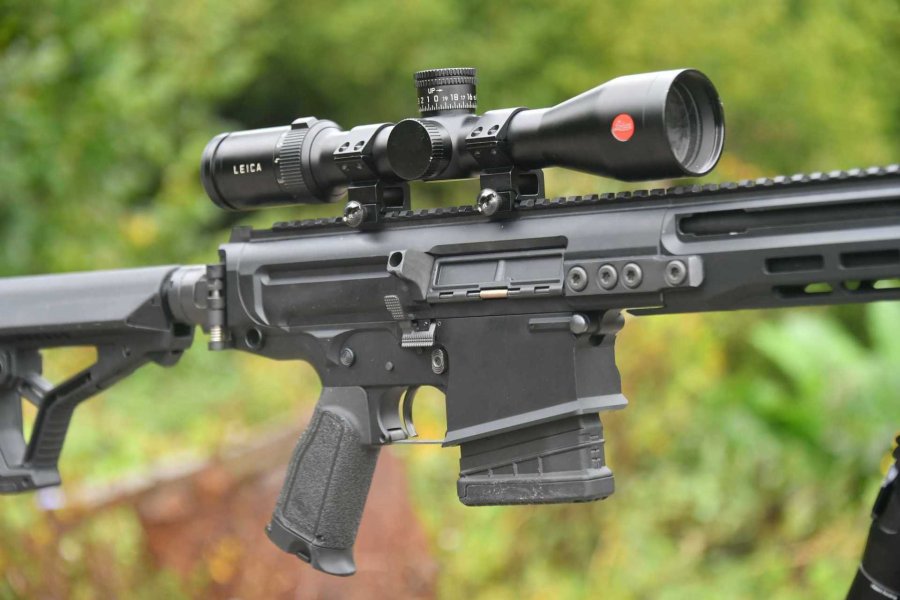
Given that this is a platform designed around precision shooting, it is hardly surprising to find a long Picatinny rail running along the entire top of the rifle. It provides ample space for a suitable riflescope as well as complementary systems such as clip-on night-vision devices, red dot sights for close-range engagements, backup iron sights or LAMs such as the PEQ-15.
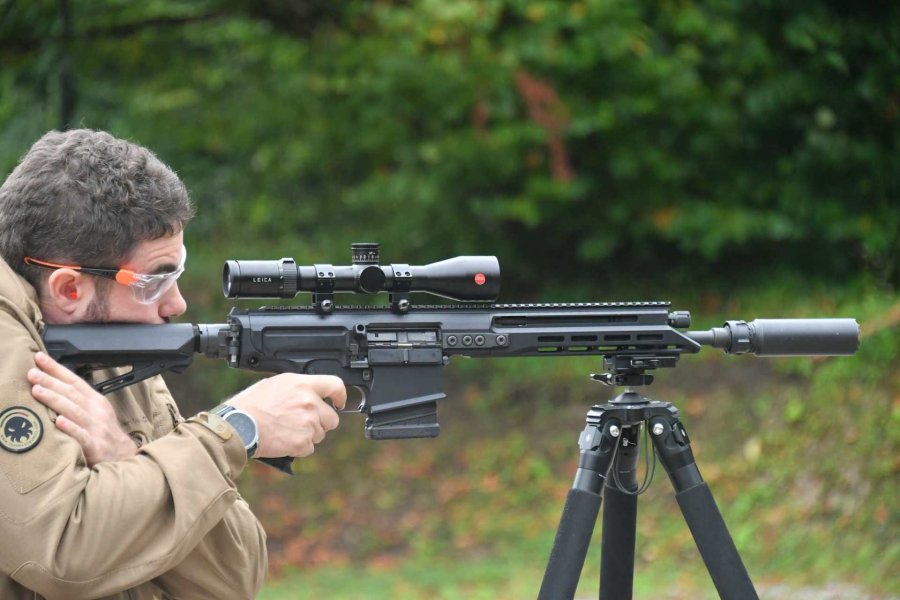
The rifle we tested was fitted with a Leica Amplus 6 3-18x44i riflescope, a choice that would be well matched to both the DMR 762 and its intended role, as It is a rugged optic with a magnification range that allows the shooter to transition quickly from maximum precision to a wider field of view, providing better situational awareness around the target. However, the reticle is in the second focal plane, and although the scope used a hashed mildot design, the subtension only work at 10x magnification. Other than that, the glass is amazing.
To allow the DMR 762 to be configured around both the user and the mission, Steyr has also provided numerous M-LOK attachment slots along the sides and underside of the handguard.
Different, but only where it needs to be
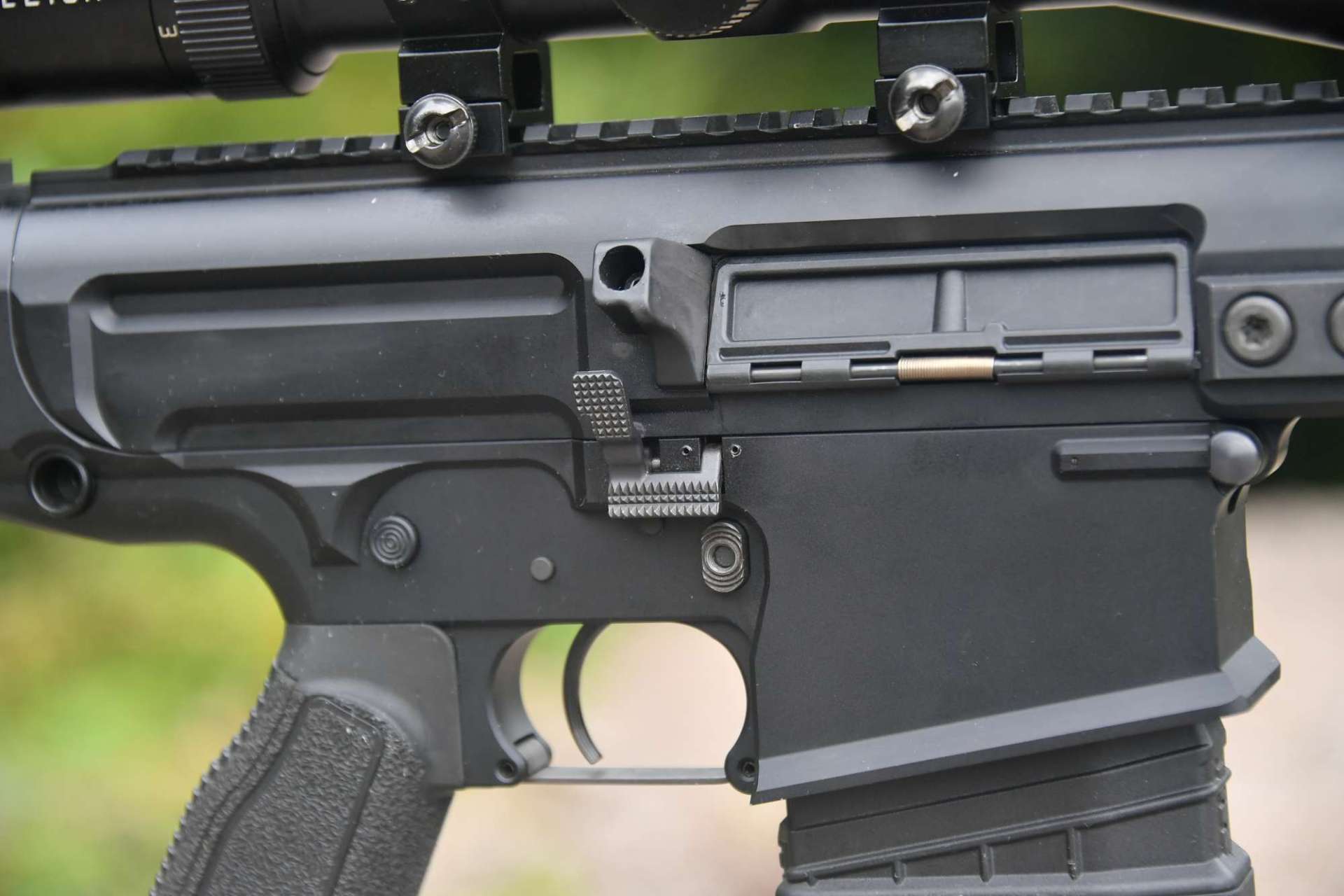
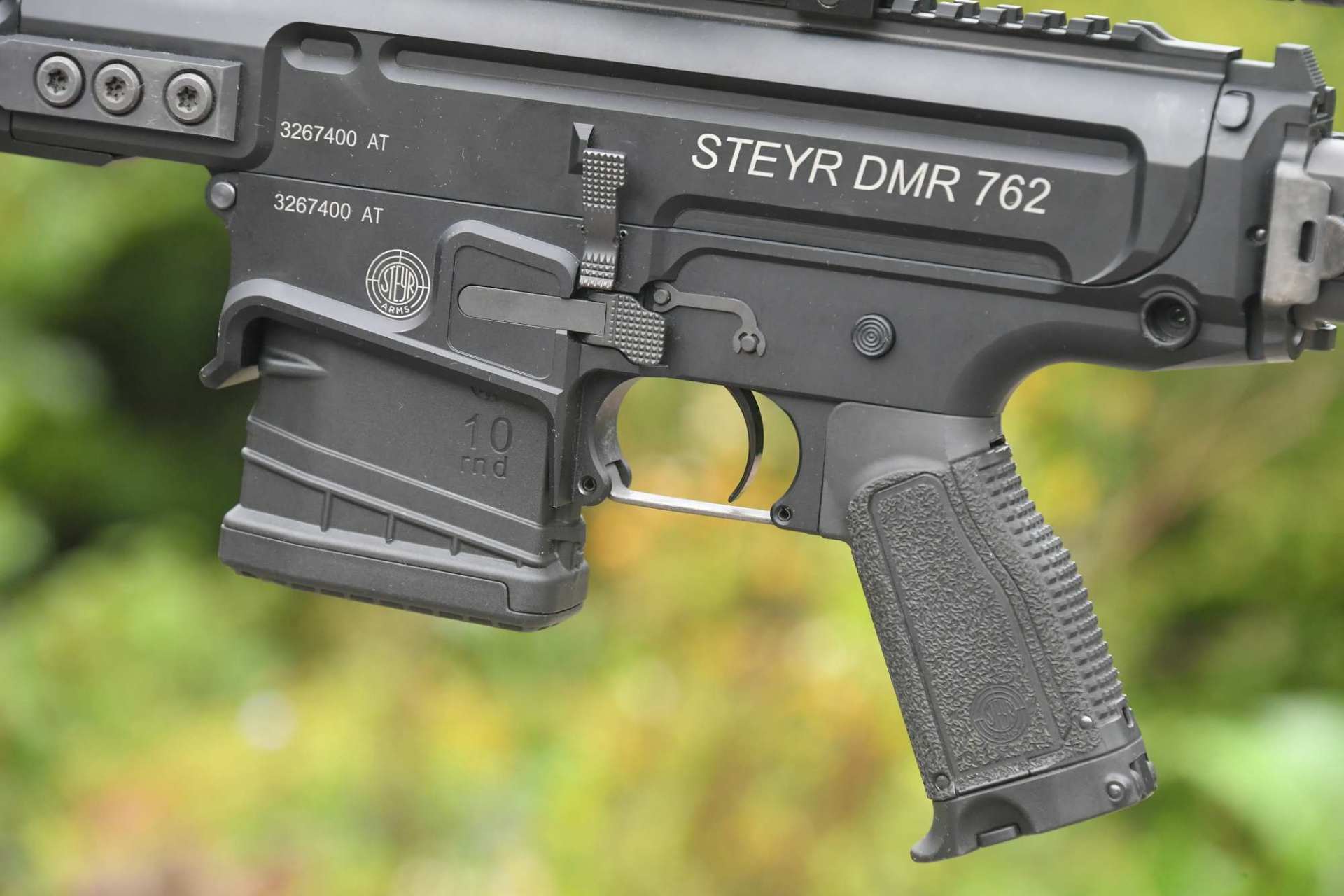
Most of the controls follow the familiar layout of modern black rifles, with ambidextrous bolt release and magazine release controls. As mentioned earlier, our test rifle was fitted with the cross-bolt safety, although the DMR 762 is also available with a conventional 90-degree rotating safety selector.
Although derived from an AR-10/SR-25-type platform, the DMR 762 differs from it in several respects, dictated both by its intended role and by the pursuit of maximum accuracy. All internal parts of the upper are proprietary: neither the upper nor the lower receiver are compatible with those of an AR-10. The takedown system is also different, requiring the user to press a button at the rear of the upper, just below the beginning of the Picatinny rail, rather than pushing out the usual receiver pin, in a manner conceptually similar to the AK.
Unless a shooting tripod is being used, a precision rifle will most often be fired from the prone position or supported on some type of surface. Steyr took this into account by equipping the DMR 762 with a handguard-mounted charging handle, which also functions as a forward assist and can be moved to either side without tools. In these circumstances, it is considerably more convenient than the conventional rear-mounted T-handle found on AR-pattern rifles.
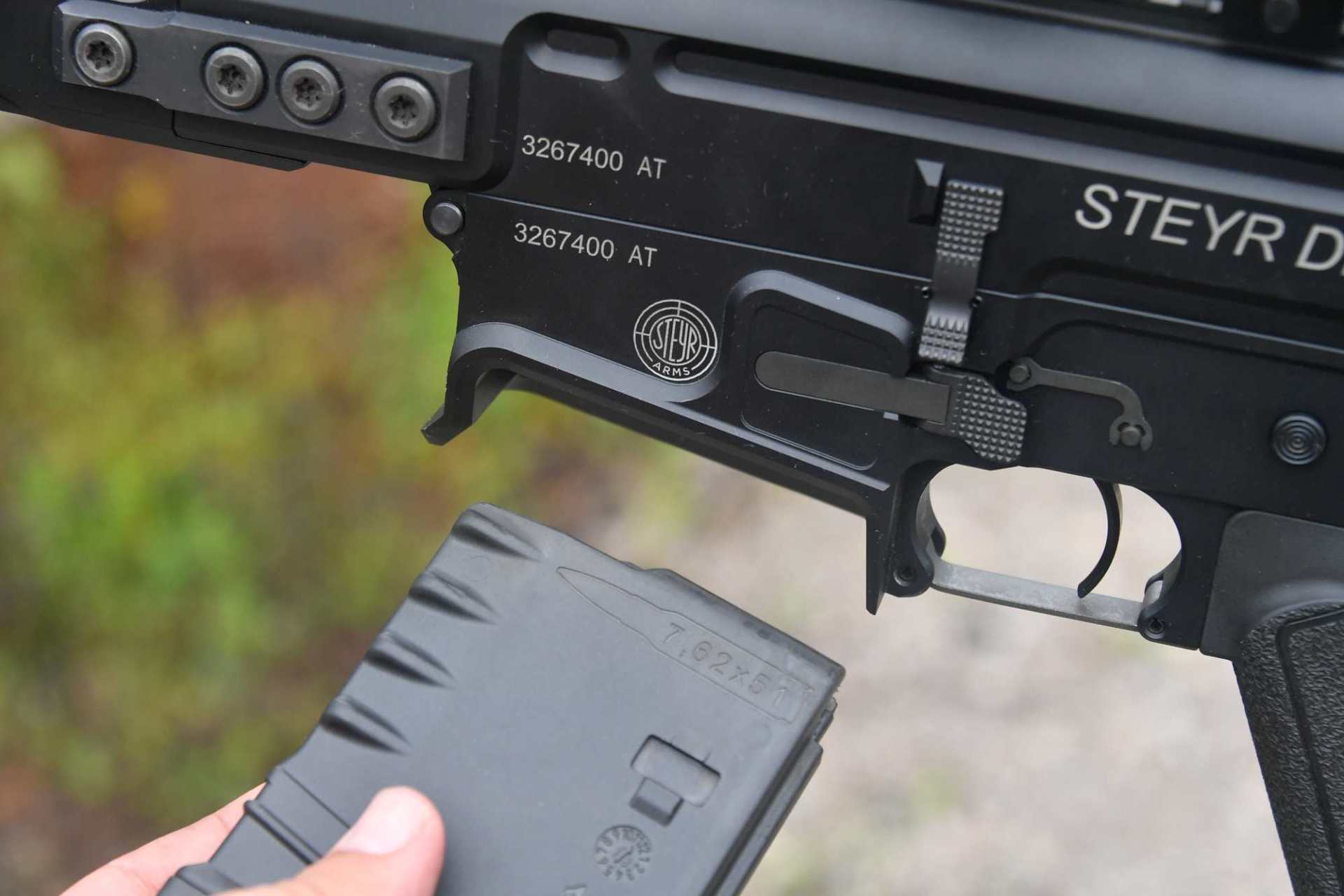
For the same reason, the magazine well features a lateral flare that facilitates magazine changes, particularly with longer magazines: they can be inserted at a slight sideways angle without forcing the shooter to abandon the firing position.
A wide choice of accessories
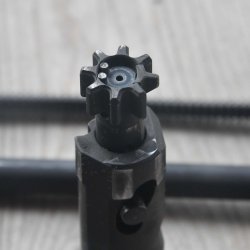
By deliberate design, wherever possible the Steyr DMR 762 retains compatibility with standard AR and SR-25 external components: it can use SR25 magazines, AR pistol grips and even stocks.
Indeed, although the stock folds to the right and there is no recoil spring housed behind the receiver, Steyr retained a standard AR-15/M4-type buffer tube, allowing the rifle to accept the wide variety of compatible stocks already available on the market.
Our test rifle was fitted with a FAB Defense collapsible stock adjustable through six positions, providing a maximum length adjustment of 3.2". During development, however, Steyr itself displayed the DMR 762 fitted with several different stocks, further demonstrating the platform’s compatibility.
Finally, the rifle accepts AR-15 drop-in trigger groups without requiring any modification.
The Steyr DMR and the civilian market
Unveiled to the world in 2023 after a lengthy development process, the Steyr DMR 762 has only recently been trickling down to the European civilian market, after the design had been further refined and the requirements of its professional customers had been satisfied.
The first version offered for professional use featured the unusual cross-bolt safety and a 13-inch barrel - making it a fully fledged SBR; this could justify in part the absence of a civilian version of the gun on the US market. Steyr subsequently decided to offer a 16-inch barrel as well, together with the conventional AR-style safety selector. On the Northern European civilian market, only the black finish is currently available; other color options remain reserved for professional customers.
A 20" barrel version has also been mentioned at times.
During the early stages of development there were rumors of possible chamberings in other currently popular calibers, but so far we have no concrete updates in this regard.
A taste of excellence
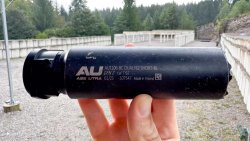
We had the opportunity to live fire test the Steyr DMR 762 during an official presentation in Slovenia, using a military rifle in the Cobra configuration fitted with an Ase Utra DUAL762-S GEN2 suppressor from Finland. Adding just over 4 inches to the rifle’s overall length, the suppressor is capable of reducing the acoustic signature by approximately 23 dB measured one meter from the muzzle, with only a limited shift in point of impact. We used match ammunition loaded with 168-grain HPBT bullets.
We shot in the rain, which prevented us from setting up paper targets, so instead we engaged 5x8-inch steel plates at 200 meters (219 yd) from a shooting tripod.
After an initial point-of-impact correction, necessary because the optic had been zeroed for unsuppressed use, we began hitting the targets with absolute consistency. It quickly became clear that truly challenging this rifle would have required distances several times greater than what we had available.
Mechanically, the DMR 762 performed flawlessly, reliably cycling without a hitch. Felt recoil and other disturbances were modest, allowing rapid follow-up shots and fully meeting our admittedly very high expectations.
We can’t have it yet… unfortunately
Although the Steyr DMR 762 is currently also part of Steyr Arms’ civilian sporting-rifle portfolio, at the time of writing it does not appear to be commercially available on the U.S. civilian market, and unfortunately no official U.S. MSRP has been announced.
Steyr DMR 762 – Technical specifications
| Manufacturer | Steyr Arms - www.steyr-arms.com |
| Model | DMR 762 |
| Caliber | .308 Win. (7.62×51 mm) |
| Available twist rates | 1:12” and 1:10” |
| Total length | 32.1 and 35.1" (815-891 mm) |
| Available barrel lengths | 13" and 16" (330 / 407 mm) |
| Magazine | Polymer, SR-25/AR-10 pattern |
| Weight | 8.6-11 lb (3.9-5.0 kg) |
| Trigger | Single action semi automatic |
| Trigger pull | 30 N (approx. 6.7 lb) |
| Optic used in our test | Leica Amplus 6 3-18x44i |
| Suppressor used in our test | Ase Ultra DUAL762-S GEN2 |