
During a recent presentation of new Burris and Steiner products focusing on hunting optics, we did not miss the opportunity to have a first contact with the latest Steiner red points suitable for use on handguns. Specifically, we handled the updated version of the MPS and the new compact model, called MPS-C. As almost all of our readers will already be aware, the German Steiner-Optik GmbH is a leading manufacturer of advanced optical instruments for professional use in both civil and military sectors, with a catalogue that ranges from marine binoculars to aiming devices for sport shooters, hunters, military and LE operators, all of which are characterized by great reliability and ruggedness.
Steiner MPS, ultra-long life
The new generation of the MPS, an acronym that stands for Micro Pistol Sight, does not revolutionize the product we already knew, but refines it further, focusing in particular on autonomy and ease of use.
Let's start with the extraordinary progress in the area of power supply: the CR2032 battery is able to guarantee an autonomy of up to 90,000 hours at medium brightness, also thanks to the automatic switch-off function after 15 hours of use. Assuming that the battery is dead before the end of the device's operational life, or in case you want to always be able to rely on a fully charged battery, it can be changed very quickly, even in the field. The other improvement concerns the user interface: the controls have been enlarged, making them easier to operate, especially when wearing gloves.
For the rest, the Steiner MPS remains a precise and very rugged red dot that embodies all the know-how of the German company and is also suitable for professional use, under conditions far more extreme than those found on a shooting range. As proof of this, in addition to the 6 brightness settings for day and night use, the sight also offers two specific settings for use in conjunction with night vision devices. In addition, it is waterproof up to 35 meters and can operate in a temperature range of -40°C to +60°C.
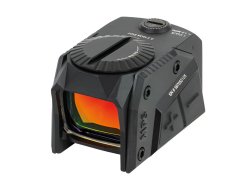
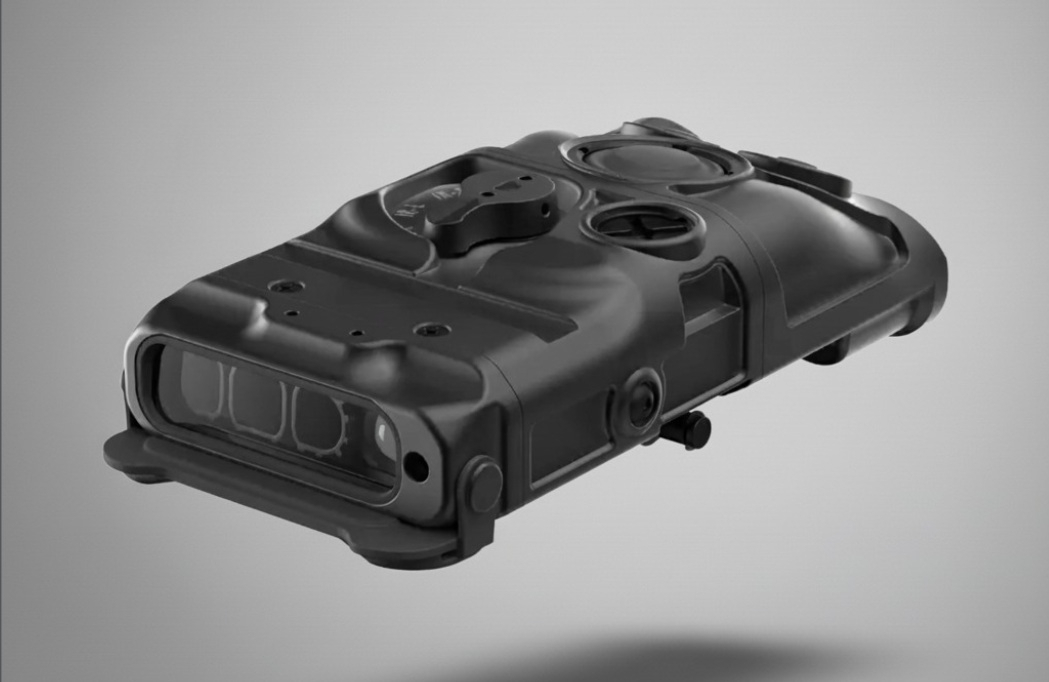
The metal housing with protective coating and recesses protecting the lens make it one of the most robust products on the market. All this with a weight of just 66 grams and compact dimensions, ideal for use on handguns, although this red dot also lends itself well to being mounted on long guns. The Acro footprint makes it compatible with most optics-ready pistols on the market.
Optically, we find a 1x magnification and clear, distortion-free lenses, which make it easy to shoot with both eyes open, without losing awareness of the surroundings. The reticle can be chosen, at the time of purchase, from two variants with a 3.3 or 2 MOA dot. The point of impact is adjusted by operating on two separate controls, with 1 MOA clicks.
Steiner MPS-C, ultra compact and lightweight
The MPS-C model is a small technological jewel created with the aim of offering the characteristics of the MPS in an ultra-compact form, suitable both for the sport shooter and to accommodate the latest trends in personal defense, which especially in the US see the use of red dots even on compact and sub-compact guns.
The substantial reduction in overall dimensions is matched by an equally significant reduction in weight, which stands at just 32 grams, a record-breaking value that puts it some 40 per cent below comparable products on the market, guaranteeing that the balance of handguns is not compromised, allowing rapid acquisition and an equally quick return to the original aiming point. Such low weight is also advantageous in competitive use, where no difference will be noticed in the speed and accuracy of handling the gun before and after assembly.
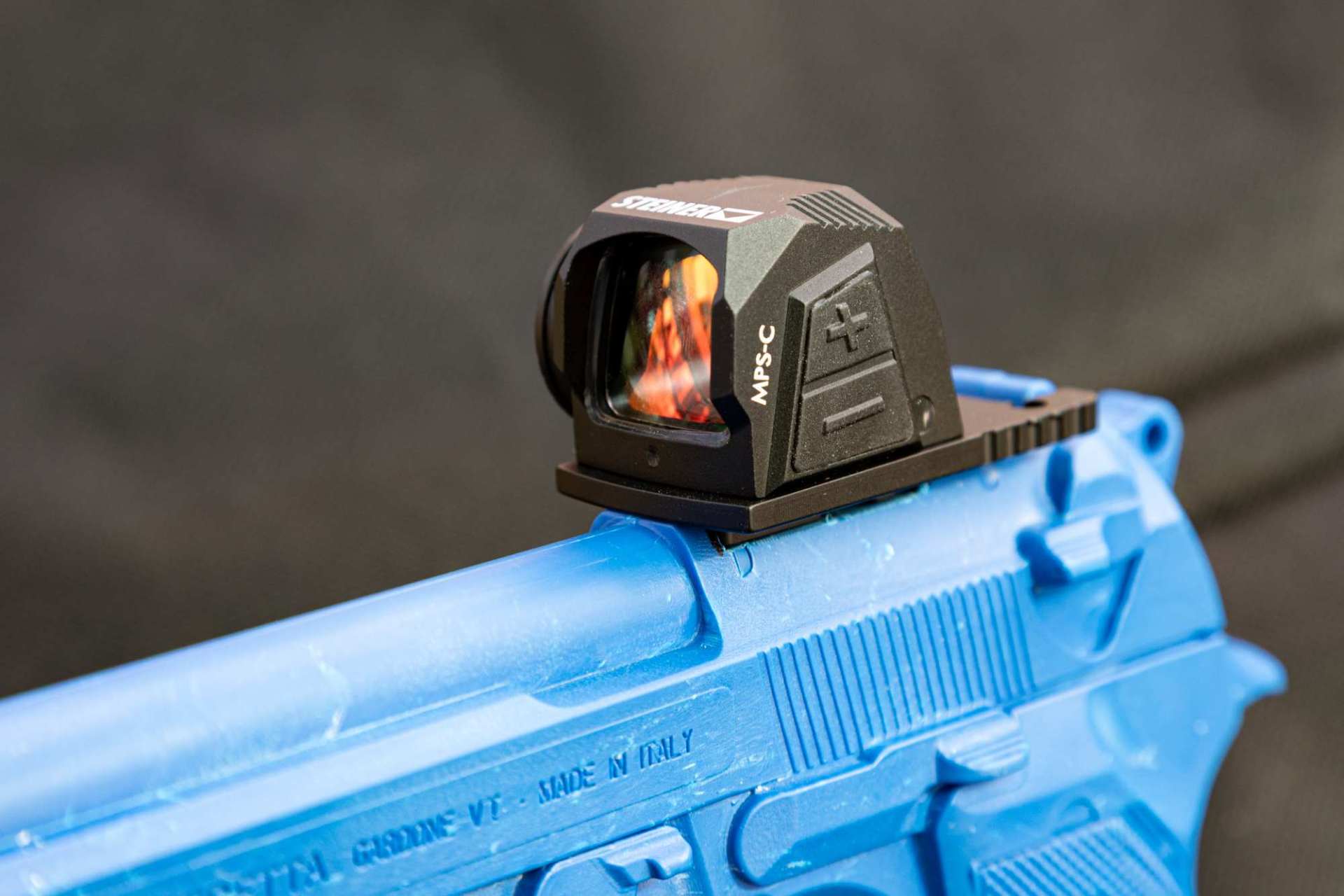
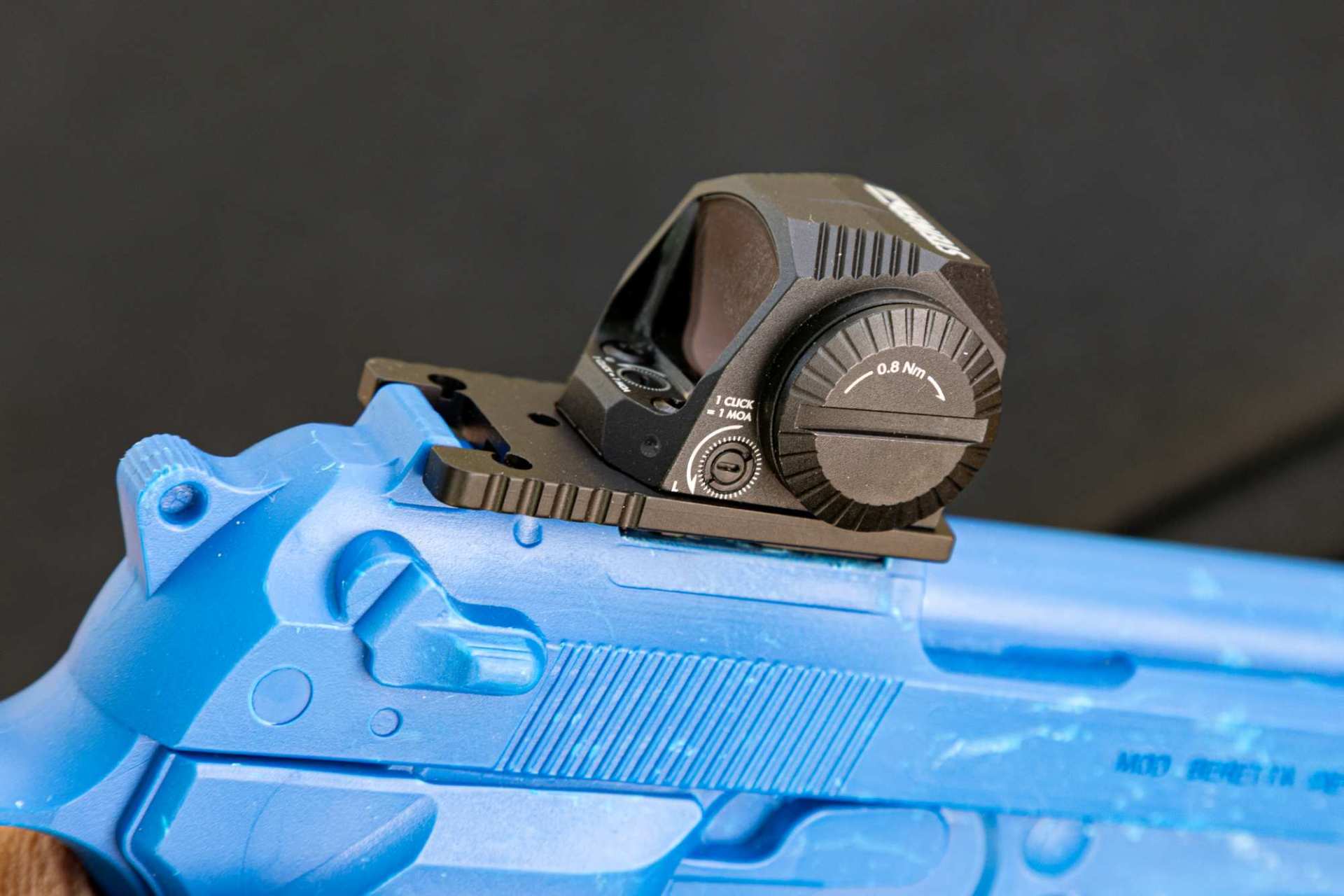
As with its big brother, the compact version of the MPS builds on Steiner's experience in the military field and therefore boasts a very robust sealed anodised aluminum housing, which protects the internal electronics from water, dust and gunshot residue: if Steiner's have been performing in the hands of special forces for years, they certainly won't go wrong during a dynamic shooting match.
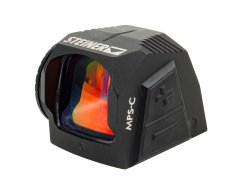
The MPS-C is offered in one variant, with a 1.6 MOA dot. Compared to the progenitor of the series, the brightness settings increase to 10, plus the two compatible with night vision.
Power is supplied by a CR1632 battery, and the RMS-C footprint, together with screws for mounting on the eight most popular platforms, makes installation a breeze.
Here too, we experienced the same optical quality seen on the MPS, with crisp lenses and a vivid, bright dot, allowing quick pointing with both eyes open.
We are looking forward to test firing the two Steiners at the first opportunity. Stay tuned!
Steiner MPS and MPS-C red dots specs
| Manufacturer: | Steiner-Optik GmbH | |
| Model: | MPS | MPS-C |
| Dimensions: | 45x31.6x31.9 mm | 37.1x32.4x27.5 mm |
| Zoom: | 1x | |
| Reticle: | 3.3 MOA or 2 MOA dor | 1.6 MOA dot |
| Brightness Settings: | 6+2 for night vision | 10+2 for night vision |
| Adjustment: | 1 MOA per click, maximum 90 MOA | 1 MOA per click, maximum 50 MOA |
| Parallax Free: | 25 m | |
| Operating Temperature: | -40° +60° | |
| Waterproof: | Yes | |
| Battery: | 1xCR2032 | 1xCR1632 |
| Weight: | 66 g | 32 g |
| Guarantee: | 10 years (2 on electronic components) | |