
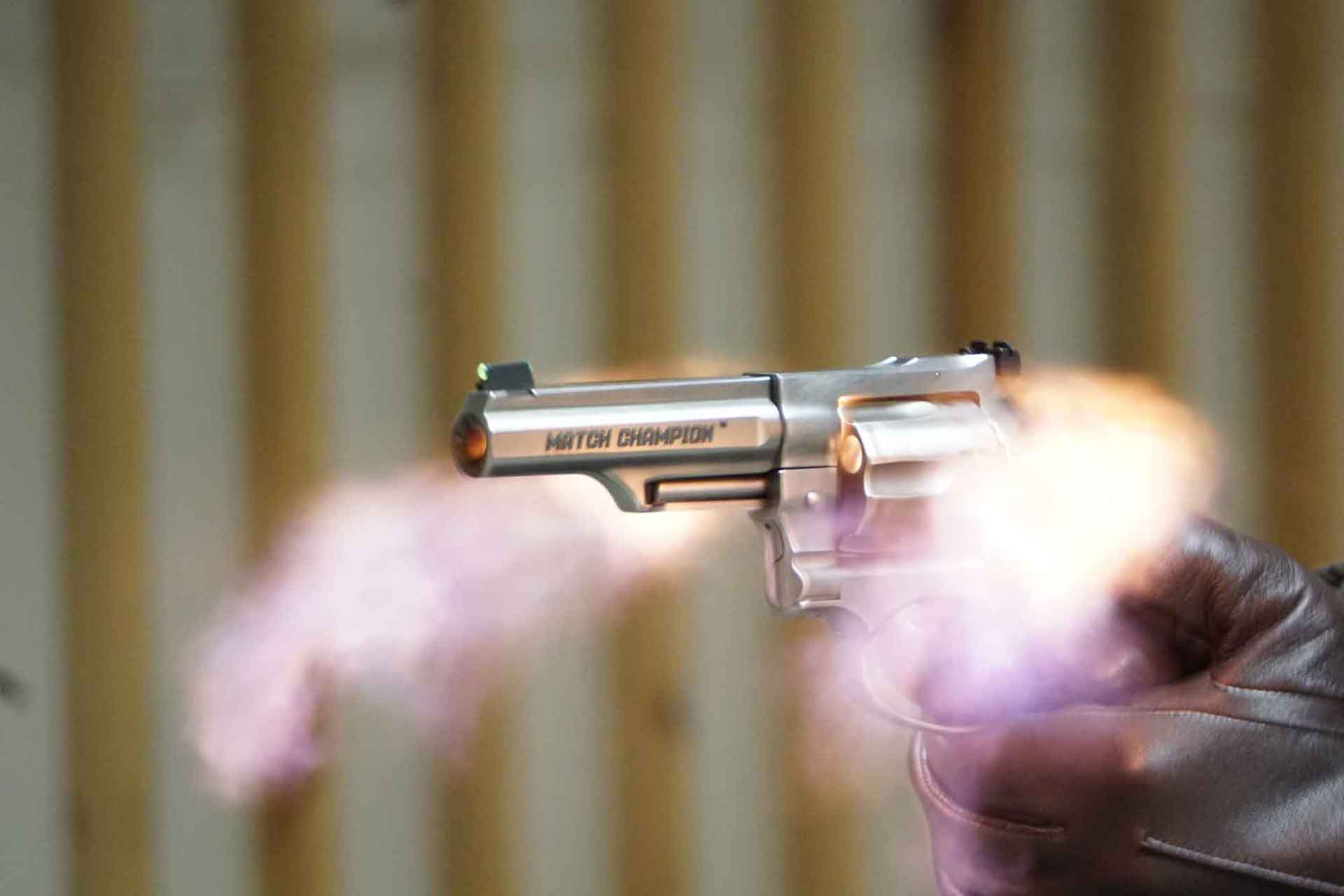
Unburned powder, fine dust containing heavy metals, water vapor, carcinogenic polycyclic aromatic hydrocarbons (PAHs) and various gases: gunshot fumes and smoke constitute a toxic mixture to which sport shooters (inevitably) voluntarily expose themselves. Whilst many are aware of the general risks, notably lead poisoning, hardly any shooter knows exactly which toxins are produced, in what quantities, and how best to protect themselves against them. To answer these questions – and a few more – we must start at the root of the problem: the sources of the pollutants.
These sources of exposure pose health risks when shooting:
Source of exposure no. 1: Primers
Primers filled with reactive substances are used to ignite the gunpowder in a cartridge. Invented in 1818 by the Swiss scientist Joseph Egg, they are still filled today with a mixture of various chemicals. The most important of these are tetrazene, lead trinitroresorcinate and lead(IV) oxide. Foreign or very old ammunition also often contains mercury or silver fulminate. Depending on the manufacturer, derivatives of other heavy-metals such as barium, antimony, copper, silver, tin or zinc, are also present. When all of this is detonated by the firing pin, lead compounds (between 1 and 7 mg per shot) in particular, as well as other substances containing heavy metals depending on the type of primer, are released. These enter the air as microparticles (less than 1 micrometer to several hundred micrometers, or μm), mixed with unburned powder residue. This settles as gunpowder residue on skin, clothing, equipment and shooting range surfaces – a highly problematic fine dust: microparticles smaller than 100 μm are not only inhaled or ingested, but also absorbed through the skin into the human body. And we all know that hands and face always get dirty when shooting – meaning they are heavily contaminated.
Source of exposure No. 2: Powder
From a toxicological point of view, the nitrocellulose powder (NC powder) used in modern ammunition is relatively harmless compared to a percussion cap. When ignited cleanly, it burns almost entirely to produce water, nitrogen, carbon dioxide and carbon monoxide – even without atmospheric oxygen. Unlike the black powder that was once commonly used, this produces hardly any visible smoke. Instead, the "smoke cloud" that forms in front of the muzzle after a shot consists largely of water. Nevertheless, the "gunsmoke" is dangerous. The reason: to improve shelf life, control the burning rate, suppress muzzle flash or enhance barrel durability, the NC powder is mixed with various additives such as plasticizers, sulfate salts, nitrides or azides. When the powder burns, this results in the formation of pollutants such as nitrogen oxides, formaldehyde, ammonia and carcinogenic nitrosamines. And, of course, the gunshot fumes also contains countless tiny particles, in particular traces of abrasion from the bullet jacket and barrel, but also highly toxic polycyclic aromatic hydrocarbons (PAHs), which are produced by the incomplete combustion of organic substances such as gun oil or grease. As with gun smoke, humans can also absorb the toxins from the powder through breathing, ingestion or the skin.
Source of exposure No. 3: Bullets
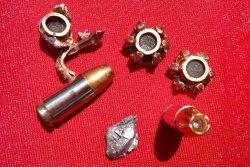
Lead is present – in metallic form – in almost all projectiles. Due to the effect of the propellant gases, which reach temperatures of up to 2,300 degrees Celsius, on the often unprotected lead surfaces of the bullet base, some lead melts and vaporizes with every shot. Lead aerosols are also produced by the friction between the lead surfaces of unjacketed bullets (such as rimfire bullets, shotgun pellets and shotgun slugs) and the barrel bore. In addition, lead-containing fine dust forms as soon as the projectiles strike the bullet trap and break up in the process. When firing typical sporting firearms, between 0.5 and 36 grams of particulate matter are produced per 1,000 rounds, of which 0.2 to 25 grams is lead.
Many sport shooters have elevated levels of lead in their blood. Taken together, all the factors mentioned contribute to this group of people being at increased risk of gradual lead or heavy metal poisoning. For instance, a study conducted by Ludwig Maximilian University of Munich between 2007 and 2016 detected lead levels of up to 555 µg in the blood of shooters. According to the World Health Organization (WHO), levels above 250 µg are already considered a cause for concern.
How to reduce the risks posed by hazardous substances when shooting
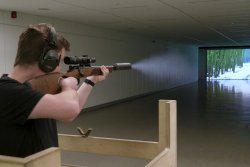
The level of lead pollution in the air of an indoor shooting range depends largely on the efficiency of the ventilation system. The Occupational Health Department of the Swiss Accident Prevention Agency (SUVA) conducted a study over a period of more than 20 years to investigate which factors play a significant role in this regard. To this end, 82 personal measurements were taken between 1991 and 2012 at eight indoor shooting ranges in Switzerland. This formed the basis for the November 2013 factsheet "Lead Exposure in Indoor Shooting Ranges", which defines four criteria for the ventilation of such facilities: firstly, the air should always flow away from the shooters towards the bullet trap (no cross-ventilation). Secondly, both intake and exhaust air should not be located at ceiling level to prevent the stirring up of fine dust. Thirdly, the air velocity should be at least 0.25 to 0.3 m/s. Fourthly, the shooting range should be furnished as sparingly as possible to avoid turbulence or even backflow. In measurements taken in facilities meeting these four criteria, the lead concentration in the air remained below the detection limit (< 0.001 mg/m³) even when using ammunition with high pollutant content.
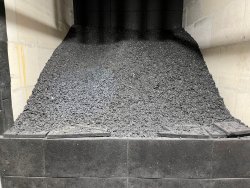
According to the SUVA paper, the type and construction of the bullet trap are also crucial. In particular, "hard" bullet traps (such as steel slats) and poorly maintained sand traps (projectile pockets in the main impact zones; insufficient saturation) generate large quantities of lead-containing dust. "Soft" bullet traps – such as those filled with plastic granules – are far safer. This is because they usually slow the projectiles down without deforming them, and the risk of bullet pits forming is significantly lower than with sand systems.
The composition and design of the ammunition also affect the shooter's lead exposure
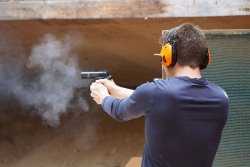
Ammunition also plays a major role in lead exposure. According to a SUVA survey, standard-issue pistol ammunition (Pistol Cartridge 41, lead in the primer, semi-jacketed bullet without gas check) resulted in an average lead exposure for the shooter of 0.628 mg/m³. Rimfire ammunition (.22 LR, mostly lead-containing primers, lead bullets without a jacket) resulted in significantly higher exposures of 0.229 mg/m³ despite a weaker charge, exceeding the permissible level according to the Maximum Workplace Concentration (MWC) values in the air, for which no adverse health effects are expected following eight hours of exposure per day; for lead compounds: 0.1 mg/m³). In the case of "Nontox" ammunition (= primers free of lead, antimony, mercury and barium; full-jacket bullets with a gas check), however, the lead concentration fell below the detection limit.
In short, people who shoot frequently should keep the following in mind to protect their health:
Be careful when choosing a training location and ammunition! Even though the average lead concentration in the air within the breathing zone, as measured by SUVA, was 0.813 mg/m³ — well above the MWC limit of 0.1 mg/m³ — according to the aforementioned factsheet, “there was generally no evidence of unacceptably high levels of inhaled lead exposure”. However, this is only because shooting sports are usually of limited duration (around two hours) and, as a rule, are not practiced on a daily basis. This means that all professional or sport shooters who train intensively and regularly (or are required to do so) should take a close look at their ventilation systems and bullet traps. Furthermore, they should – provided it is available in the chosen caliber – use non-toxic ammunition. This does increase costs – but, as we all know, your own health is priceless!