
The Story of CCI: From Speer to a World-Class Brand
CCI's history is inseparable from that of Speer, one of the pioneering names in the reloading industry. Today, CCI is known worldwide for its rimfire ammunition and primers, but its origins trace directly back to the entrepreneurial vision of brothers Vernon and Dick Speer. Inspired by the success of his brother Vernon's Speer Bullet Works, Dick Speer decided to follow a similar path by founding Speer Cartridge Works Inc., the company from which CCI would eventually emerge.
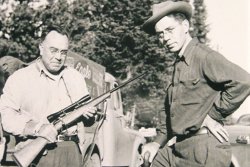
As early as the 1940s, Vernon Speer had relocated to Lewiston, Idaho, where he began manufacturing bullets for the growing handloading market. After initially operating out of a former grocery store, the rapid expansion of Speer Bullet Works soon required a move to a much larger facility on the banks of the Snake River, significantly increasing production capacity.
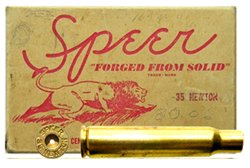
CCI's roots can be traced to the "Forged From Solid" brass cartridge cases manufactured by Speer Cartridge Works Incorporated. Encouraged by his brother's success, Dick Speer also moved to Lewiston. A mechanical engineer by training, he left his position at Boeing in Seattle to focus on manufacturing solid-brass cartridge cases. He initially rented a small workspace inside the Speer Bullet Works facility, where he established Speer Cartridge Works.
Before long, however, Dick realized that manufacturing cartridge cases alone was not sufficiently profitable. He shifted the company's focus to the design and production of primers, partnering with Lithuanian-born chemist Victor Jasaitis to develop the company's first commercial primer products.
From a Poultry Farm to Cascade Cartridge Inc.

Production began in a modest former poultry farm purchased in Lewiston, just a short distance from the Speer Bullet Works factory. The farmhouse became the company's offices and warehouse, while the surrounding agricultural buildings—including the chicken coop—were converted into production and quality-control facilities.
A major turning point came in the mid-1950s when the company secured an important contract to supply primers for military applications. From that point forward, government contracts became an increasingly significant part of its business.

At the same time, Dick Speer continued expanding the company's presence in the civilian reloading market. To avoid confusion with Speer Bullet Works, the business was officially renamed Cascade Cartridge Inc., later universally known simply by its initials: CCI.
During this period, CCI also introduced to the commercial market several primer lines originally developed for military use, including the No. 200 Large Rifle, followed by the No. 300 Large Pistol, No. 400 Small Rifle, and No. 500 Small Pistol primers. Although refined several times over the decades, these products remain in the catalog today and continue to be trusted by handloaders around the world.
As production expanded during the late 1950s, new industrial buildings were constructed to house tool-and-die manufacturing, metalworking operations, and research and development dedicated to primer chemistry and ignition systems.
During the same period, CCI also began manufacturing industrial rimfire cartridges for powder-actuated fastening tools. The expertise gained in this field laid the technological foundation that would eventually allow the company to enter the sporting rimfire ammunition market.
CCI Enters the Rimfire Market and Continues Expanding Its Product Line
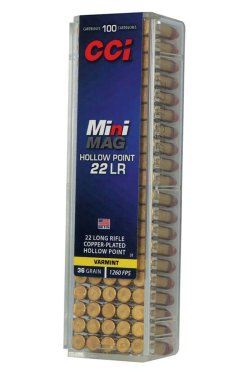
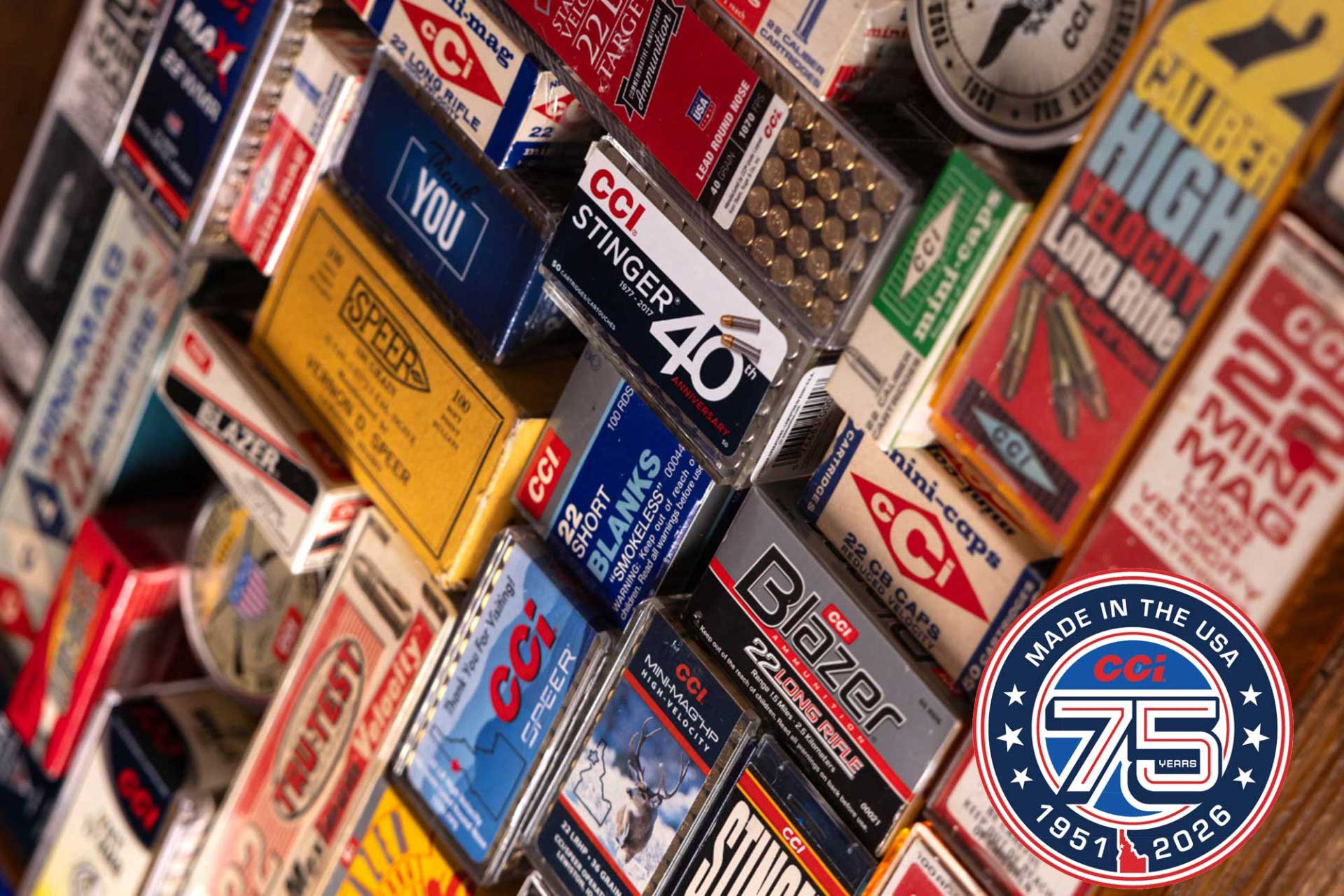
In the early 1960s, CCI officially entered the commercial rimfire ammunition market. After several years of development, the company introduced its HySpeed, Dart, and Target product lines, which later evolved into the now-famous Mini-Mag, Mini-Match, and Mini-Group families. Among them, the CCI Mini-Mag quickly became one of the company's flagship products and remains one of the most respected rimfire loads on the market today.
By the late 1960s, CCI had also introduced the now-iconic plastic ammunition boxes with sliding lids, a packaging design that would eventually become the industry standard for .22 caliber rimfire ammunition.
Throughout the 1970s, the company's rimfire lineup continued to grow. Among the most significant introductions were the Maxi-Mag, developed for the .22 Winchester Magnum Rimfire (.22 WMR), and the legendary Stinger, a hyper-velocity cartridge designed to deliver exceptional performance for varmint hunting and recreational shooting. These were joined by numerous specialized loads developed for hunting, target shooting, and competitive disciplines.
Another highly successful innovation was the CCI Shotshell, introduced during the same decade for controlling small pests and vermin - especially snakes. Instead of a conventional bullet, these cartridges used a distinctive blue plastic capsule filled with fine shot. Initially chambered in .22 WMR, the Shotshell line was later expanded to include .22 Long Rifle and several popular handgun calibers.
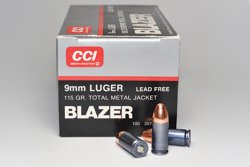
At the same time, CCI broadened its centerfire ammunition offerings. In 1980, the company introduced the Blazer line, featuring aluminum cases as a cost-effective alternative to traditional brass. Designed primarily as an economical training round, the Blazer family remains in production today and includes both aluminum- and brass-cased variants intended for recreational shooters and high-volume range use.
During this same period, CCI also continued refining its primer technology, introducing increasingly reliable designs specifically engineered to function flawlessly in the modern progressive reloading presses that were becoming increasingly popular among handloaders.
New Cartridges and Continued Innovation
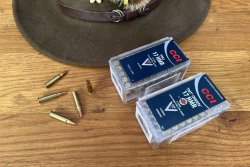
Beginning in the 1990s and continuing into the early 2000s, CCI significantly expanded its product portfolio. Working in close partnership with Hornady, the company helped develop the groundbreaking .17 HMR and .17 Mach 2 rimfire cartridges, both of which quickly established themselves as benchmarks for varmint hunting and precision rimfire shooting. At the same time, CCI introduced numerous new hunting loads and innovative bullet designs tailored to a wide range of sporting applications.
As demand for lead-free ammunition increased, CCI responded with dedicated product lines such as TNT Green and Copper-22. These were later joined by the Clean-22 family, featuring bullets coated with a proprietary polymer designed to reduce barrel fouling while minimizing airborne lead exposure during firing.
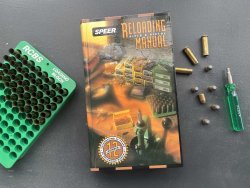
The company also invested heavily in expanding and modernizing its manufacturing facilities. Among these is the Southport plant near Lewiston, dedicated to producing primer systems and components for both the commercial and defense sectors.
The close relationship between CCI and Speer, both founded through the vision of brothers Vernon and Dick Speer, has now continued uninterrupted for more than seven decades. Today, the two brands continue to operate in close synergy and, together with several other historic American ammunition manufacturers, are part of The Kinetic Group, a company owned by Czechoslovak Group (CSG).
Combined, the CCI and Speer manufacturing operations employ approximately 1,100 people and run 24 hours a day, seven days a week. Their three production facilities encompass more than 350,000 square feet (approximately 32,500 m²) of manufacturing space dedicated to producing ammunition, bullets, and primers for the civilian, sporting, hunting, law-enforcement, and military markets.