

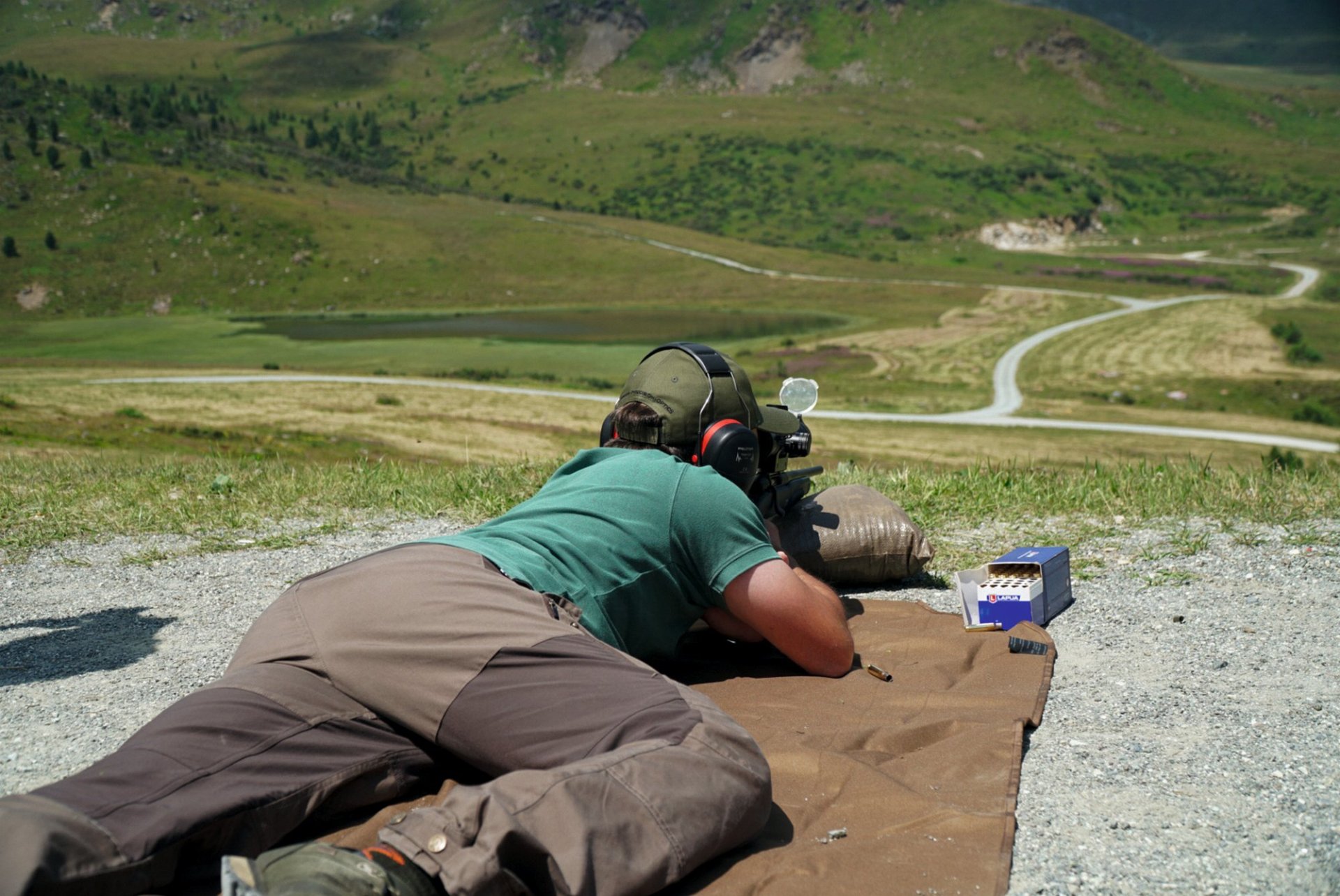
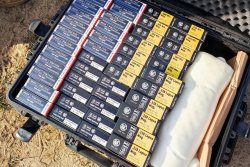
Long range is high-tech and shooting sport at its best. Even at the trade fairs that all4shooters.com regularly reports on, long-range rifles are often the focus of visitor interest. In addition to static competitions such as F-Class or Benchrest (generally at 300 meters, mostly prone or, with a bipod, up to 1,200 metres), there is now also the ELR – Extreme Long Range shooting, with distances beyond the two-kilometer mark as a further variant, which is even more demanding in terms of both equipment and cartridges. The "King of 2 Miles" competitions, now held not only in the "inventor country" of long-range shooting, the USA, but also in Chile and France, are regarded as a kind of master test. A "spotter" is indispensable in almost all long-range matches, who observes the targets and hits with a spotting scope alongside the shooter and provides valuable tips on wind direction, for example. Accordingly, there are now spotter binoculars from various manufacturers such as GPO that have the same reticle as the shooter's riflescope, which simplifies aiming advice since both use the same crosshair system.
Modern relatives of classic long range shooting are the Precision Rifle Series and rimfire long range shooting
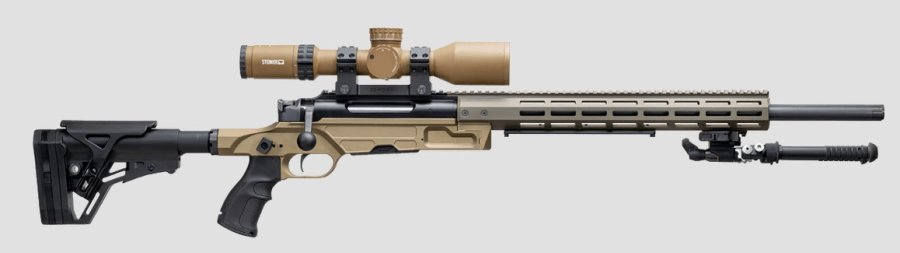
PRS (Precision Rifle Series) is much more active: here, shooters mainly use bolt-action rifles in dynamic courses with fixed time limits of usually 90 or 120 seconds to hit multiple targets at up to 1,000 yards (914 meters) while changing positions and shooting stances.
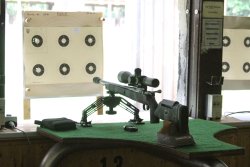
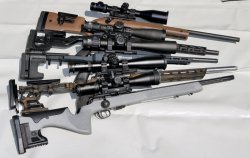
For almost five years now, long range shooting (LR for short) with rimfire rifles has developed into a segment in its own right due to the lack of shooting ranges in many cramped urban areas, but also for cost reasons. Here, beyond the previous 100-meter limit of standard shooting club competitions, there are also opportunities to test the performance of the rifle, ammunition and, of course, the optics up to 200, sometimes even 300 meters.
For reasons of space, we are only presenting the modern, sporting aspects of long-range shooting in this article and refer you to numerous more detailed articles that have already been published for more in-depth information – for example on the history of the development of the long range or on military operations and sniper rifles, both of which represent independent and extensive subject areas.
Long-range shooting requires ballistic knowledge, the ability to read the wind, and being able to withstand the elements
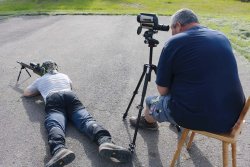
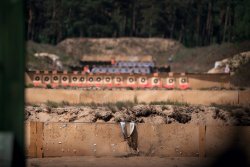
Let's start our overview with the static rifle disciplines from 300 meters upwards. The annual Imperial Meeting in Bisley, England, is just as much a part of this as the Palma Matches, which have been held since 1876 (!) and have been regarded as the official world championship for long-range shooters since 1992, taking place every four years, again in 2028. Fifteen shots are fired at each of the three distances: 800, 900 and 1,000 yards.
The F-Class competitions were named after the Canadian George "Farky" Farquharson, who in the 1990s invented a new shooting discipline by using a scope for magnification and a rest to support his rifle due to his age, as F-Open for suitable calibers up to 8mm or as F Target Rifle in .223 Remington or .308 Winchester – the latter using a bipod at the front and a separate rest at the rear.
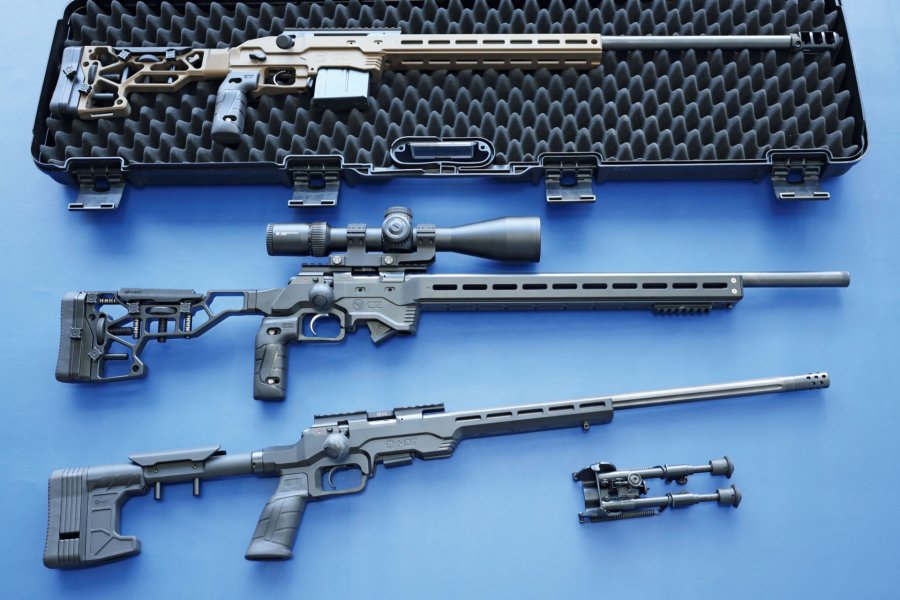
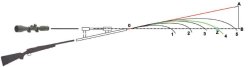
In theory, the layman might think that the firing distance would be relatively unimportant because long range targets are correspondingly larger. However, this is contradicted by the physical laws of external ballistics and those of nature: while projectiles are largely stabilized by spin from the muzzle, they do not travel in a straight line to the target. Especially at long range, the trajectory curve, depending on the caliber and the initial velocity of the projectile, makes a significant upward arc. In other words, the bullet drop relative to the bore axis can easily amount to several meters at the target. This is compensated for on the rifle by a scope with an elevation adjustment range optimized for long range, and a forward cant of the mounting rail.
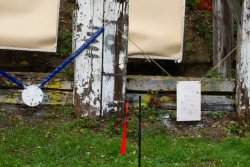
This leaves the most difficult factor at long range: reading the wind to account for its effects on the bullet's trajectory when aiming. In reality, this is more of a rough estimate of the wind, which acts on the projectile from all sides during its flight. You can only really estimate the wind conditions at the firing point, but hardly at the target or on the way there. Winds can also change direction spontaneously, for example behind a tree, or a clearing can introduce unpredictable crosswinds into the shooting range. And raindrops add an element of chance to the sport. Years of experience and various aids, from observing the grass and bushes to measuring the wind speed with a device, are the keys to success. But on a previously unknown shooting range, even excellent shooters will not hit the target with the first shots. Besides paper targets, simple steel plates have also proven effective as target media, their sound providing immediate feedback upon impact. "Immediate" is relative, as it can take a few seconds depending on the distance. But by then the sound of the shot will have faded away...
Further links:
- Test report: Haenel LR/One rifle
- Mossberg Patriot Long Range in .308 Win. and 6.5 Creedmoor
- Test report: CZ 457 MDT ACC rimfire match rifle in .22 LR
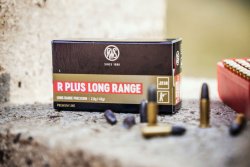
- Test: RWS Long Range Match, RWS R Plus Long Range and RWS Target Elite Plus rifle cartridges
- Long range optics: Kahles K540i and K540i DLR riflescopes
- Accessories for Long Range and PRS at Strobl.cz
- Precision Rifle Series website
- ICFRA International Confederation of Fullbore Rifle Associations
- Longrange.eu: tips for beginners and current dates