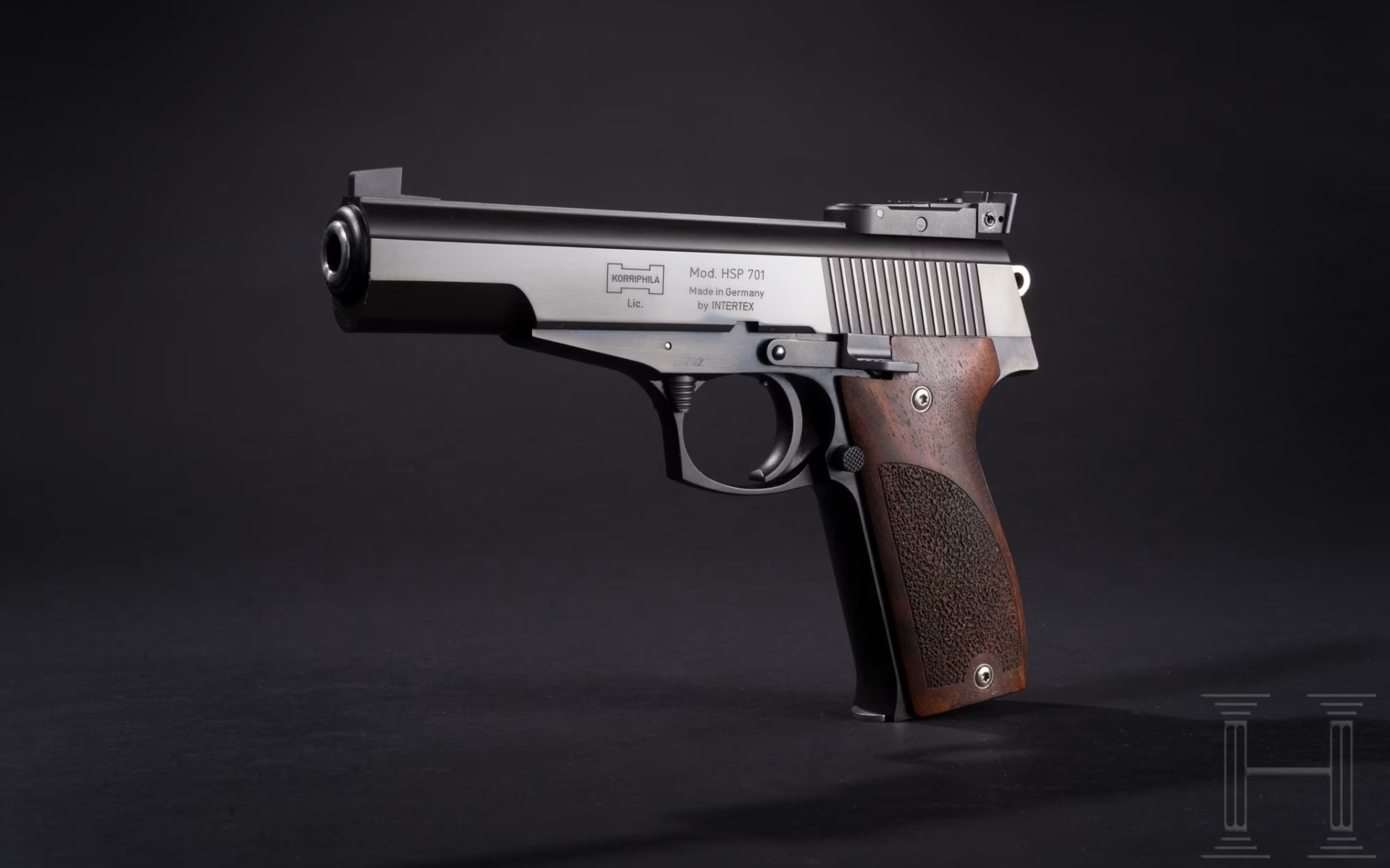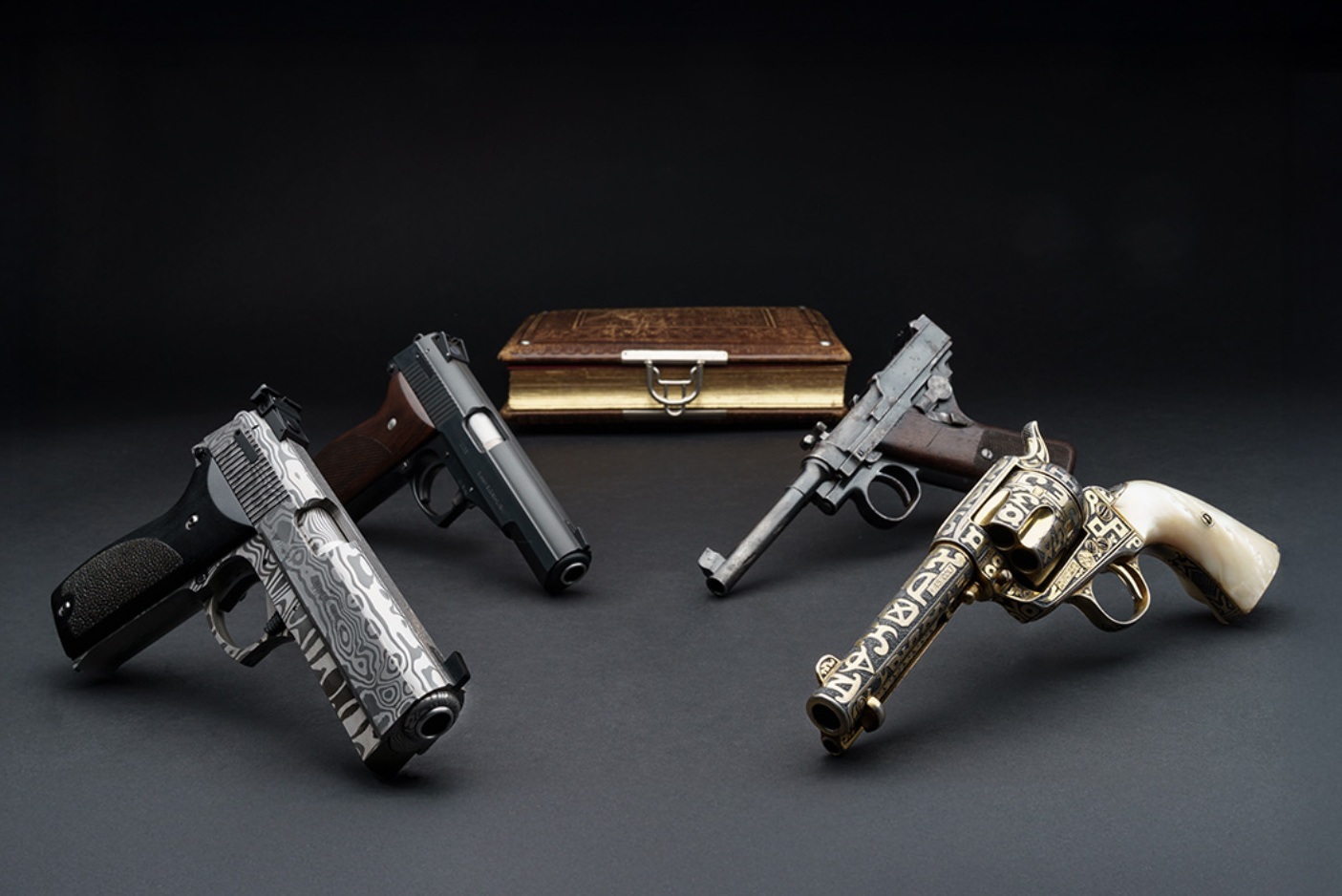

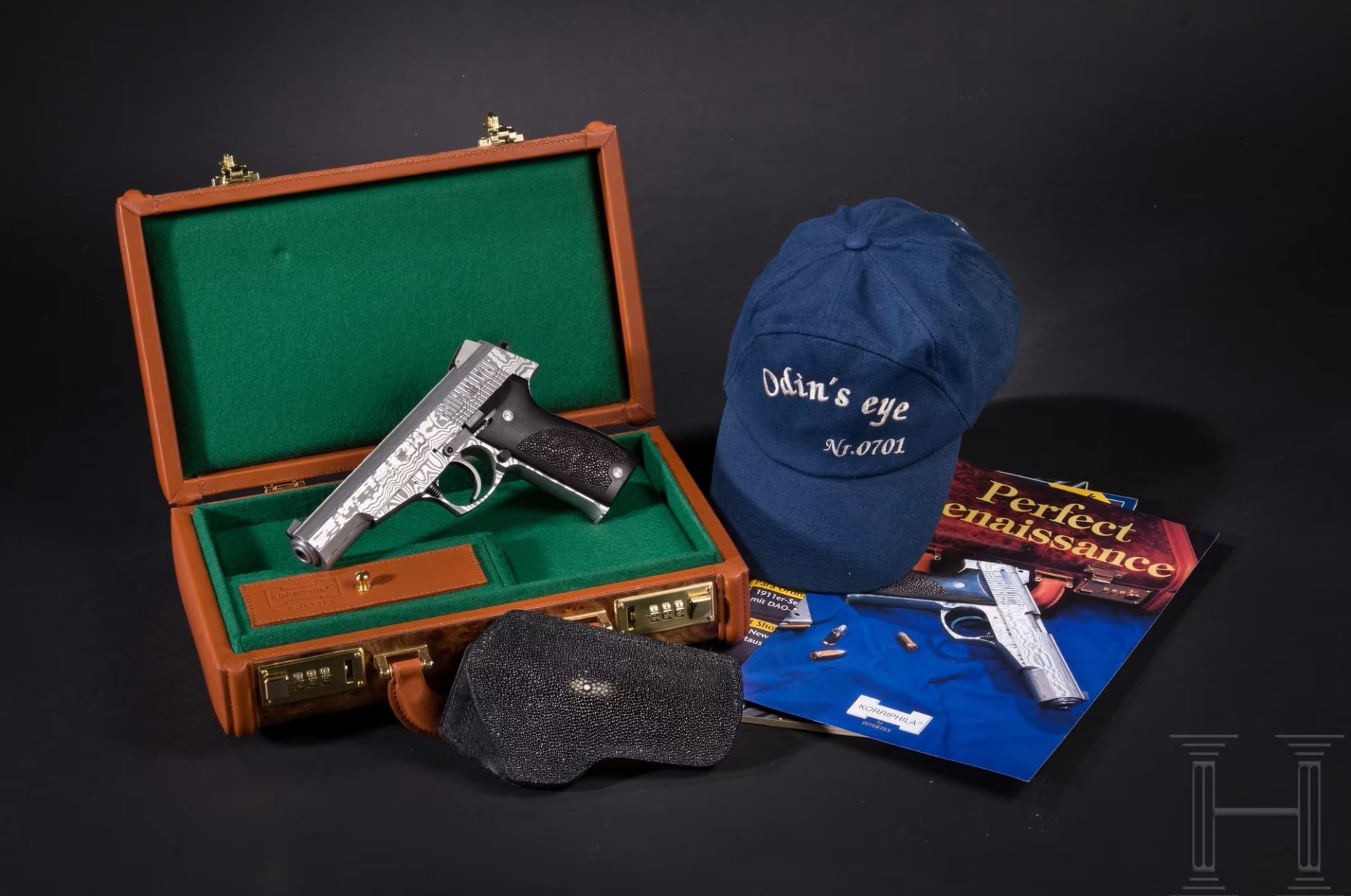
Predictions were fully met for lot 2289, a Korriphila HSP 701 pistol that belonged to the German champion Dieter Krause, known as the "Weltmeisterpistole" (World Champion Pistol). Starting from 13,000 euros, this relatively recent pistol (it bears proof marks from 1997) sold for a remarkable 36,200 euros, almost three times the already high starting price. This sale testifies to a trend that has become established in recent years, namely the shift in record prices from the world of fine long guns to that of contemporary pistols. It is no coincidence that on the second step of the podium we find another modern pistol, the Kort in 9x19mm with serial number P090 (lot 2306), which we had already reported in our previous article. Even in this case, the relatively high starting price – 4,800 euro – did not deter collectors, who fought it out in a fury of bids. In the end, the auctioneer's hammer closed the bidding once it reached the 14,800 euro mark, more than three times the starting figure. The same result, with due proportion, for the Korriphila HSP 701 "Odin's Eye" semi-automatic pistol made entirely of Damascus (lot 2288). The "rule of three" was confirmed – almost: the sale price started at €8,000 and was almost trebled. The gun was in fact sold for the nice sum of €22,000.
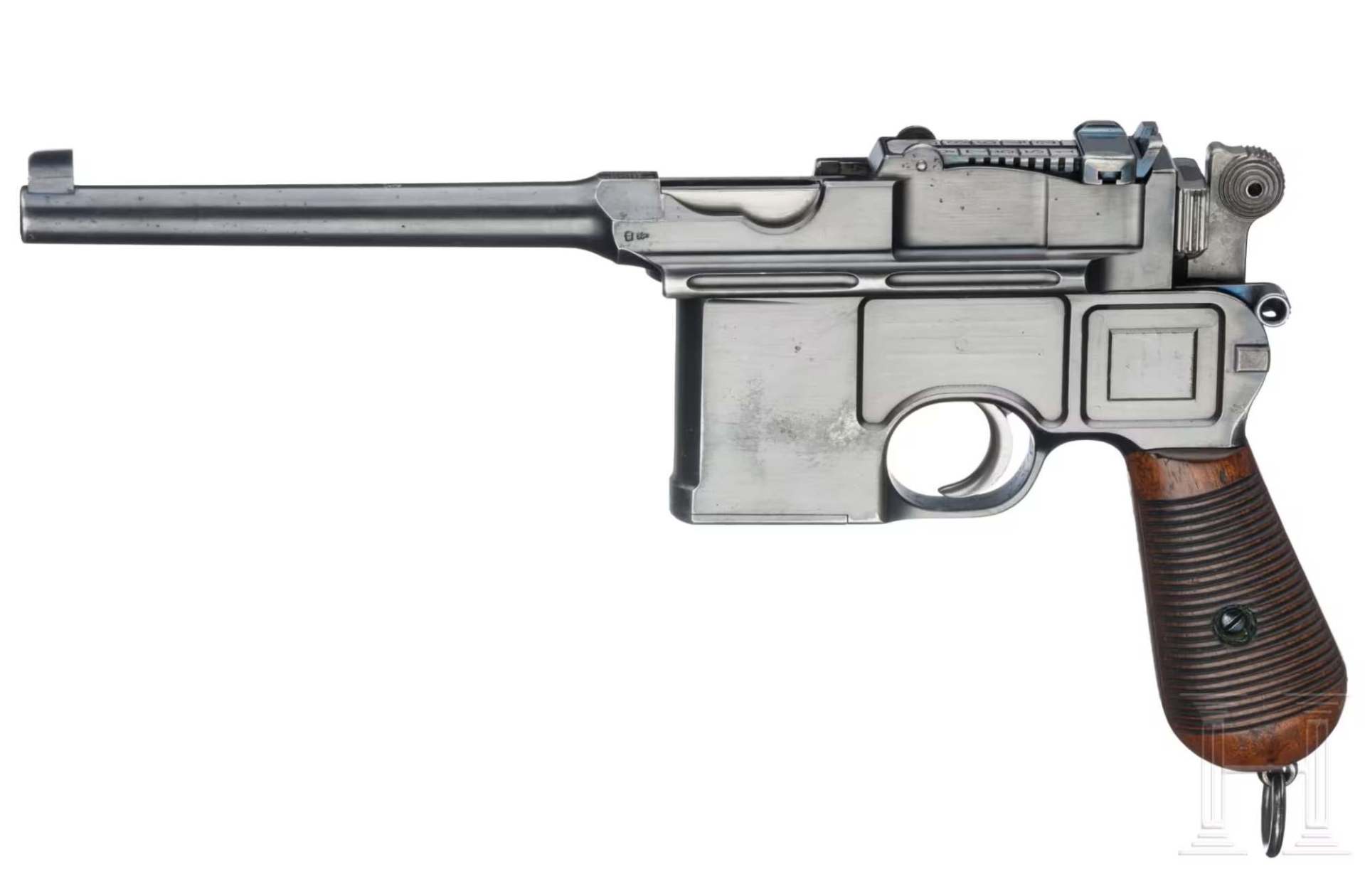
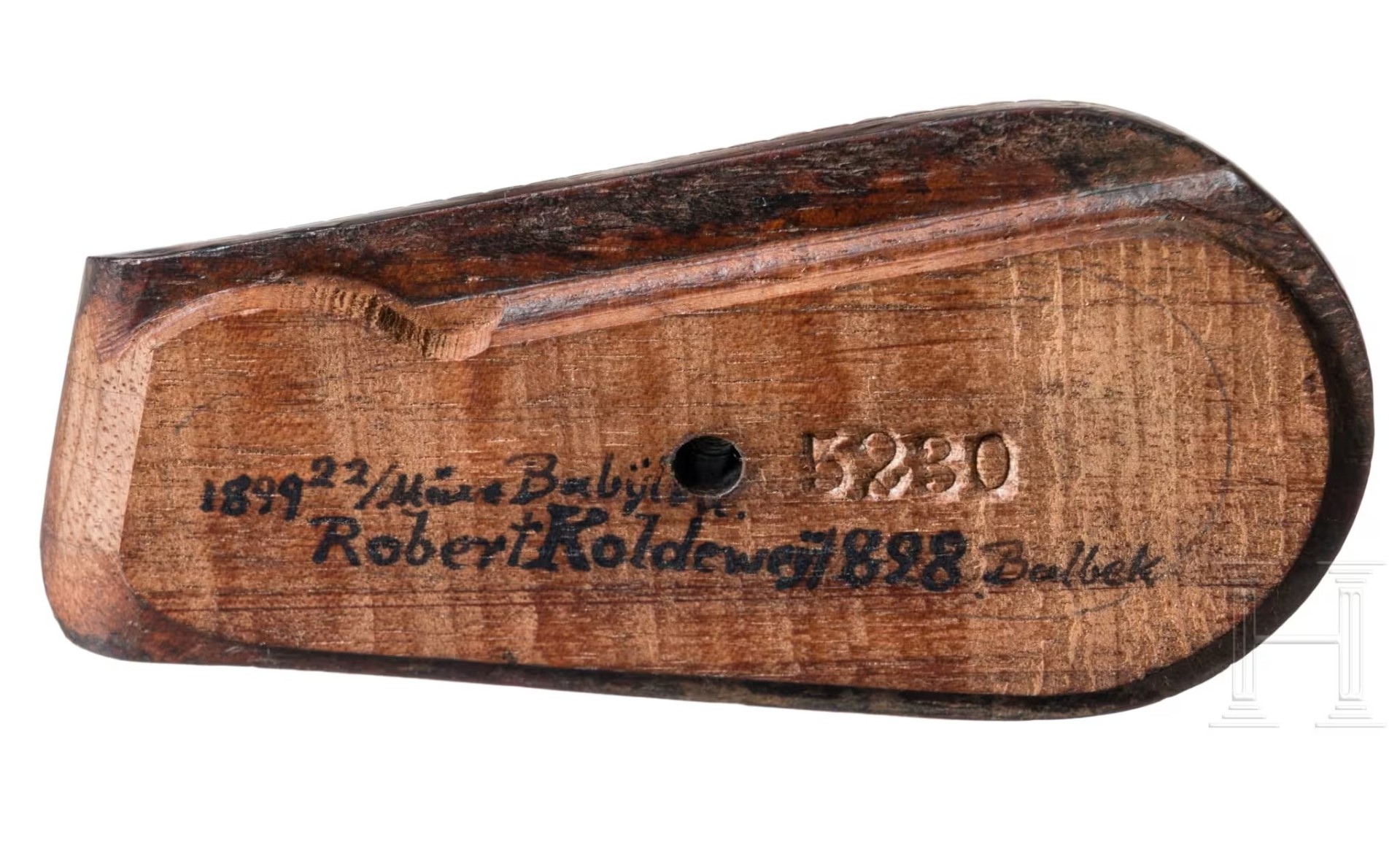
As we have seen, besides objective rarity, another factor that contributes to raising the value of any collector's item is the fact that it is demonstrably linked to someone famous. Confirmation of this comes from lot 2310, a Mauser model C96 "Conehammer" pistol with stock-holster that belonged to the legendary German archaeologist Robert Koldewey (1855-1925) who discovered the remains of the city of Babylon in modern-day Iraq. To defend himself during his travels in the mysterious Orient, this real-life Indiana Jones carried this semi-automatic pistol with very interesting markings. On the inside of the right grip is the ink inscription "1899 22/März Babylon Robert Koldewey 1898 Balbeck", while on the outside is engraved the monogram 'PX' (Chi-Rho), the first two letters of the Greek word "Christòs", i.e. Christ, and the number "98". The pistol is chambered in 7.63mm Mauser, has the serial number 5230. It was made in 1898 and stamped with Oberndorf proof marks. The pistol is in excellent condition, accompanied by a wooden stock-holster and a letter of authentication. Here too, the starting price was greatly exceeded: from a base price of 4,500 euros, it went up to 22,000.
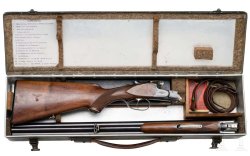
It therefore seems that pistols have ousted rifles and shotguns from the Olympus of the most desired collector's firearms, but there are always exceptions. It was not difficult to predict a staggering sum for lot 3355, one of the most coveted and desired guns among collectors. We are talking about the legendary Drilling Sauer & Sohn M30 "Luftwaffendrilling", which Hermann Historica offered complete with its original case and preserved in exceptional condition. This particular version of the M30 Drilling was manufactured by J.P. Sauer & Sohn for the Luftwaffe during the Second World War. It was not a combat weapon in the strict sense of the word, but a survival gun intended for German crews operating mainly on remote fronts, such as North Africa. The aim was to provide downed pilots with a versatile firearm to find food and defend themselves while waiting for rescue. For this, the Drilling system (three barrels) was adopted: two smoothbore barrels in 12-gauge for hunting small animals and one rifled barrel in 9.3x74R for larger game or self defense. The starting price was 12,000 euro, but the collector who bought it was prepared to spend 17,800 and, to our knowledge, he still got off easy.
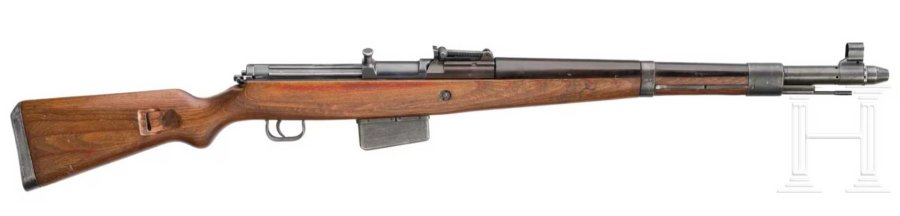
The real surprise is also further confirmation of the great interest in service weapons from the Second World War at this time. Lot 3356 was an interesting Gewehr 41 rifle in 8x57 JS, in the rare variant produced by Berlin-Lübecker Maschinenfabrik, Lübeck (BLM) with the wartime code "duv 43". The serial number is 7349d, consistent on all parts and the finish is 98 per cent. The Gewehr 41 was one of the first semi-automatic rifles adopted by the Wehrmacht during the Second World War and utilized a gas trap operating system that worked by capturing combustion gases at the muzzle. Interestingly, this system was invented by a Danish engineer called Søren H. Bang. With an auction base of 4,500 euro, this hen's tooth went for 17,800 euro, just under four times the starting price.
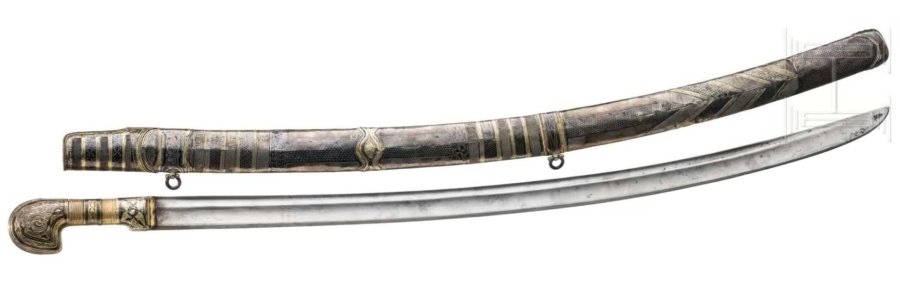
There was also a fierce battle for edged and antique weapons: the Ottoman Shaska dating from around 1870 that we showed you in our preview (lot 41039, with a starting price of 6,000 euro) was auctioned off for an impressive 26,000 euro.
As always, after the end of the live auction, which can also be enjoyed online, there will still be time for bargain shopping. In fact, the post-auction sale that will run until 30 June allows enthusiasts to look for great bargains among the unsold pieces.
You can find the auction catalogues and the complete sales results on the Hermann Historica website under Past Auctions.