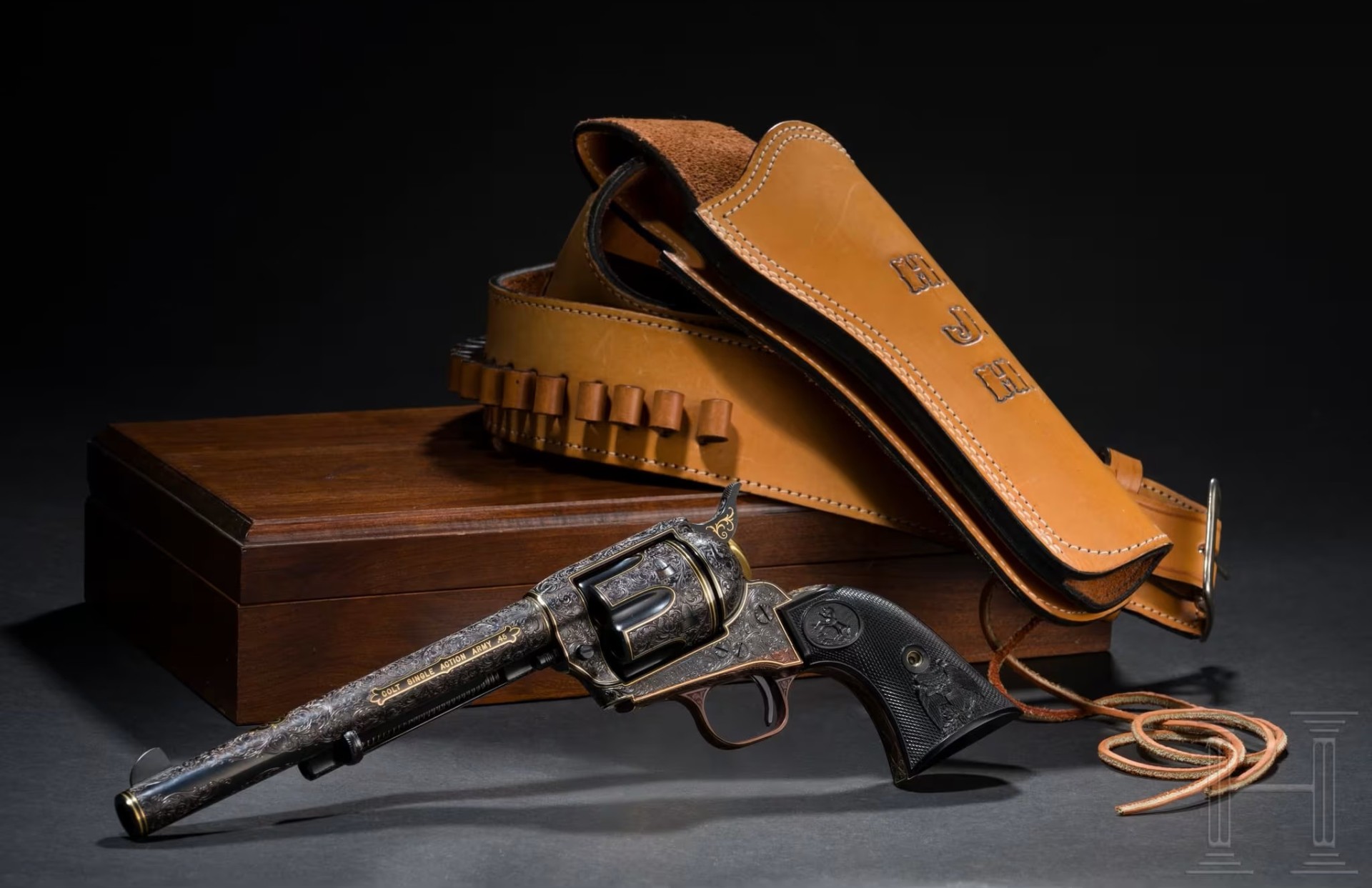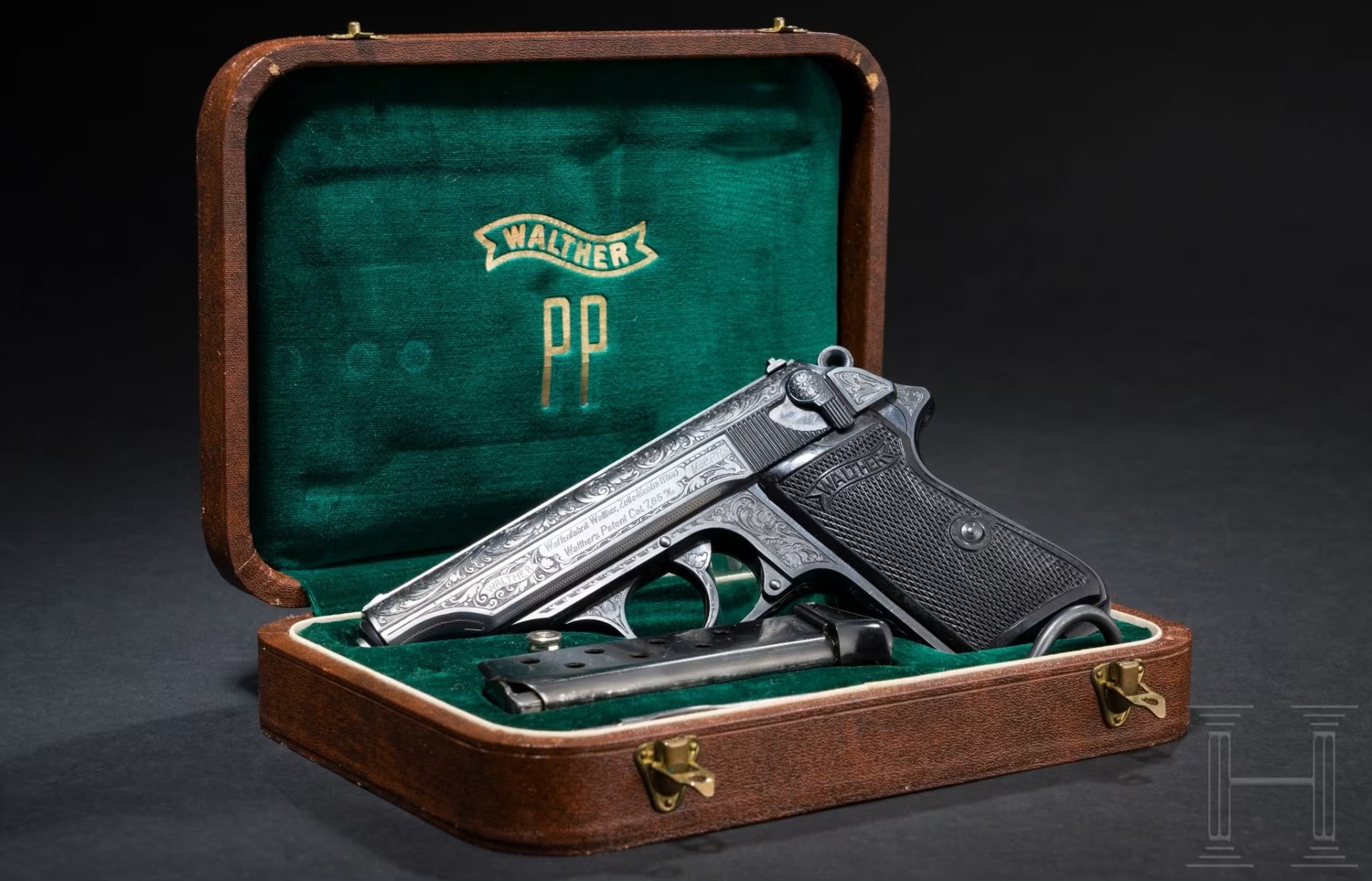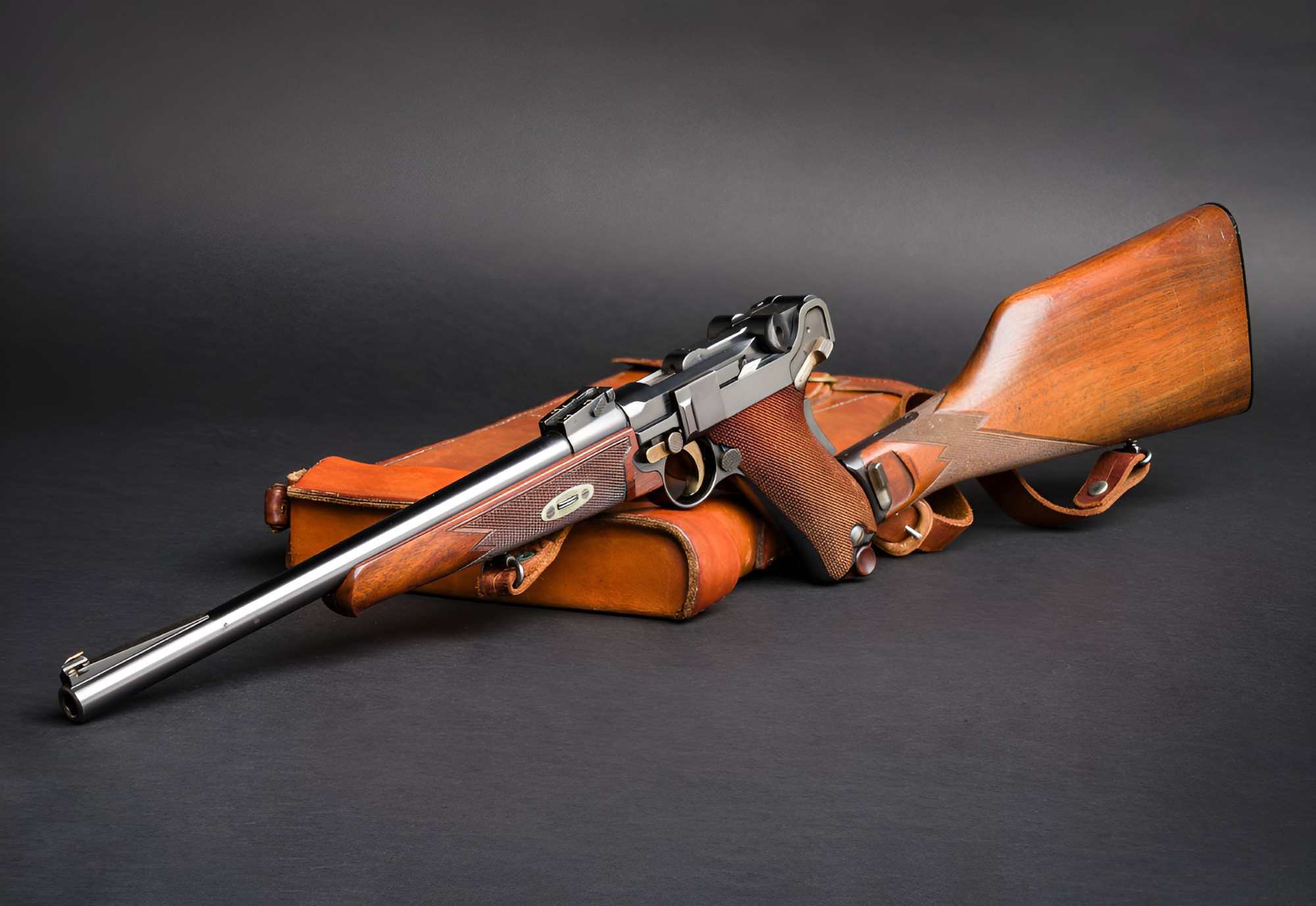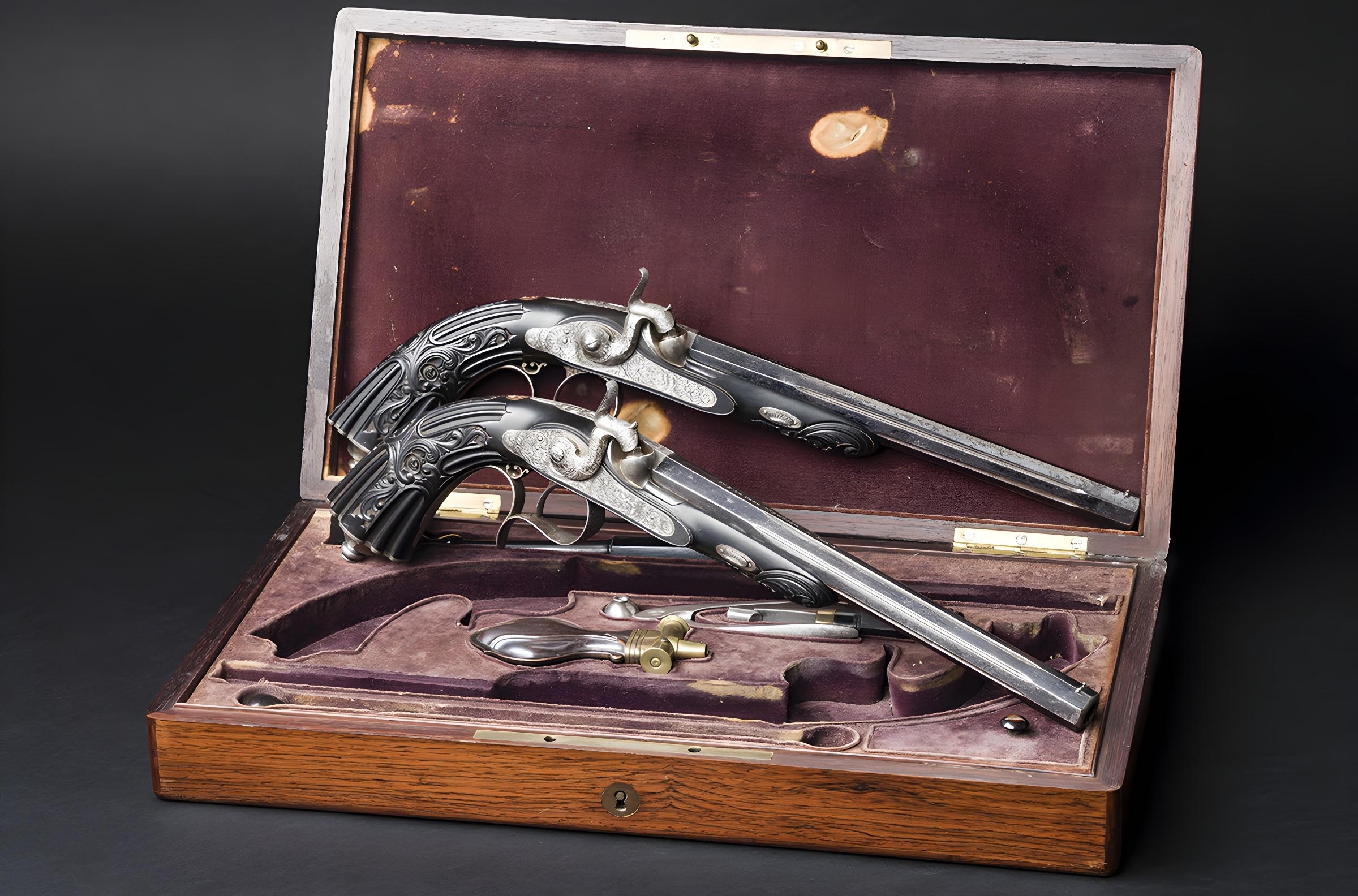

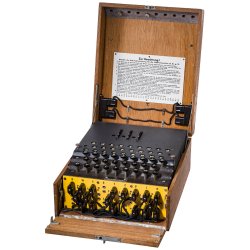
Hermann Historica GmbH, headquartered in Grasbrunn near Munich, is one of the world's leading auction houses specialising in the fields of arms and armour, firearms, antiques, orders and decorations, historical objects, militaria and hunting collecting. For 2026, it has also gone big, organising a round of auctions starting on 19 May and ending on 23 May. The first day will be entirely dedicated works of art outside the world of guns, while the following three days will focus more on firearms and military collecting. On 19 and 20 May, the auction of historical and modern firearms will reserve strong emotions for those looking for unique pieces with which to enrich their collection. On 21 May, Arms & Armour, Antique Firearms will make collectors' hearts beat faster. The last two days will be dedicated to military collecting and will respectively offer "Orders and Military Collectibles until 1918" and "Orders and Military Collectibles from 1919 onwards". Again, the pieces up for auction are of absolute collector value, and very high figures are already expected for incredible pieces such as a specimen of the Enigma machine cipher device.
The sales will take place at Hermann Historica 's headquarters in Grasbrunn, near Munich, Germany, where the lots can be physically previewed during the pre-sale, which will be held from 12 to 15 May 2026 from 11 a.m. to 5 p.m., preferably by scheduling an appointment in advance. The auction can also be followed online, and on the Hermann Historica website you will find all the information you need to take part comfortably and discreetly.
But let's start with our highlights with sale number 108 of 19-20 May:
Lot 2004 is a percussion revolver-shotgun made by Johann Conrad Fischer (Schaffhausen, 1773-1854). This interesting gun in .55 caliber (black powder) bears serial number 21. The barrel is 75 cm long with an almost bore and wide upper rib tapering towards the muzzle, and a bead front sight. The barrel rib extends out over the cylinder and connects to the receiver. The barrel has been re-bronzed. Five-shot, rotating, fluted cylinder with remnants of the original finish; the nipples are missing. It is closed at the back by a flash guard attached to the receiver, while the four open chambers are covered by a sheet metal disc at the front.
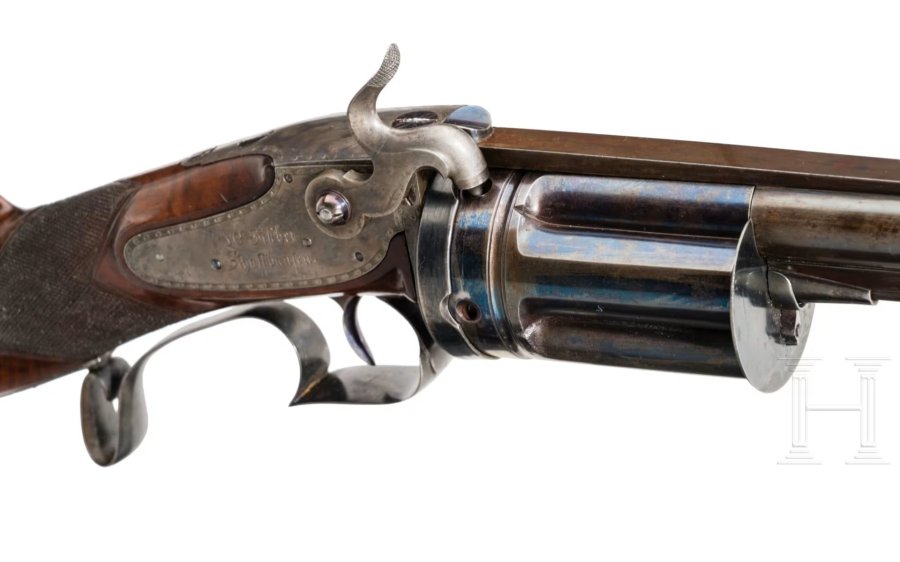
Original, color case hardened action with hammer-fired action and back-action spring on the right The hammer have a minor hairline-crack. Lock plate is marked "J.C. Fischer Schaffhausen". Richly grained stock with finely chiselled checkering and German cheek piece and iron butt cap. The ramrod is not original. A sling swivel is present. To operate the gun, after cocking the hammer, the cylinder must be pulled back firmly to the breech section to be moved further into the safety position. Then it can be rotated around a chamber before it snaps forward into its final position by means of spring tension. This rare combination of revolver and shotgun appears to be slightly reworked. Johann Conrad Fischer was an important European gunsmith: according to Der Neue Stöckel he visited Pauly and LePage in Paris and Joseph Egg in London. This is a piece of absolute rarity, in excellent condition. According to research, no other similar specimens are known. The starting price is 6,800 euros.
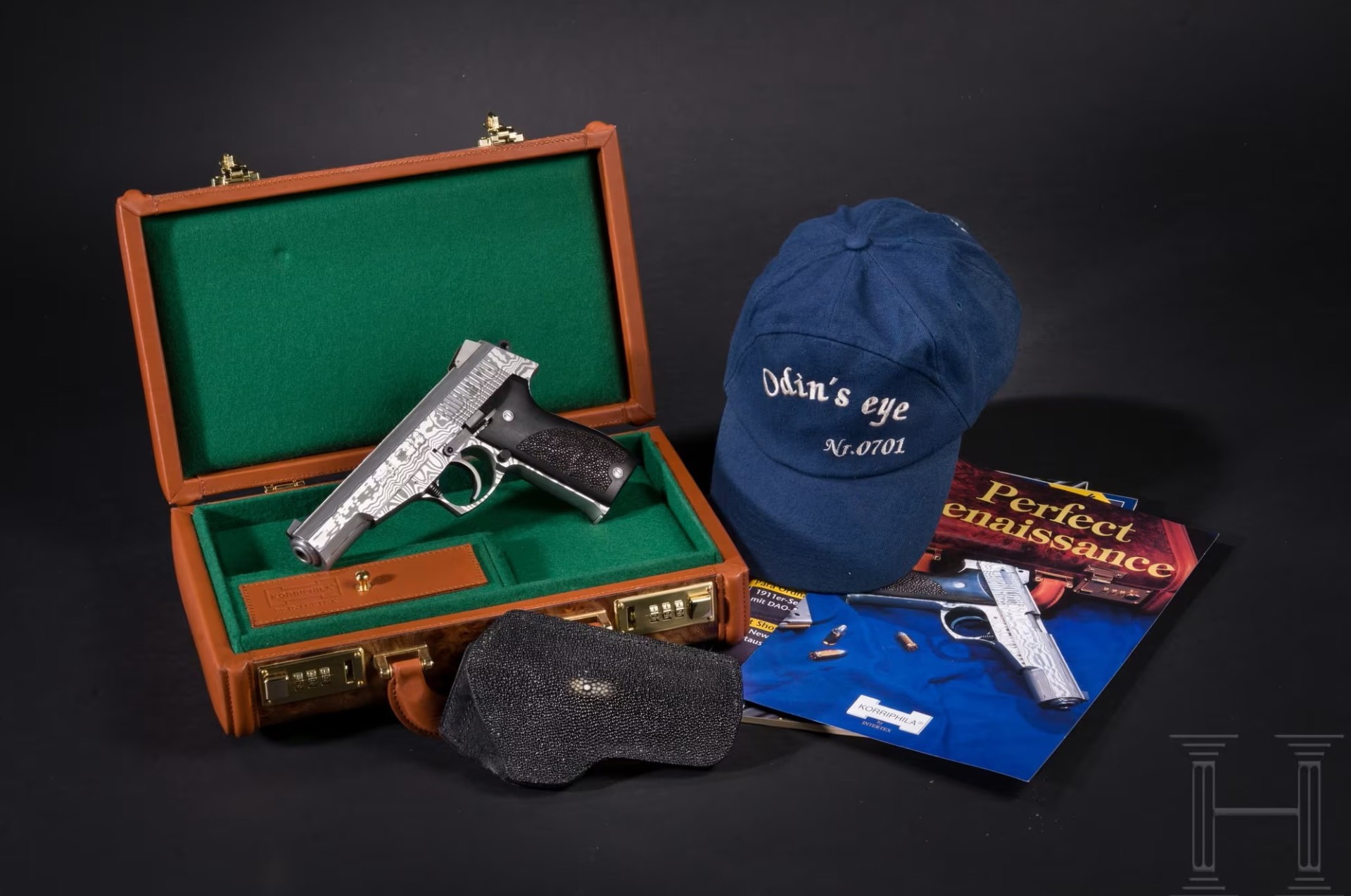
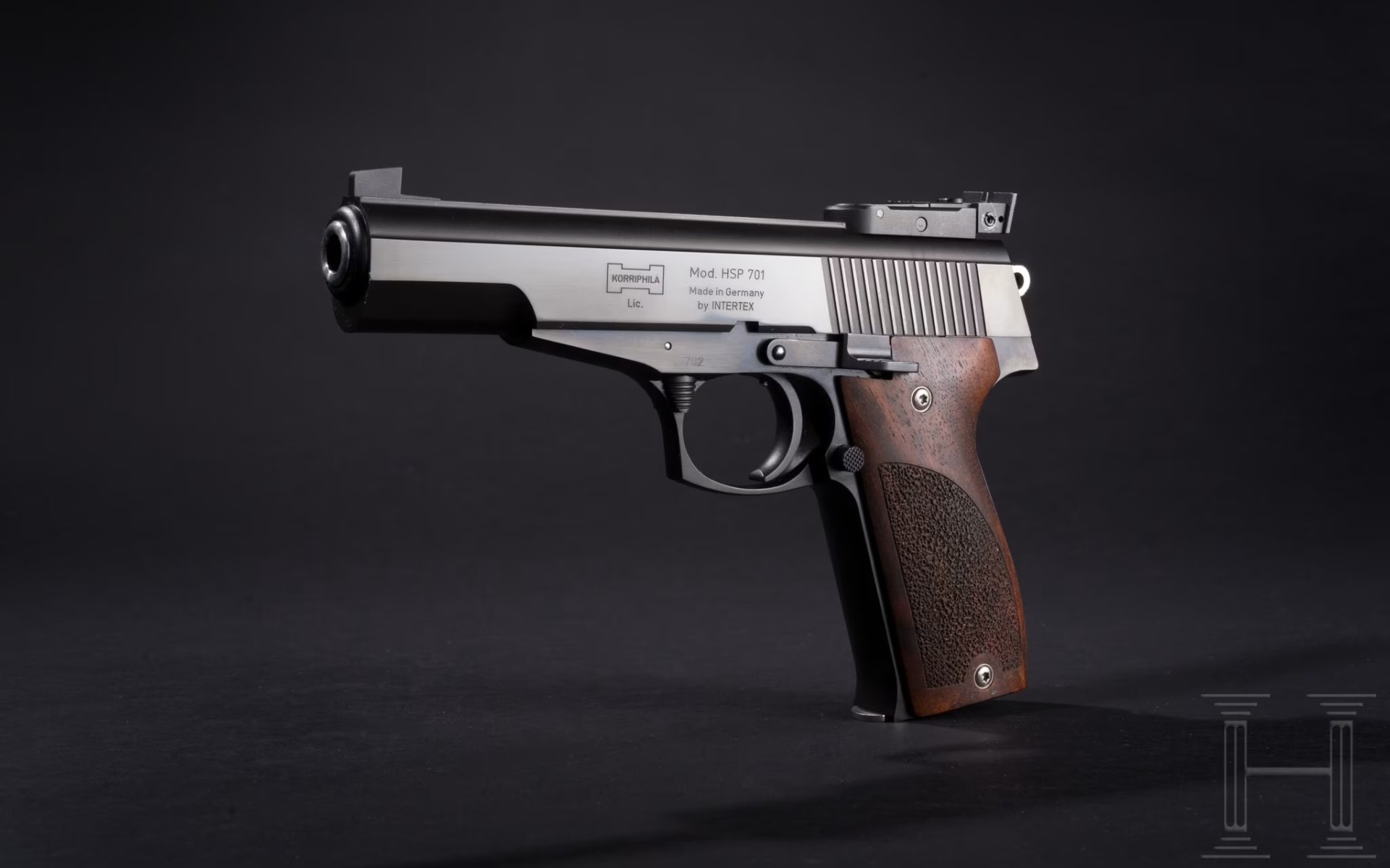
Lot 2289 is a Korriphila HSP 701 pistol, known as the "Weltmeisterpistole" (World Champion Pistol) is one of the pinnacles of modern German firearms manufacturing, linked to Edgar Budischowsky and the Intertex brand. Dieter Krause won two world titles with this pistol: in 1997 (Auto Match, Unclassified), and in 1998 (BDMP 1500). A unique piece of great technical, historical and sporting value. Designed for top-level sport shooting, this pistol is chambered in 9mm Luger, and has a 5-inch barrel with a mirror-like bore and German proof marks from 1997. The serial number, consistent on all parts, is 0702. The trigger is single-action and the single-stack magazine holds nine rounds. Of great interest is the Aristocrat Tri-Set adjustable rear sight, with three selectable settings to quickly adjust the point of impact.
The Korriphila logo and the inscription "Mod. HSP 701 / Made in Germany / by Intertex" appear on the left-hand side of the slide, and "Budischowsky-System" on the right-hand side. The gun has been factory reworked and reblued, and comes with a high quality polished finish, with the top of the barrel matted.
The walnut grips, with checkering in impeccable condition, are complemented by a second original smooth set in precious exotic wood. The loaded chamber indicator is not installed. The condition is like new. The set includes an Emmebi brown leather case with green baize interior and double lock, with only a small imperfection on the lid. Also present are an Intertex sales folder, a special print of German monthly "DWJ"(8/98) and a copy of "caliber" magazine (3/1999) with an article on Dieter Krause, plus a "Korriphila Team" cap.
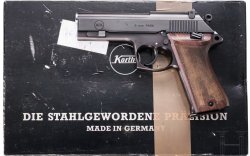
Lot 2307 is another of the finest (and most expensive) pistols ever produced: it is a 9mm Luger Korth semi-automatic, with serial number P096, 4" barrel with a mirror-like bore and a 10-round single-stack magazine. It bears German "JK" (Kiel, 1989) proof marks. The rear sight is adjustable. It utilizes the operating system developed by Korth with locking block and the barrel moving rearward on a straight path, here further simplified compared to the solution used on the P090 model. On the left side of the slide is stamped the Korth logo in a circle and the words "9 mm PARA"; on the right side is the company markings on three lines.
The original matte finish is >99%. Some minor defects caused by bad storage: the rear strap shows three specks with loss of finish, as does the floor plate. Otherwise, like new condition, with no signs of use. Impeccable walnut grips with fine checkering, a walnut insert as backstrap. Complete with original box with matching number, the insert a bit smelly from moisture in storage; lid with small tears at corners, brown wrapping tape all around. Korth patch present. Nearly as good as new, makes a great pair with the other Korth pistol with Serial number P090, showing the continuous development of Korth pistols. The starting price is € 5,200.
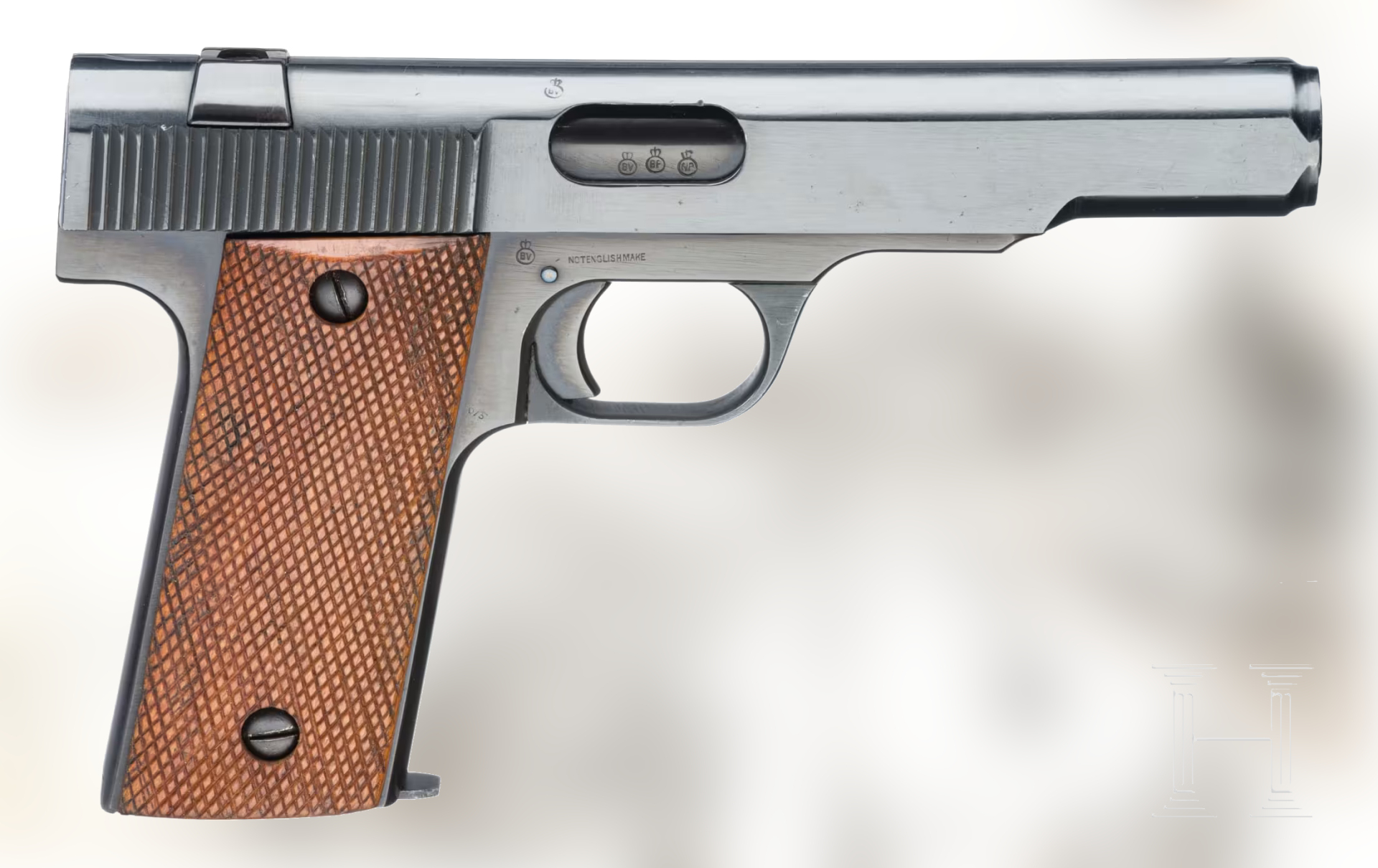
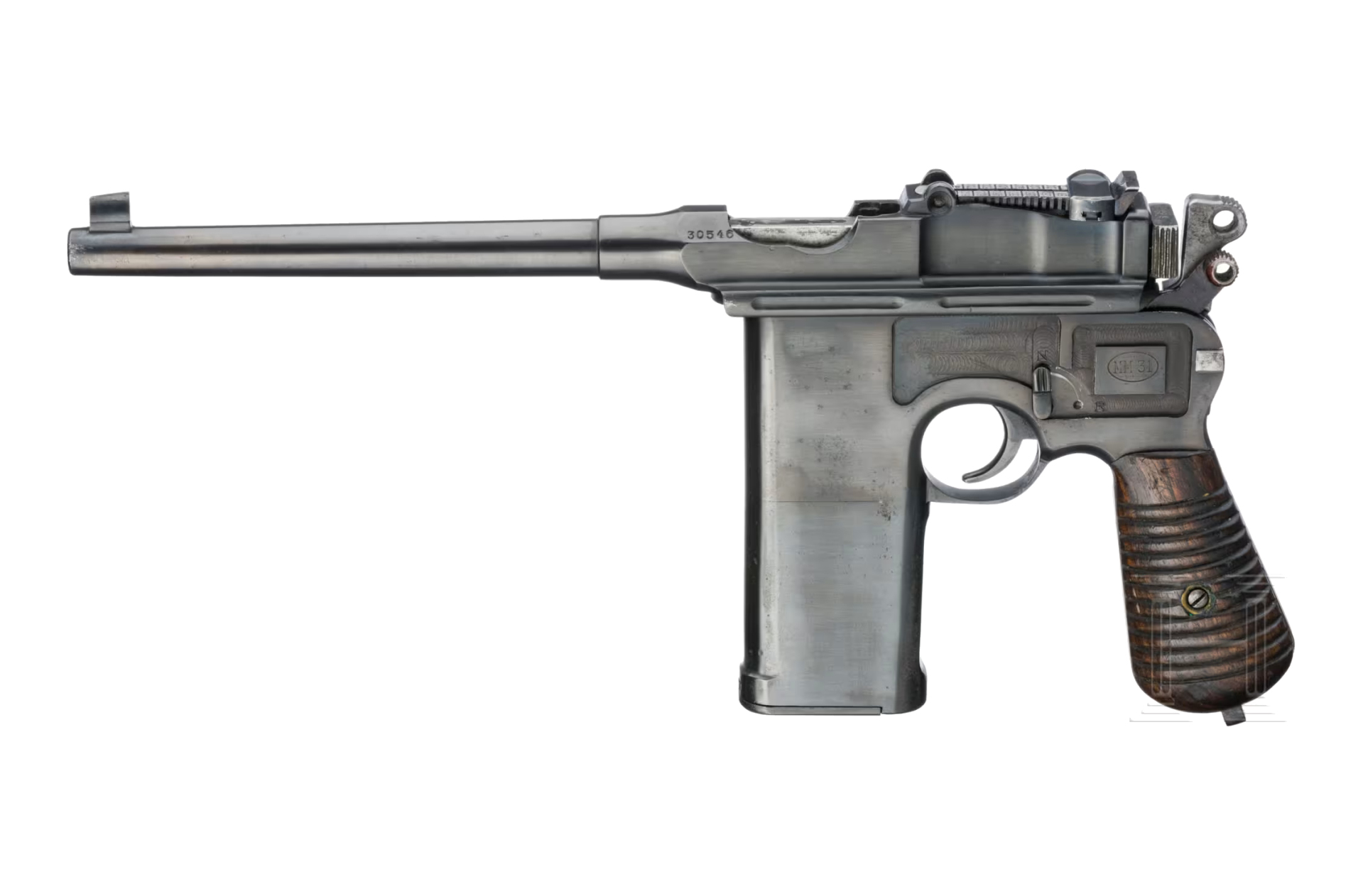
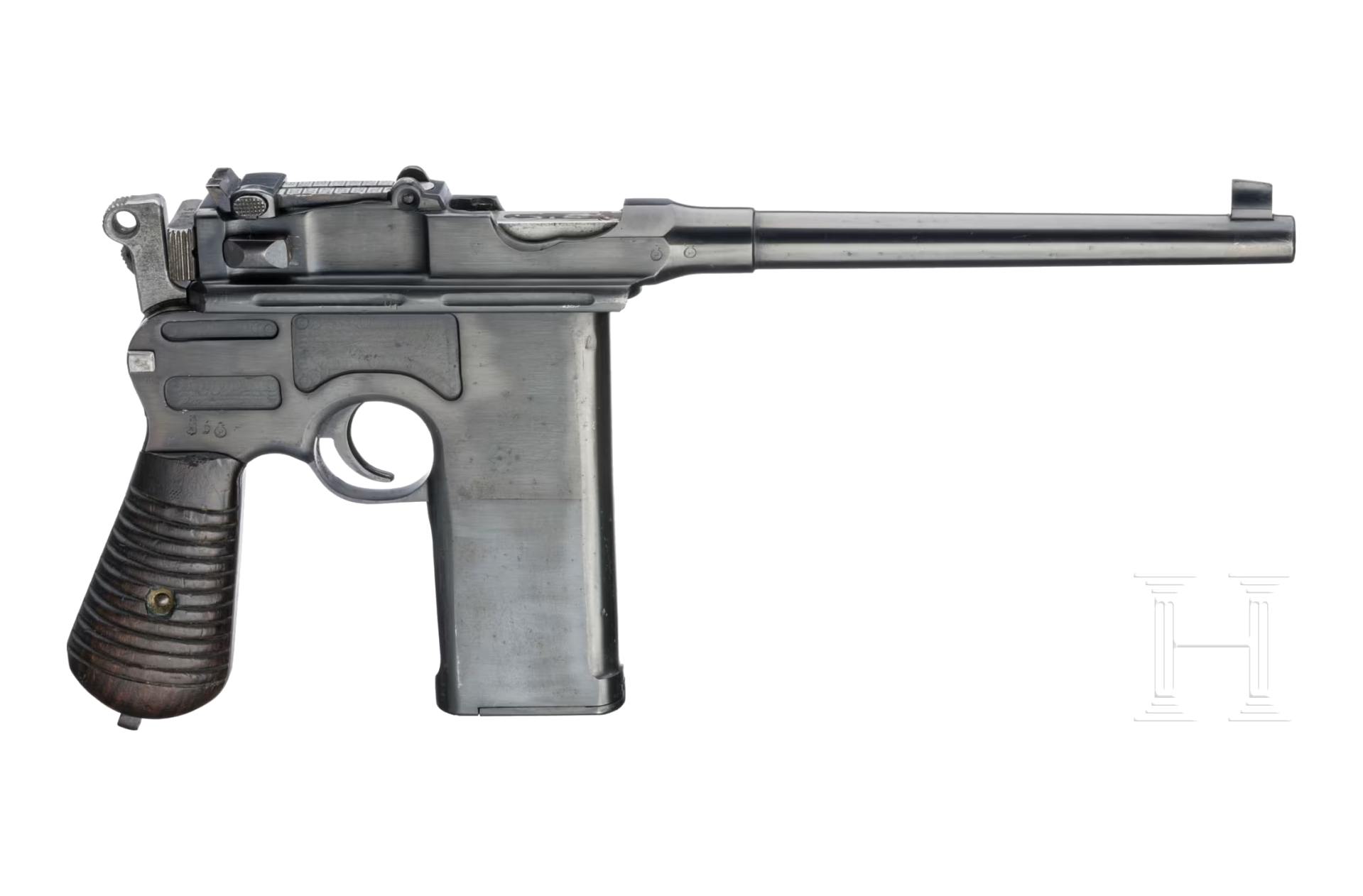
Lot 3046 is an interesting example of the Basque productions inspired by the Mauser C96, typical of the period between the two World Wars. The Beistegui Royal MM 31, second pattern, is a Spanish-made semi-automatic pistol chambered in 7.63mm Mauser, with serial number 30546 on all main parts, including the grips. It is the variant with a 20-round magazine. The 180-mm long barrel has a matte finish, while the front sight is paired to an adjustable slide rear sight, set from 50 up to 1000 meters, according to the typical Mauser C96-inspired pistol design. The proof marks bear the year 1931. As the only marking, on the left side of the barrel the words "MM 31" enclosed in an oval, indicative of the 1931 military model; production is attributed to Beistegui Hermanos of Eibar. The gun is probably re-blued, with light and diffuse surface spotting, while the hammer and receiver show a grey finish. The grips are made of dark walnut with horizontal grooves. The lanyard ring is missing and the full-auto mechanism has been deactivated. The starting price is 1,900 euro.
Lot 3402 is a 7.63mm 1932 ("Mod. 712") Mauser C96 pistol, here offered with shoulder stock/holster complete with rare leather harness. The consistent serial number for the entire gun is 92118. The barrel, 140 mm long, has the bore in excellent condition, the rear sight is adjustable from 50 to 1,000 metres. Crown/U proof marks and standard model markings are present. The hammer and trigger show the typical finish, while the original bluing is still present, albeit with normal signs of use.
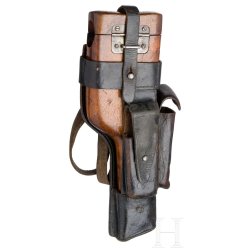
The lacquered walnut grips are well preserved and the pistol is equipped with a removable 20-round magazine. The lanyard ring is missing and the full-auto has been deactivated. Of particular interest is the matching wooden stock, with Mauser branding on the left side, which has a crack on the underside later repaired with reinforcing strips.
Even rarer is the vintage leather harness, without manufacturer's markings, complete with two applied magazine pouches and carrying strap. The kit also includes four additional magazines, two 10- and two 20-rounds, making the set particularly complete. All in all, this is a rare and fascinating set, especially due to the presence of the very hard-to-find original equipment, an element that greatly increases its collector's interest. The starting price is 4,000 euros.
Lot 3355 is a real "Holy Grail" for military weapons collectors, even if at first glance one might think otherwise. This is a rare and fascinating example of the Sauer & Sohn M30 "Luftwaffendrilling", offered complete with its original case and in truly exceptional condition. It was a special version of the M30 Drilling combination gun produced by J.P. Sauer & Sohn for the Luftwaffe during the Second World War. In essence, it was not a "combat" weapon in the classical sense, but a survival gun intended for German aircraft crews, especially those operating on remote fronts such as North Africa. The idea was simple but very clever: to provide downed pilots with a versatile firearm that would allow them to obtain food and defend themselves while waiting for rescue. For this the Drilling system (three barrels) was chosen, which combined two smoothbore 12-gauge barrels for hunting small animals and birds and a rifled barrel in 9.3x74R for larger game or self-defense.
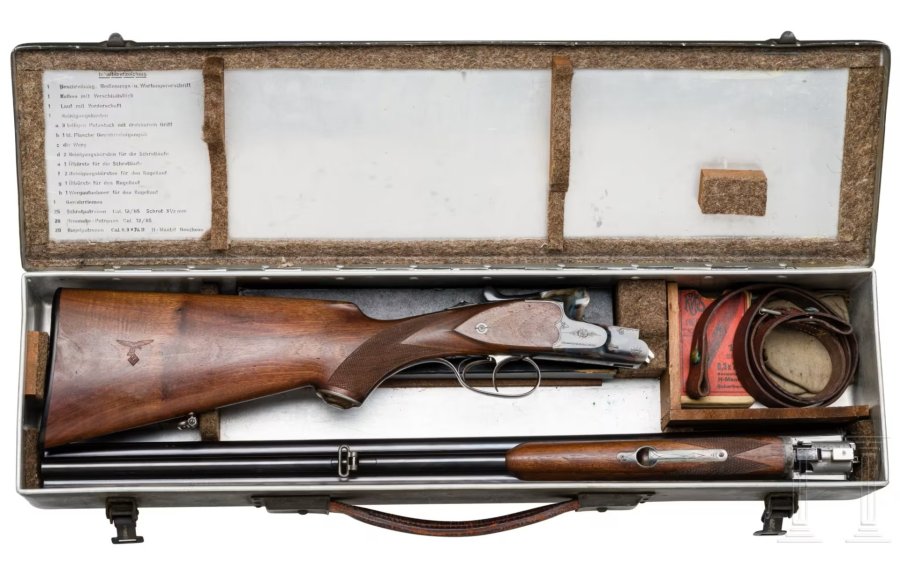
The barrels of the specimen for sale at Hermann Historica are 65 cm long, have bright bores and are preserved with an original finish of over 99%, a detail that alone places this piece among those of a high collector's level. The upper rib, finely machined and tapered towards the muzzle, integrates a folding rear sight; on the barrel assembly one can read the markings "9.3x74 R" and, laterally, "Krupp-Laufstahl", while on the right barrel, near the chamber, appears the Luftwaffe eagle. On the underside are the calibers, Suhl's proof marks and the date '9/41', which refers to September 1941.
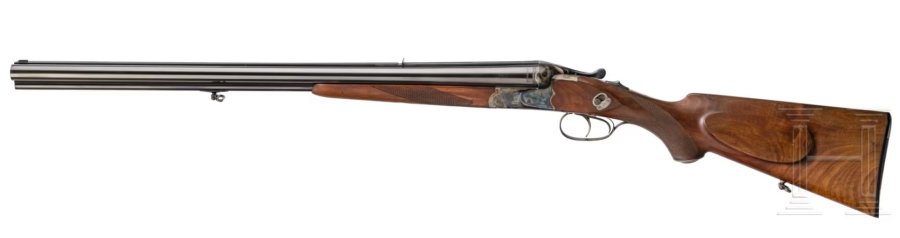
The action, made of steel with an extraordinarily well-preserved color case hardened finish, features dual locking lugs with Greener bolt; the Luftwaffe acceptance mark is also present here. The barrel selector is located on the upper rib, while the side safety is of the Greener type. The dual trigger comes with a set trigger on the forward trigger, a typical solution to increase accuracy in rifled barrel shooting. The walnut stock, with checkering, pistol grip and classic German-style cheekpiece, has an additional Luftwaffe eagle on the right side. A black rubber recoil pad with Sauer & Sohn logo and sling swivels complete the set. The gun's overall length is 108 cm.
What makes this specimen even more interesting is the presence of its original green painted aluminum case, 69x19x11 cm, marked "Drilling M 30 mit Munition und Zubehör". The interior is very well preserved and even has a table of contents under the lid. The gun strap, cleaning kit with three-piece rod and gun oil are included, as well as an empty original box for 9.3x74R ammunition. The starting price is 12,000 euros.
The "Arms & Armour, and Antique Firearms" auction on 21 May
Let us now talk about the auction that will take place on 21 May, which focuses on antique arms. Among the 1129 lots that make up the auction catalog, we find mainly bladed and ethnic weapons and rare books. Although it is outside the topics we usually deal with, we would still like to present some really interesting lots, such as 4103, an Ottoman shashka dating from around 1870.
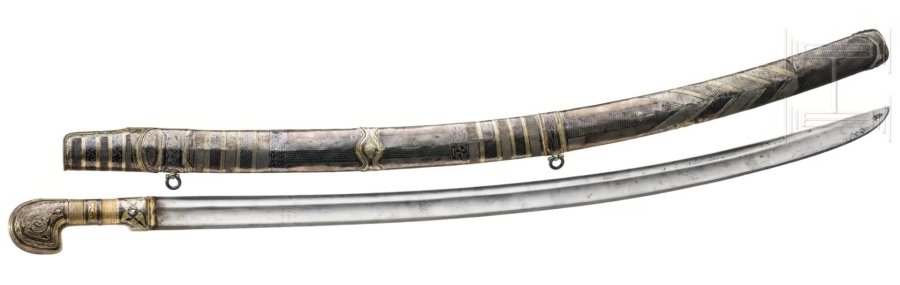
The Ottoman shashka is a sabre originating from the Caucasian regions characterized by a slightly curved blade and the lack of a pronounced guard, making it extremely maneuverable and fast in combat. It was mainly used by cavalry to deliver quick and effective blows from the top of the horse downwards. The specimen on offer from Hermann Historica is decorated with the niello technique. At the base of the blade, faint traces of an etching now difficult to read are still visible on both sides. The silver-mounted grip in the Circassian tradition with characteristic curved pommel, is slightly loose. The scabbard, made of silver sheet, is richly and uniformly decorated with engravings, nielloed and partial gilt: it has geometric fields, lozenges, latticework and intricate vegetable ornaments. The locket is slightly loose. On the back is a cartouche with an inscription in Arabic. Overall length is 93 cm. The starting price for this exotic sabre is 6,000 euros.
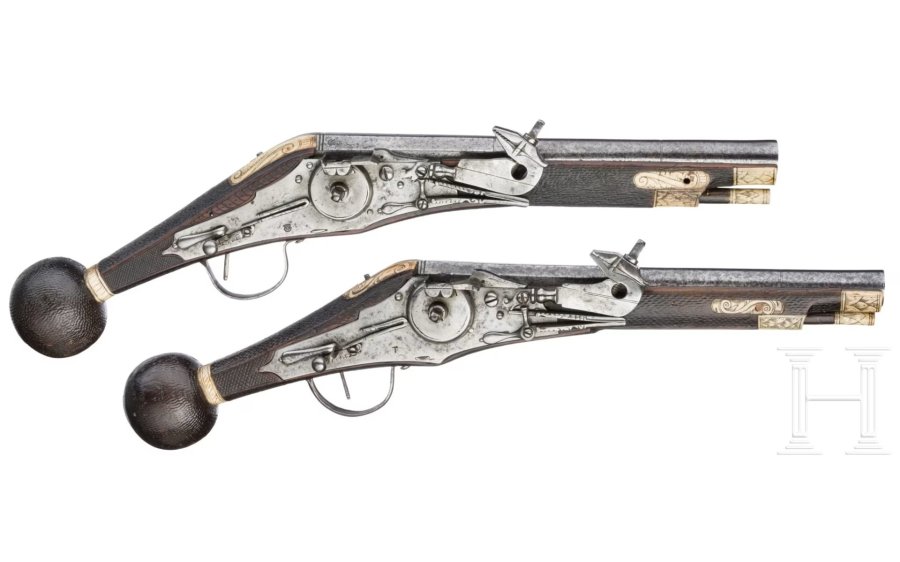
Lot 4856 consists of a pair of wheellock pistols for enlisted men of the Saxon Electorate Palace Life Guard (second model), circa 1580-1590. These are a pair of puffers, or Saxon wheel-guns, of very similar design, with smoothbore barrels in 16 mm caliber: one with octagonal cross-section and the other with round cross-section. One of the barrels bears the date 1588 on the breech together with a hunting horn mark; the second is marked with the monogram "NH". The metal surfaces show slight oxidation, staining and light pitting in places, consistent with the age of the guns. The locks have external encapsulated wheels and folding safety catches. The pan cover is spring-loaded, with a practical release button. One lock plate has a hunting horn mark, the other a mark in the shape of a hammer. The delicately burled, blackened walnut stocks feature inlays of engraved and blackened bone. On the spherical butt ends, Inlaid silver plaques with finely etched warrior's heads amidst leafy vines. Also original are the wooden ramrods, with engraved bone tips. The overall length is 56.5 cm each. From a historical point of view, this is a particularly interesting set: since a large number of these pistols were needed for the Saxon trabant guard (Sächsische Trabanten), different gunsmiths were commissioned to make the weapons according to a standard pattern. The markings on both pistols can in fact be traced back to two Saxon gunsmiths who were active at the time. The starting price for this lot is 18,000 euro.
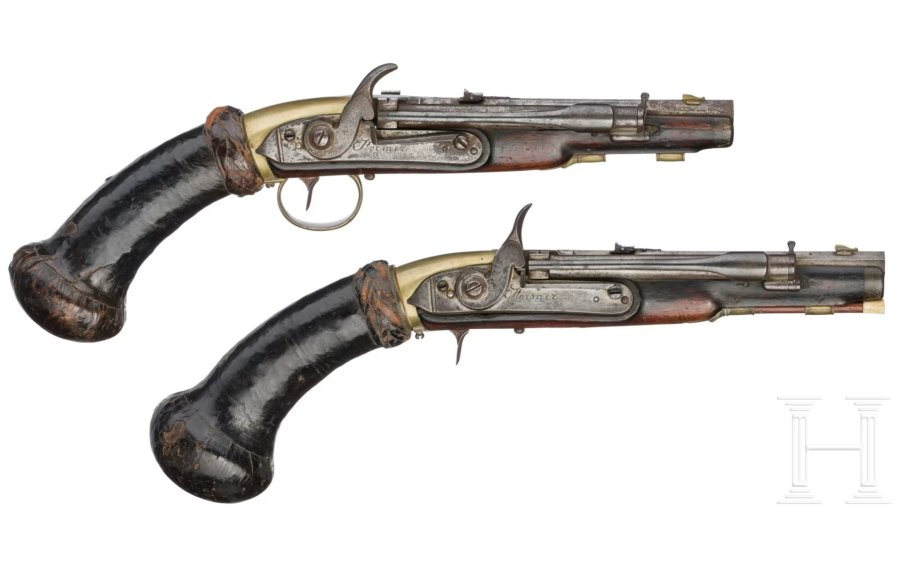
Lot 5048 is a rare pair of Girandoni system air pistols by Störmer of Herzberg, circa 1820. This pair of pistols has octagonal eight-groove rifled barrels in 9mm caliber. The brass front sights are dovetailed and the folding rear sights are iron. On the side is the tubular magazine for round bullets with spring-loaded slide. The lock plates, with external hammers, are signed "Störmer", while the counter plates with the safety levers bear the inscription "Herzberg" engraved. The frames are brass, with screw-mounted leather-covered air reservoirs; on one example the cover is incomplete. Brass mounts, one trigger guard is missing. Inset wooden cleaning rods with bone tips (one is missing). Length: 38 cm each. The pre-charged pneumatic system derived from the one developed in 1779 by Bartolomeo Girardoni, with a lateral breech-loading tubular magazine, allowed for very rapid firing. Ernst August Störmer (1776-1857) was appointed royal gunsmith at the Herzberg factory in 1802 and made numerous hand- and long guns based on Bartolomeo Girardoni's design. The starting price for this highly unusual pair is €7,500.
We conclude by inviting you to visit the Hermann Historica website and make your own personal ranking of the most interesting pieces: all catalogs are already online, also in a browsable version. We will return to the subject when the sales results are available, with our comments and observations. Stay tuned!