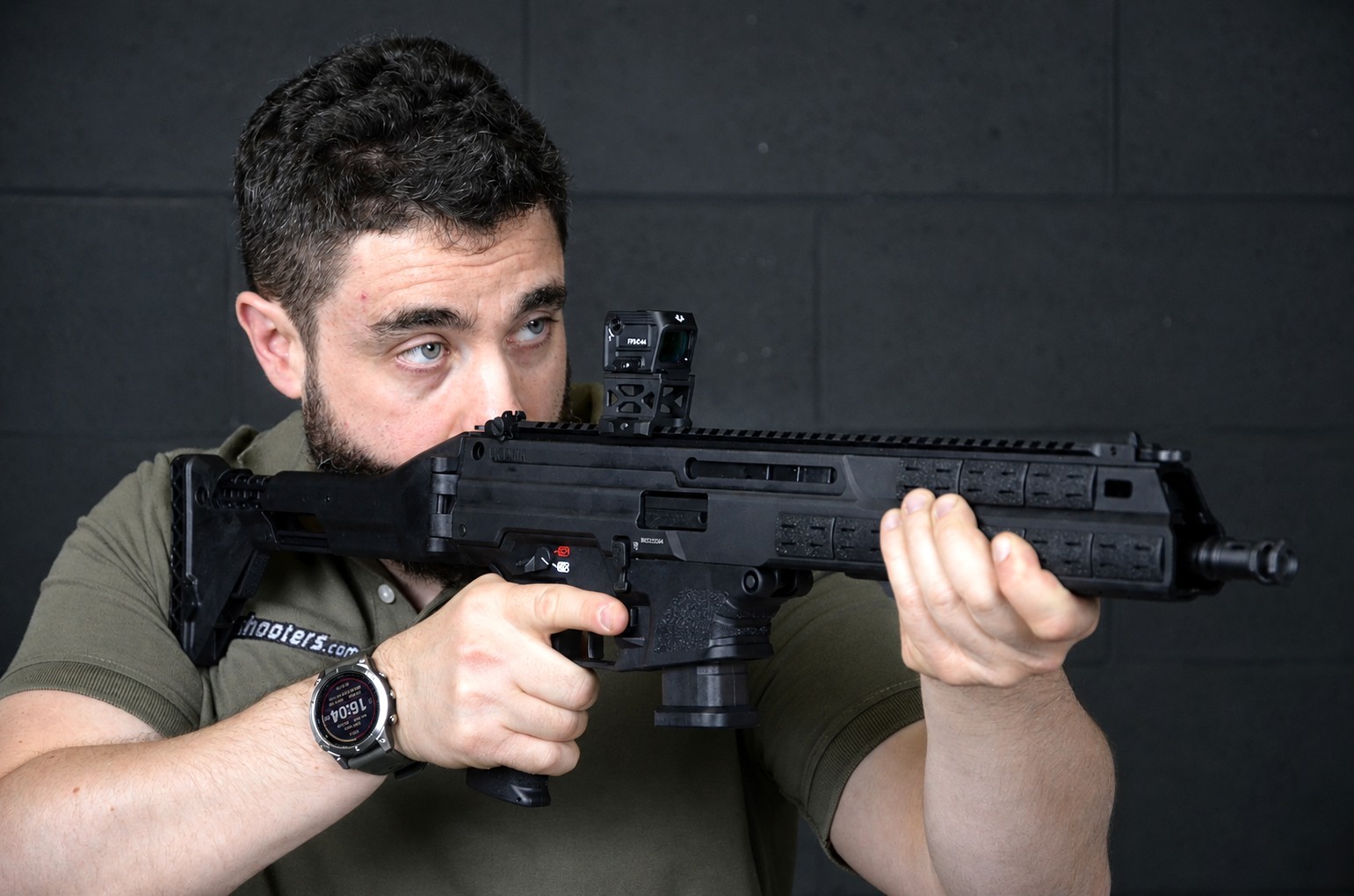

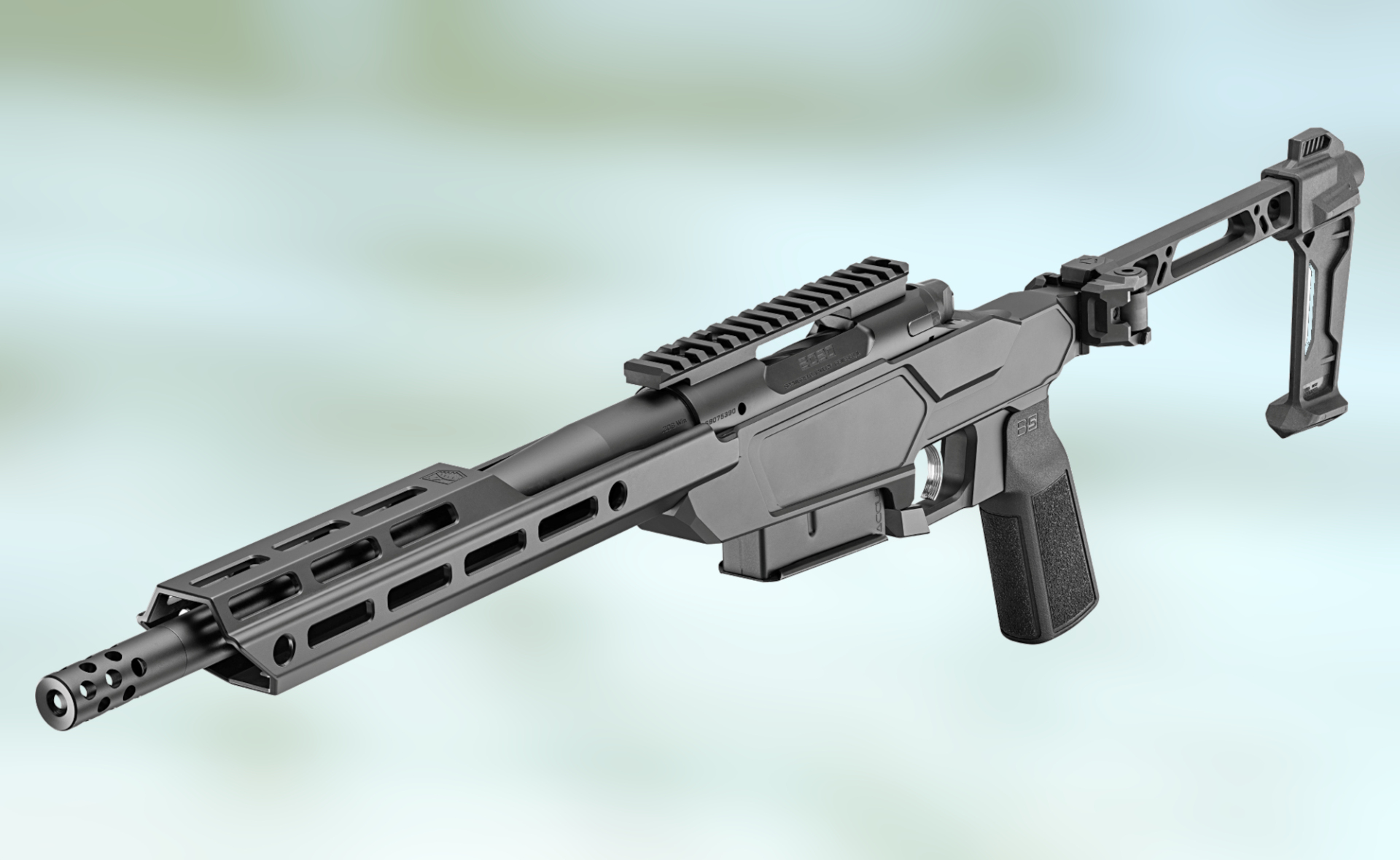
At first glance, it looks like a rifle with just about everything shortened as much as possible. The Springfield Armory Model 2020 Heatseeker .308 Pistol with Strike Industries FSA, however, belongs to the unusual category of bolt-action pistols, firearms that bring the mechanical design and layout of manually operated rifles into a decidedly unconventional format. Our readers will remember the first of such pistols, the largely forgotten Remingotn XP100 introduced in 1963. Announced on November 17, 2026, the new Springfield Armory Heatseeker model 2020 comes factory-equipped with a folding stabilizing brace and joins the brace-less Heatseeker Pistol introduced earlier this spring.
Springfield Armory Model 2020 Heatseeker .308 Pistol: 12-inch barrel and FSA brace
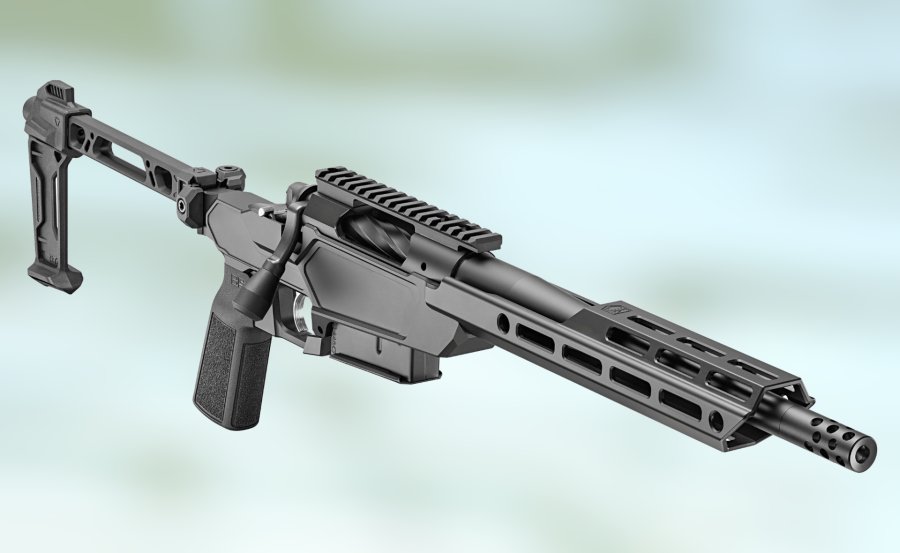
At the heart of the firearm is Springfield's Model 2020 action, featuring a manually operated bolt with two locking lugs. The bolt raceways are cut using wire electrical discharge machining (EDM), a manufacturing process Springfield employs to ensure smooth bolt travel. The bolt itself is made from 4140 steel, with spiral fluting and a nitride surface treatment, while the receiver is stainless steel.
Beneath the deliberately unconventional exterior, then, lies a familiar action from the manufacturer's existing lineup. The action is housed in a Sharps Bros. 1913 Heatseeker chassis, CNC-machined from a solid aluminum billet and incorporating an integral recoil lug. The short handguard features M-LOK mounting slots, while a section of Picatinny rail at the rear accommodates the stabilizing brace.
Modularity also extends to the B5 Systems P5 pistol grip, with its vertical profile and aggressively textured surface. Compatible with AR-pattern grips, this arrangement makes the accessories an integral part of the overall design. The distinguishing feature of this particular model is the Strike Industries FSA, or Folding Stabilizer Adapter. This pistol brace incorporates a side-folding mechanism that reduces the firearm's overall length for transport and storage.
With the brace extended, the Heatseeker measures 31.5 inches (approximately 800 mm). Folded, its overall length drops to just 22.5 inches (572 mm). The firearm weighs 6 lb., 3 oz. (approximately 2,807 g).
These figures illustrate the peculiar nature of the Heatseeker Pistol: compact compared with a conventional rifle, but certainly a substantial piece of equipment when measured against an ordinary handgun.
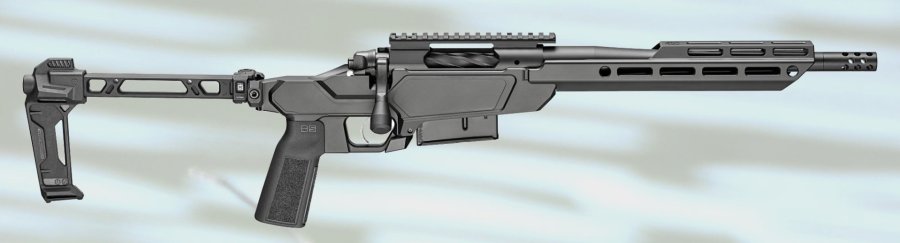
The 12-inch (305 mm) stainless steel barrel has a 1:10-inch twist rate and is chambered in .308 Winchester. At the muzzle, 5/8×24 threading accommodates the removable SA Radial Brake, designed to reduce recoil by redirecting propellant gases. The barrel, receiver and chassis share the same Graphite Black Cerakote finish, giving the entire firearm a uniform black appearance. Even within the Heatseeker family, this configuration has a distinctive identity.
Springfield has selected an adjustable TriggerTech trigger, with a pull weight ranging from 2.5 to 5 pounds (approximately 1,134–2,268 g). Ammunition is fed from a detachable five-round AICS-pattern magazine. Once again, we find components and standards familiar to precision-rifle enthusiasts, brought together in a firearm with decidedly unusual proportions. It is this combination, rather than the short barrel alone, that makes Springfield's latest offering interesting.
Optics mounting is handled by a Picatinny rail above the receiver, using the Remington 700 short-action mounting pattern with 6-48 screws. The package also includes a padded carrying case with adjustable interior straps and a muzzle protector, designed to accommodate the firearm even with an optic installed.
The Springfield Armory Model 2020 Heatseeker .308 Pistol with Strike Industries FSA carries an MSRP of $2,212. It should not be confused with the original configuration without a rear brace, which is priced at $1,999.
This is a deeply American firearm, and an interesting example of how a gun's configuration can be influenced not only by its intended use, but also by the regulations governing its classification.
Springfield Armory Model 2020 Heatseeker Pistol FSA: Technical specifications
| Feature | Specifications |
Manufacturer | Springfield Armoury |
Model | Model 2020 Heatseeker .308 Pistol, Strike Industries FSA |
| Product code | BAH912308B-FSA |
Firearm Type | Bolt-action pistol |
Action | Manually operated, rotating bolt with two locking lugs |
Caliber | .308 Winchester |
Magazine capacity | 5 rounds, detachable AICS-pattern magazine |
Chassis | Sharps Bros. 1913 Heatseeker, billet-machined aluminum |
Barrel length | 12 in (305 mm) |
Twist rate | 1:10” |
Trigger | TriggerTech Adjustable trigger, 2.5–5 lb |
Optics mounting | Picatinny rail; Remington 700 short-action pattern, 6-48 screws |
Overall length | 22.5 in (572 mm) folded; 31.5 in (800 mm) extended |
Materials and finish | Stainless steel barrel and receiver; nitrided 4140 steel bolt; Graphite Black Cerakote H-146 |
Weight | 6 lb., 3 oz. (approximately 2,807 g) |
MSRP | $2,212 |
Configuration | Strike Industries FSA folding brace, B5 Systems P5 pistol grip, SA Radial Brake with 5/8×24 threads, five-round magazine and padded carrying case |
Pistol braces: a bit of history and where we’re at
The popularity of pistol stabilizing braces stems largely from a distinction in firearms classification.
A conventional shoulder stock is designed to allow a firearm to be fired from the shoulder. A pistol brace, by contrast, was originally conceived to provide support when firing a handgun with one hand, including for shooters with disabilities or limited physical strength. This distinction can influence how the complete firearm is classified under federal law. A rifle with a barrel shorter than 16 inches falls within the statutory definition of a short-barreled rifle (SBR), an NFA item. Historically, making or transferring an SBR generally required federal approval, registration and payment of a $200 tax. A firearm originally configured as a pistol and fitted with a genuine stabilizing brace could fall into a different category. This explains much of the commercial interest in compact firearms equipped with braces rather than conventional shoulder stocks. However, simply calling an accessory “a brace” does not automatically determine the firearm's legal classification, and in 2023, ATF famously introduced a rule that would have classified many braced pistols as short-barreled rifles; the rule was subsequently vacated by a federal court in June 2024.
The regulatory situation changed again in 2026: effective January 1, 2026, the federal making and transfer taxes for SBRs and several other NFA firearm categories were reduced to zero. Then, on October 9, 2026, ATF announced that it would no longer enforce certain NFA requirements for these categories, including mandatory registration and prior federal approval for making or transferring them. This is an enforcement policy, however, rather than the wholesale repeal of the underlying statutory classifications. The federal Gun Control Act continues to apply, as do state and local restrictions. Certain federal requirements, including those concerning interstate transportation of short-barreled rifles, also remain relevant.
Consequently, the historical legal advantage of a pistol brace cannot simply be assumed to remain unchanged, and today, choosing a brace may also reflect considerations of ergonomics, portability and product configuration. It does not provide universal exemption from firearms regulations.
Do your homework and check your local laws and regulations before purchase.