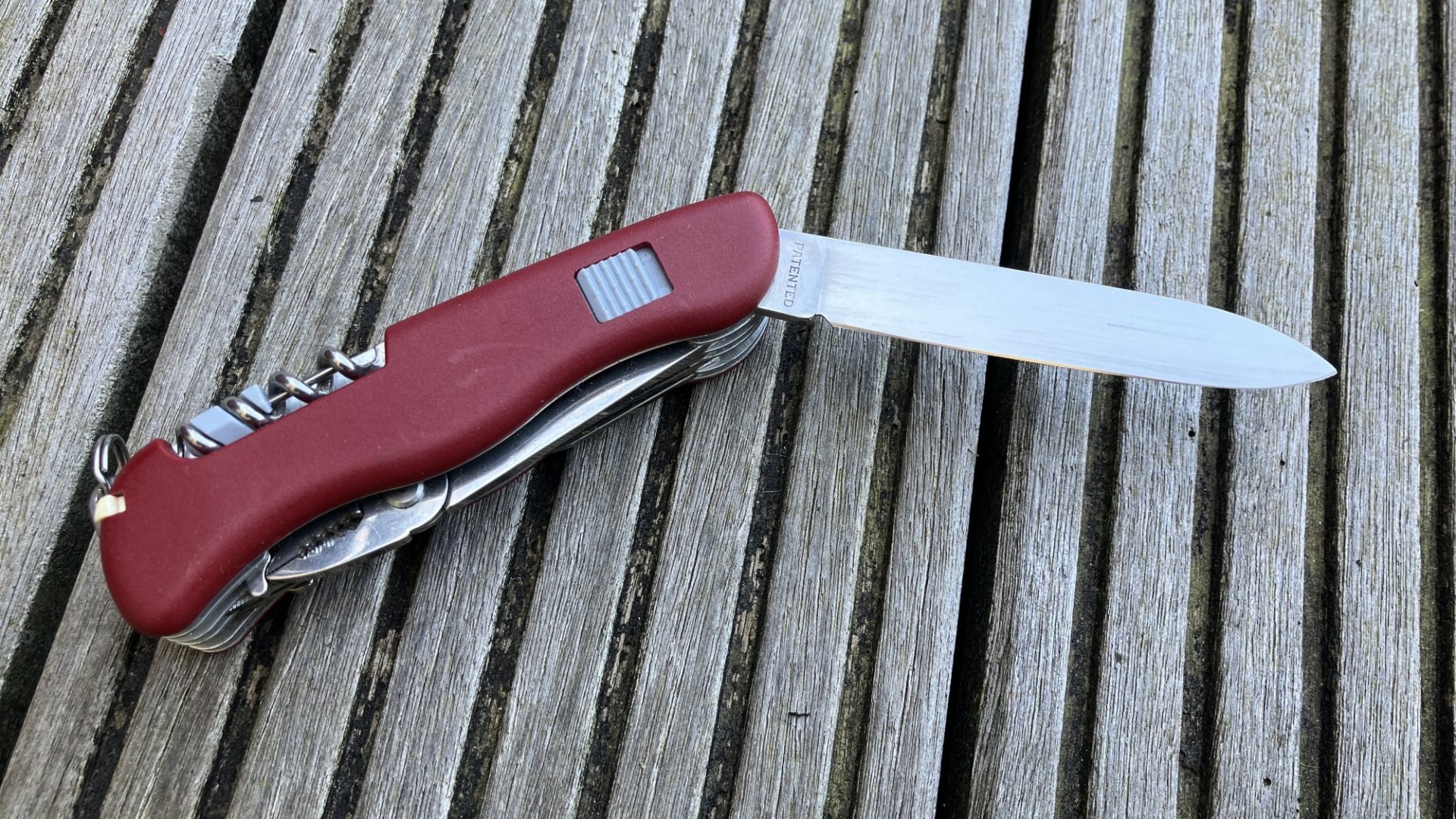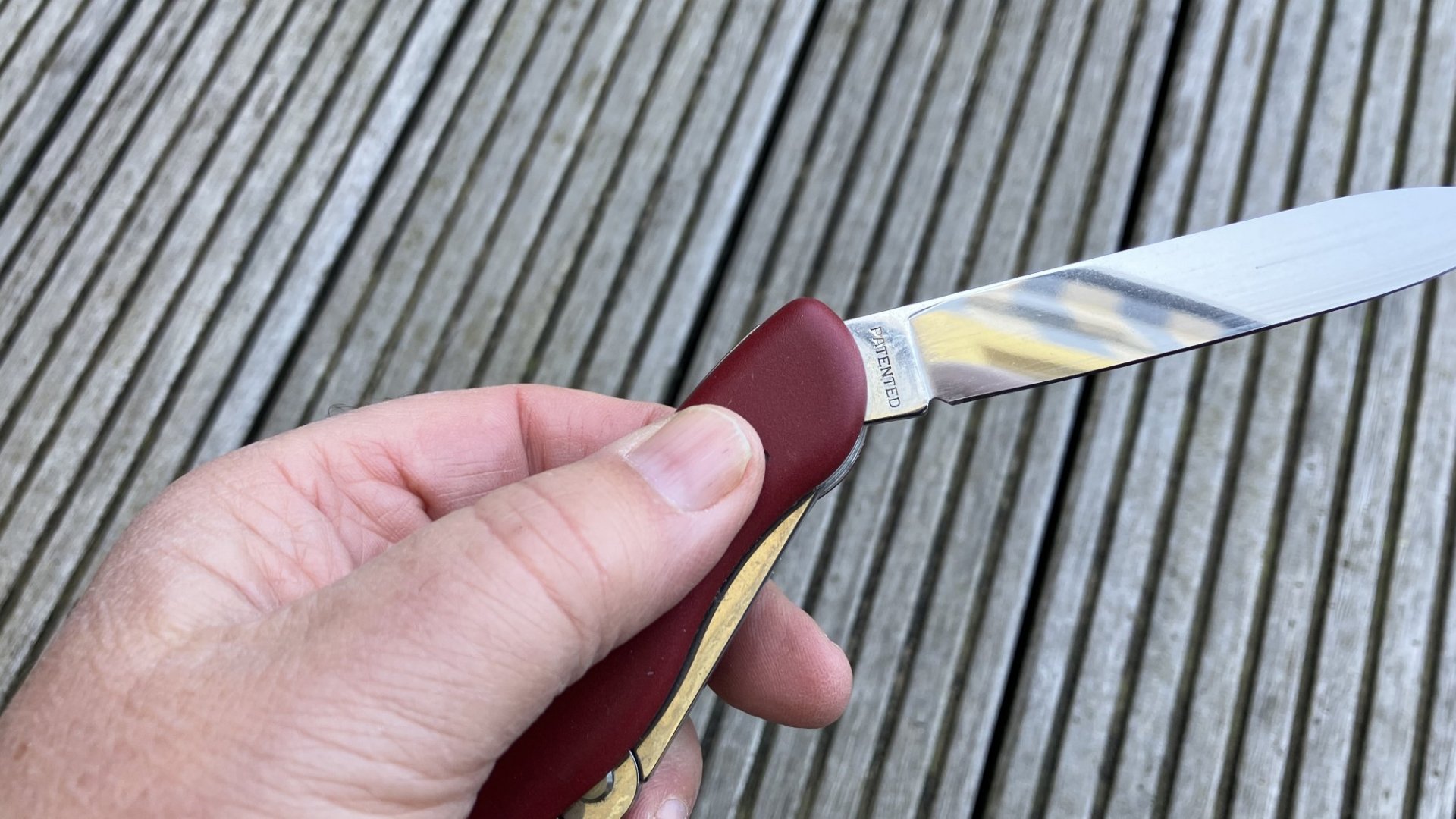

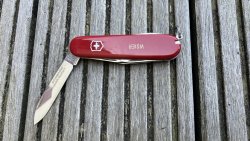
Most of us will probably always remember our first pocket knife. It was probably a bright red Victorinox, the legendary "Swiss Army Knife". The signal color red not only helps when searching for a misplaced knife, but often also infects the owner with the "knife collecting virus", so that other knives are added to the collection over the following years and decades. The most important diagnosis that you are infected is probably the indignant denial: "I don't collect knives!"
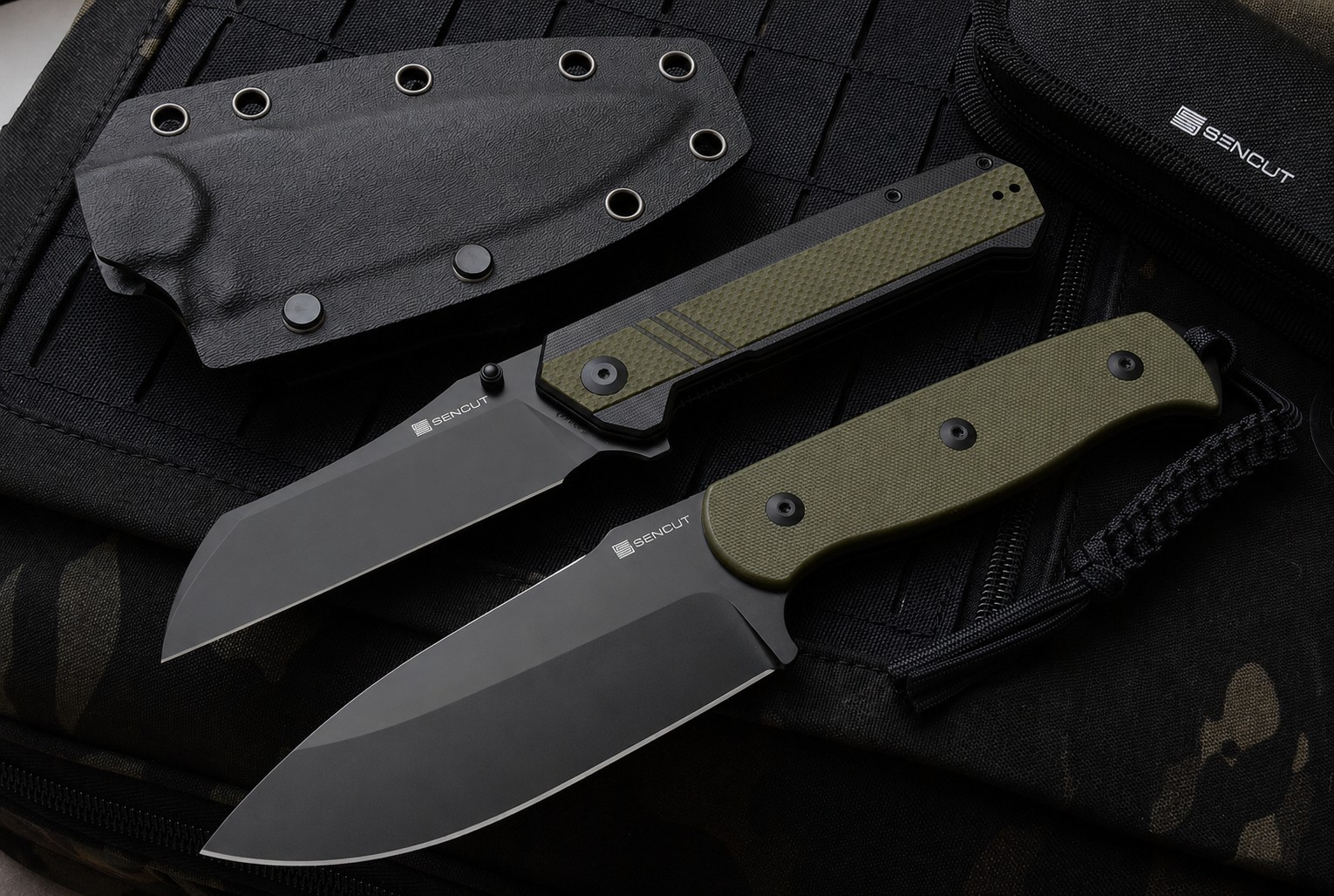
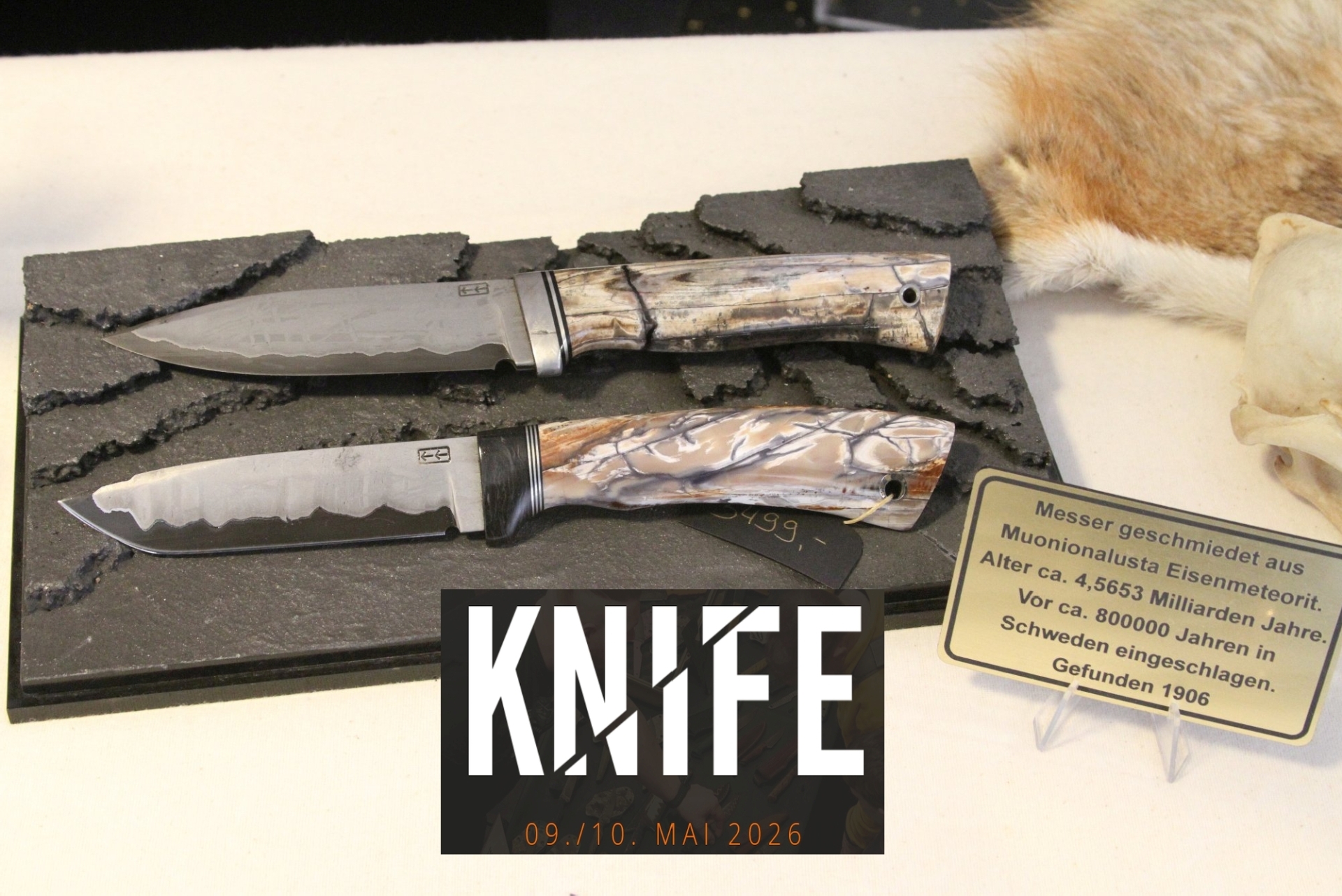
For knives that you want to carry (we'll leave law issues out of the equation today), the various folding knife variants are ideal. When transported, whether as a pocket knife in your trouser pocket or, in the case of larger models, in a holster on your belt, the blade is securely stored in the handle. Depending on the design, it can be folded out more or less easily for use. The blade and handle are connected by a pivot. To prevent the blade from folding back and injuring the user, even under slight lateral pressure, ingenious designers have devised numerous mechanisms to lock the deployed blade in place, and to prevent it from accidentally deploying. The large number of different mechanisms arose not least because the most popular techniques were protected by patents and could not be easily copied. But often also because even good things can be improved or simplified from time to time. And because, to stay with the metaphor, manufacturers can also carve out a new slice of the buyer’s pie...
Even if the exact date of the first locking mechanisms for folding knives cannot be determined, the estimate "in the Middle Ages" is probably realistic. As already mentioned, there are almost countless solutions – some intricate, some astonishingly simple – of which we briefly list the best-known ones here.
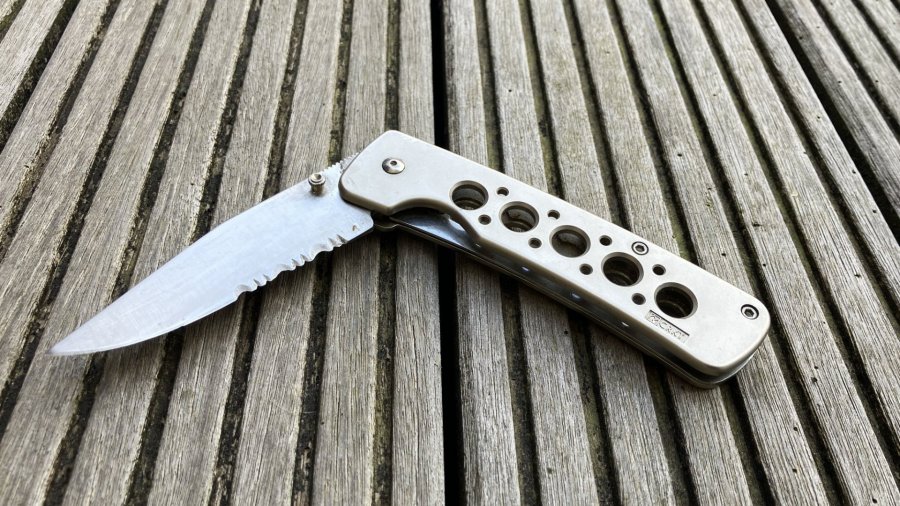
Examples of locking systems that can be operated with one hand:
- Liner Lock – A metal spring bar inside the handle snaps behind the blade. Widely used, can be operated with one hand and is inexpensive to manufacture. The best-known models using this technique were introduced by the American custom knife maker Michael Walker in the 1980s.
- Related to the liner lock is the frame lock, with a simplified construction principle that requires fewer parts, as a part of the handle (usually the left one) itself locks the blade when opened. This locking mechanism was made famous by the knifemaker Chris Reeve and his "Sebenza" knife.
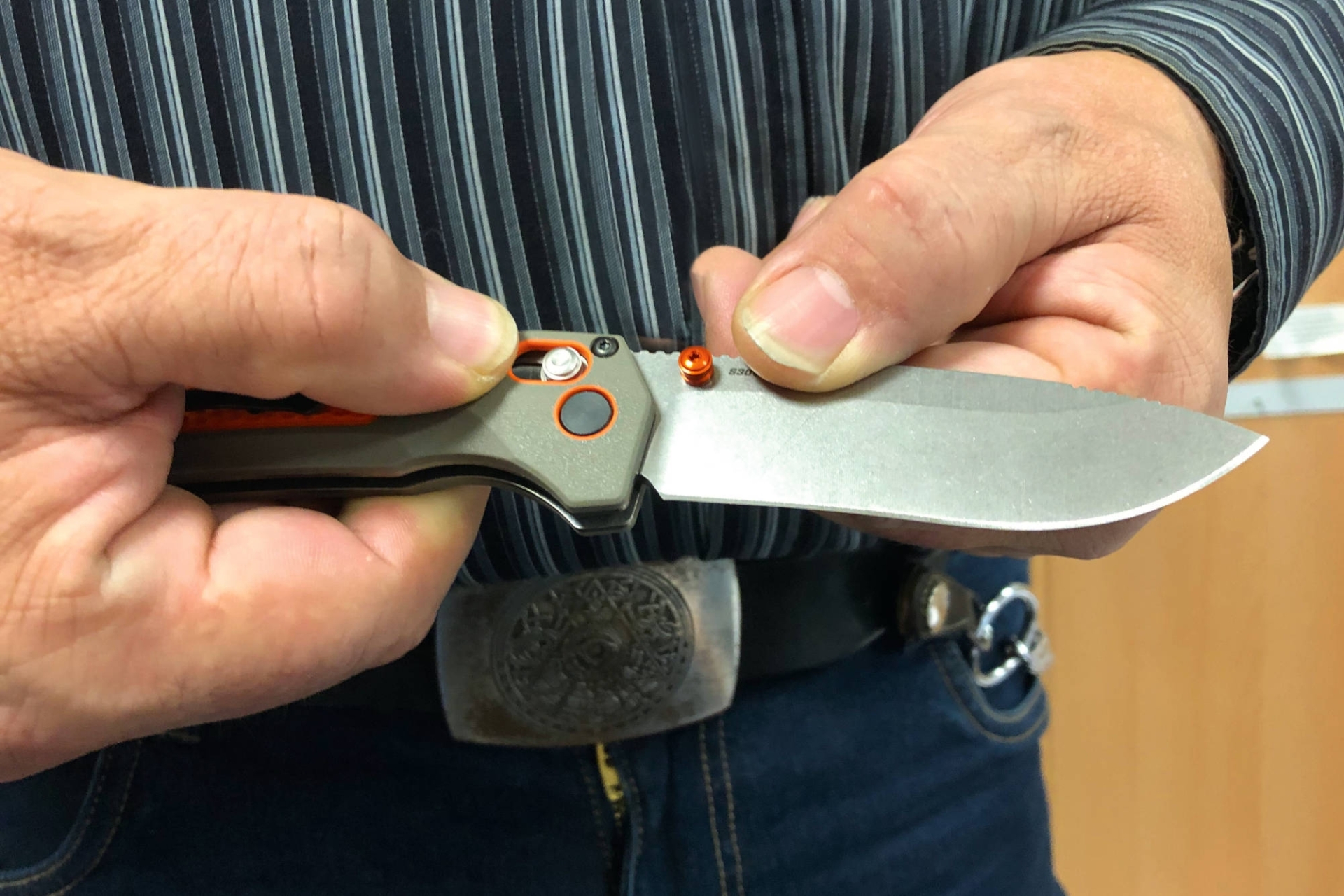
- Axis Lock – A spring-loaded sliding bar is pulled backwards with your thumb and index finger. Accessible from both sides of the handle, it is also ideal for left-handers. Very smooth and secure (for an example, see Benchmade Grizzly Ridge in the picture at the top).
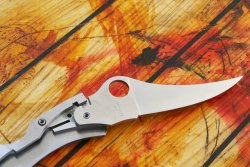
- Compression Lock – Spyderco founder Sal Glesser invented the typical thumb hole into which the tip of the thumb engages, then the blade can be opened without changing grip and without a second hand. Only then does the compression lock engage: a split liner or nested flat spring inside the handle works as a lock bar. When the blade is opened, the spring tension of the lock bar moves it laterally to wedge between the stop pin and an upward-facing ramp on the blade tang. The blade is unlocked with the thumb via a button/lever in the back of the handle, but the hand remains safely outside the blade path.
- With the Button Lock, the locking and unlocking mechanism is basically a spring-loaded button that runs over the spine of the knife, which allows very intuitive operation without having to reach round.
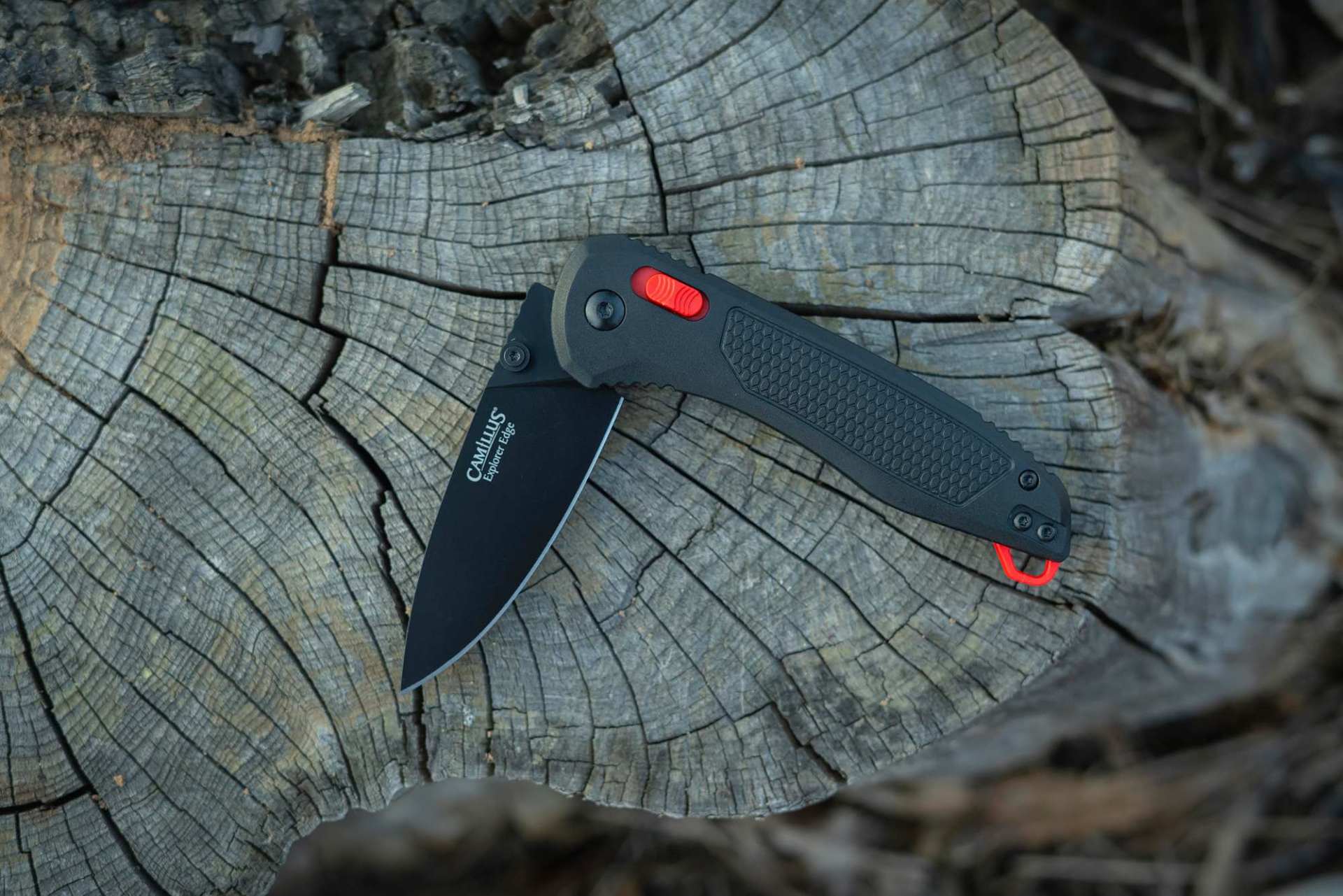
Various aids are used to open one-handed knives, such as the Spyderco thumb hole, a screw-on thumb stud or a flipper – a small tab or protrusion on the blade's heel that extends from the handle when closed (this means that these models can also be used by left-handers).
Locking systems that must be operated with both hands
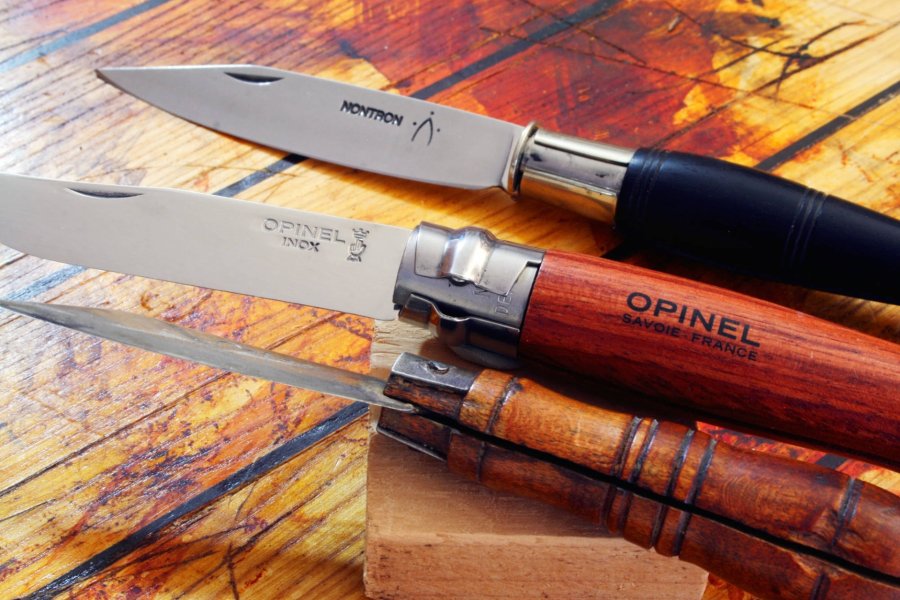
- The Virobloc handle ring locks the blade and blocks the blade slot in the handle; when the knife is closed, the blade can be secured in the handle (but always with both hands). The principle was invented in 1955 by the French knife manufacturer Marcel Opinel, and Opinel knives, as well as other French makes, are equipped with this ring.
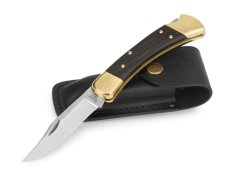
- Back Lock (also sometimes Lock-Back) – This centuries-old locking system works with a very long spring-driven rocker arm, usually within the spine of the handle or even at the rear end of the knife. The hand must have a clear grip or slide along the handle. Very secure and robust, but uncomfortable for quick one-handed operation. In addition to the Buck 110, the all-metal Mercator knife from German production is also one of the best-known representatives.
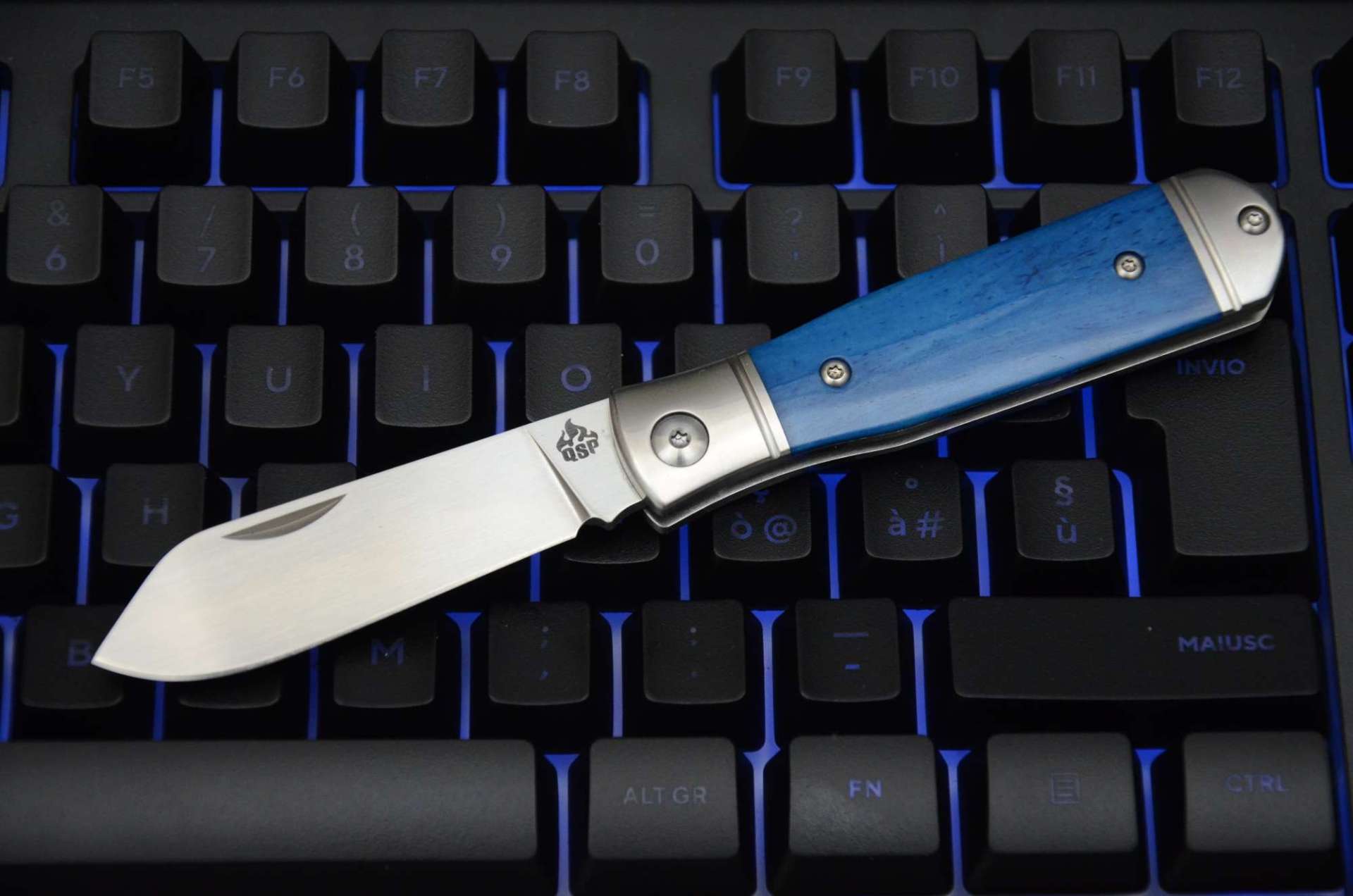
- Slip Joint – A simple locking mechanism without a manual lever or button: the blade is swivelled by the other hand against a spring resistance and blocks in the end position. A little force is required to overcome the spring to fold it back in again. Typical of traditional pocket knives, such as the simpler Victorinox "Officer's Knives".
In some slip joints, but also in other designs, the blade position is also held by spring-loaded ball detents. Ball bearings are also used to improve the smooth opening.