
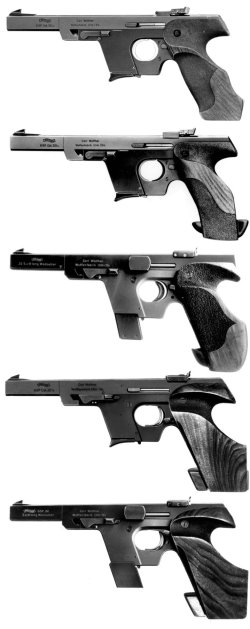
with lever safety behind the trigger. A GSP in .22 LR from 1970, slightly modified grip. In 1971, the first 32 GSP
was released. From 1973 the grip was changed again, a pair in .22 l.r. and in .32 S&W long WC.
Some successful products are not perfect when they are launched on the market and are not launched with a completely new approach. It is more like a maturing process. What is gradually developed, improved in details and often also according to customer wishes, usually becomes more popular with buyers and becomes a classic. The Walther GSP sport pistol, which we are presenting here clearly belongs in this category.
Even if the competition gun introduced in 1968 is no longer used by the world's best shooters after more than 50 years, yet still sits in many gun safes, not only in Germany. This is a quality feature that makes it attractive to other buyer groups. For example, for beginners who do not want to or cannot spend over 2,000 euros on one of today's top models. Or as an inexpensive used and durable club pistol, for rimfire competitions, which otherwise focus on centerfire shooting, as well as an inexpensive two-caliber firearm – .22 LR (GSP) and .32 S&W Long .

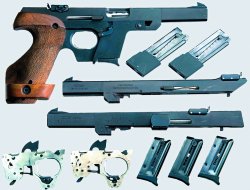
Of course, you can also buy two completely independent GSPs in both calibers, but you don't have to: with a GSP in .32 S&W Long Wadcutter (WC for short), you also have the option of equipping the gun with a conversion kit in .22 Long Rifle, and thus getting a proven rimfire match pistol in addition to a fully-fledged match pistol for many centerfire disciplines. The grip and trigger remain the same (if desired), while the sights, which are linked to the interchangeable upper, are adjusted to the respective discipline and caliber. There was even an interchangeable system for the .22 Short cartridge to turn the GSP into an Olympic rapid-fire pistol. But since the 2004 rule change, the shorter .22 cartridge has become obsolete; this discipline is also shot in .22 Long Rifle.
To anticipate a little: The new Walther GSP 500, which has been modified in some respects, can also be converted from rimfire to centerfire with conversion kits. For rapid fire pistols, there is the fully specialized Walther GSP 500 Rapid Fire.
Walther GSP: Who came up with this design, why and when?
In the early days of the GSP, the Walther designers in Ulm were actually not yet thinking of centerfire cartridges, but of the .22 Short as an interchangeable caliber. The predecessor of the GSP was the Walther OSP, which was designed for the Olympic rapid-fire pistol discipline and introduced as early as 1961. It already contained the essential features that were assumed to be part and parcel of a precision target shooting pistol uncompromisingly trimmed for competition success. Walther had already been building a successful rimfire sport pistol since the 1930s, still in Zella-Mehlis in Thuringia, with the Olympia model series, which was, however, manufactured under license by the Swiss company Hämmerli after the end of the war. It ultimately formed the progenitor of the Hämmerli 208, 212 and 215 target pistols, which were successful for decades, and can be traced back to the Hämmerli X-Esse series, i.e. for a good nine decades now. The current Walther CSP, which we already presented here, is also the latest addition to this branch of the family.
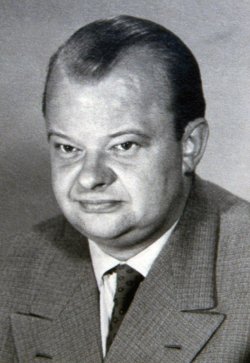
However, the borrowed Olympia design and technology were no longer considered suitable for expansion and competition in Ulm, and not just because of the license issue. The grandson of the former company founder Carl Walther, Karl-Heinz Walther, became the new head of the company in Ulm in 1966 after the death of his father Fritz Walther. As an enthusiastic sport shooter, he often traveled with the service technicians to international competitions and was eager to discuss matters with the competitors. From then on, target shooting guns were a top priority at Walther. Even though it took until 1970 for the Walther OSP to make a name for itself internationally (with the world record set by the Italian Giovanni Liverzani at the World Championships in Phoenix/USA, and many other successes up until the 2000s), the rapid-fire pistol also paved the way for its new sister, the GSP.
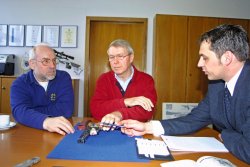
As already mentioned, the German abbreviation GSP stands for "Sport Pistol for Standard Use" – this was explained to us during a visit to the company in 2005 and still in the old Walther building on Karlstraße in Ulm by someone who was involved in the naming process: Georg Zanner had headed the GSP design team at Walther in 1968. As a retiree, he met with Thomas Breitschneider and Wolfgang Müller, who set the German record (595 out of 600) with his GSP – a record that remained unassailable, as the design of the dueling target used at the time was later modified.
At this meeting, Georg Zanner recalled the planning phase: "“Back then, the process was as follows – an idea was developed into a prototype weapon, which was then tested at the shooting range. The staff there would then provide suggestions for improvement, which were incorporated back into the design. And of course, the drawings weren't done with CAD computers, but rather by hand at the drawing board in white coats.”
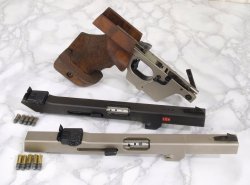
This modular system, first introduced at Walther, had been planned for a long time, but was not actually implemented until 1976: In 1971, the GSP in .32 S&W Long WC was introduced, allowing for "large caliber sport pistol" shooting according to UIT/ISSF "centerfire" regulations. Instead of a complete second pistol in a different caliber, from serial number 67001 it was also possible to use conversion kits in .22 Short, .22 LR and .32 S&W Long WC.To allow for a grip with a more favorable, "steeper" angle to the bore axis and a smaller diameter for smaller hands, the GSP magazine, as with the OSP, was moved from the grip well in front of the trigger – reportedly at the suggestion of a top Swedish shooter. With the magazine in the grip, there were limited design options due to the well's constraints, as the minimum grip diameter was determined by the magazine well. This also made the pistol more front-heavy. Allegedly, the Mauser C96 even served as a model.
Walther GSP, Sport Pistol for Standard Use – But why was this name chosen?
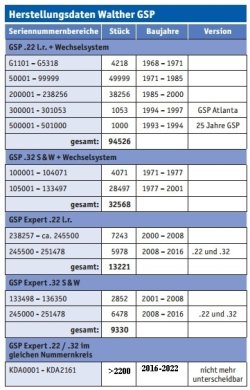
The standard pistol, alongside the Olympic pistol (OSP), remains to this day the only multi-shot rinfire discipline that leads to international championship honors for men – also at 25 meters, also with five rounds per magazine, but fired at different time intervals: 150, 20, and finally 10 seconds for five shots each.
From 1970 onwards, the UIT (now the ISSF) allowed women to compete in the combined precision and duel competition with rimfire pistols. The Walther GSP came at just the right time, especially as the Ulm-based company was also counting on male customers for Germany-wide demand.
The fact that the forward-mounted magazine necessitated a significant reduction in the GSP barrel length to 115 millimeters to ensure the sport pistol complied with the 300 mm rule and fit into the test box was considered acceptable at the time. The 10-ring in the 25-meter discipline measured five centimeters in the first half of the "precision" competition, easily accommodating a typical five-shot group without risking any point deductions. Furthermore, the international target for the "duel" portion, which usually decides the outcome for equally skilled shooters, was rectangular and even featured oval rings, with a 10-ring that was ten centimeters wide but fifteen centimeters high. This meant that slight variations in the height of the shots during the rapid upward swing of the shooting arm (three seconds per shot, followed by a seven-second pause) were easily tolerated.
Of the original "System Zanner" GSP, nothing remains today after more than 150,000 units of all versions were produced. Every detail was changed at some point: the barrel shape, the length, and the method of attachment. The magazines were redesigned, as were the magazine well, the recoil spring, the bolt itself, the trigger (multiple versions) and its mounting, the rear and front sights, the grip shape and its attachment to the frame, the initially present safety, and the bolt release — it was a completely redesigned firearm.
Walther GSP: Details on the action, barrel, grip and trigger
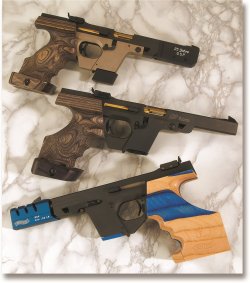
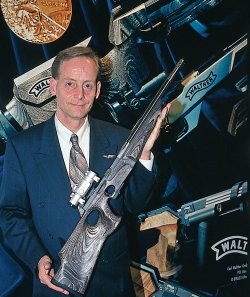
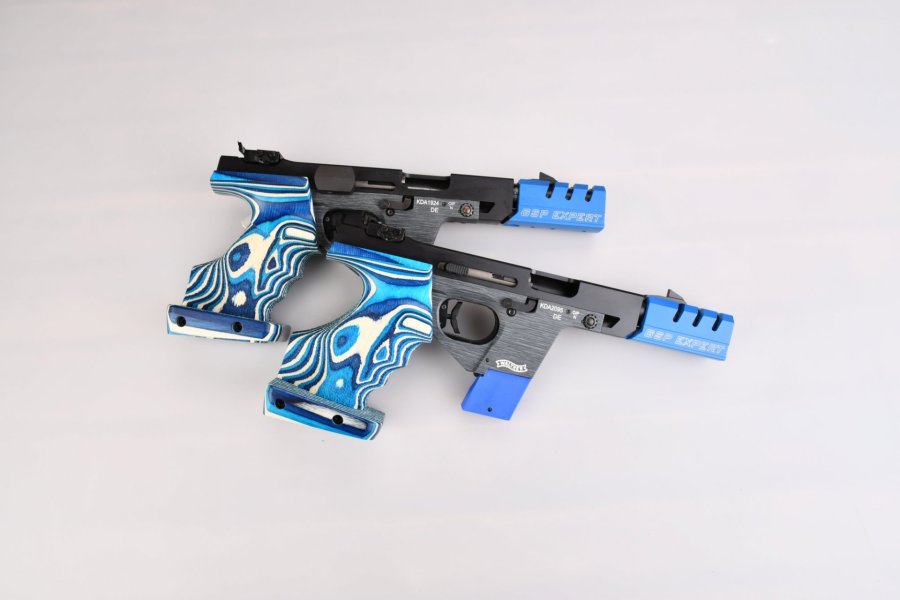
The GSP Expert, which was initially only launched as a special model in 2000, slowly replaced the first GSP generations for practical reasons: the mold for the frame developed age- and use-related voids, making it impossible to guarantee smooth surfaces. In the limited "First Edition" of the Expert, this was skilfully concealed by a ribbed surface pattern, but the Expert, which was built until the model was discontinued in 2022, confidently shone with numerous innovations. For example, the front weight with two inertial dampers mounted on the front of the plastic-coated barrel. Another innovation was the rear sight, positioned closer to the shooter's eye, which fully utilized the 220 mm permitted by the regulations.
Disassembly, conversion: An aluminum frame with integrated controls serves as the basis for the GSP. The spring-loaded magazine release is located at the bottom center of the magazine well and is equally easy to operate for left and right-handed shooters. On the right side, enticingly within easy reach of the trigger finger, is the angled bolt catch.This was introduced after top shooters requested that all five shots produce the same gun response. Therefore, the automatic slide stop, which previously held the bolt open when the magazine was empty, was removed. If you remove the complete upper part of the slide to the front, the trigger unit can be removed upwards (after rotating the locking screw).
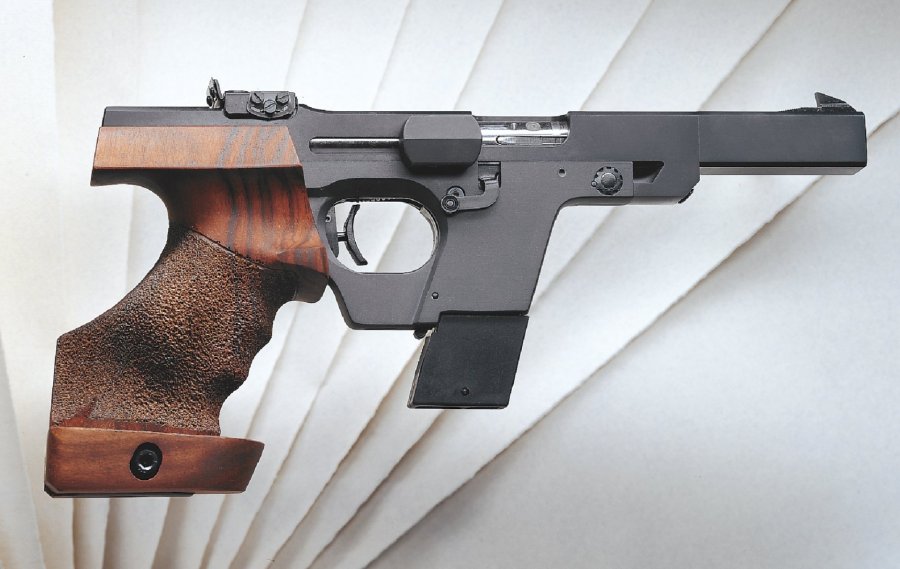
The action: The GSP system consists of the bolt housing in which the bolt with firing pin, ejector and recoil spring can slide back and forth. The cocking piece, which is inserted transversely into the bolt, is guided through a slot in the bolt so that the shooter can comfortably cock the gun, most easily from above or below with the thumb and index or middle finger of the non-firing hand. In the .32 version, the side blocks of the cocking piece were simply enlarged so that the bolt mass was increased in this way and no heavy bolt was required. The GSPs did not have a manual safety; this detail, which was necessary for export to the USA, was only added to the current GSP 500.
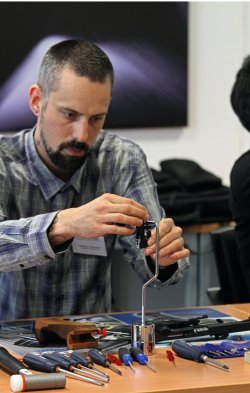
The barrel: In order to stay within the maximum length of 300 mm, target shooting pistols with a magazine can only be shortened at the back of the frame or at the front of the barrel. The GSP barrel started at 115 mm in 1968 and was shortened to 107 mm for a few years in order to achieve a more comfortable hand position on the grip. In the end, the Expert barrel measured 115 mm again – but the current competitors, such as the Pardini models, have the maximum permitted length of 150 mm and in many tests usually achieved tighter groups than the GSP. The 10-ring of the targets used today measures 50 millimeters in both precision and dueling competitions. However, in international competitions (which have been an Olympic sport for women since 2008), scoring is now done electronically, and in the final round of the top eight, it is solely a points competition. For this, a competitor must hit at least a 10.2 with every shot in the final – anything below that counts as a miss. Consequently, precision through extremely tight shot groups plays a crucial role. Munkhbayar Dorjsuren achieved the last German success in the women's GSP in 2002, when she became world champion in Finland. But as mentioned at the beginning, today a GSP has a completely different customer base than it did 20 years ago.
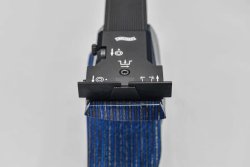
Grip and sights: Since the GSP Expert was delivered with its modified grip, the new laminated wood grip has provided an excellent hand position for most shooters. The palm rest is now held in place by two Allen screws, the finger grooves are more pronounced, and the textured surface of the grip areas is non-slip. Anyone considering buying a used Walther GSP should therefore thoroughly test the grip on all models from the pre-Expert era to ensure the available options are sufficient. Regarding the sights, the regulations set limits. The rear and front sights must be a maximum of 220 millimeters apart. The rear sight may only be adjustable with a tool. Nevertheless, modern details such as a width-adjustable rear sight notch would be helpful, allowing for adjustments to light levels at different shooting ranges. This wasn't the case with the classic GSP, where one could only replace the rear sight blade with one featuring a different notch. For the front sight, a tuning accessory has proven useful: a folding front sight instead of the fixed standard sight allows for quick adjustment of the aiming point after precision shooting. Here, one aims into the bright area below the target, but in dueling shooting, one aims directly at the center.
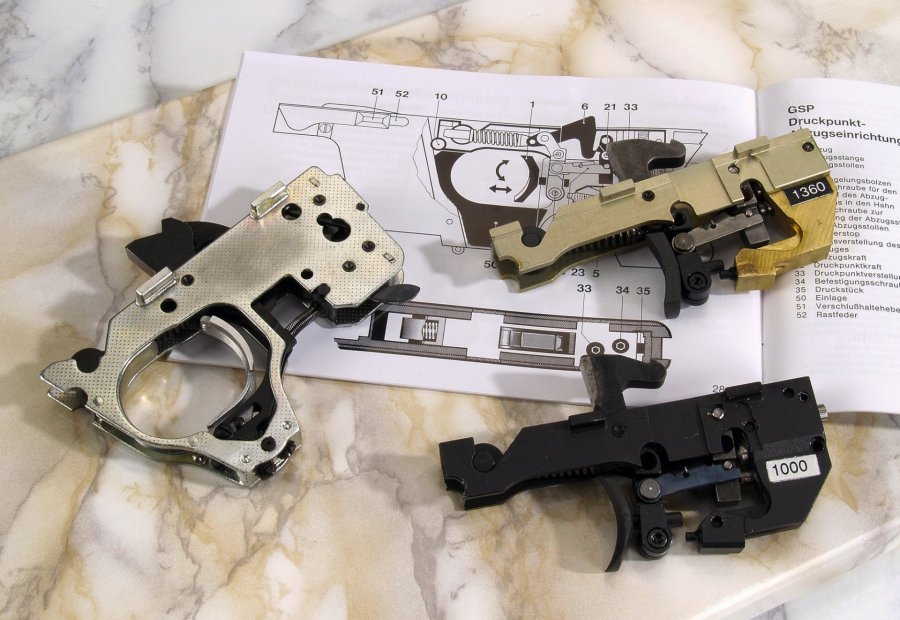
The trigger: "The GSP trigger over the last 50 years" would be a topic in itself for a scientific paper. In any case, it is also evidence of the constant further development and the influence of sporting knowledge. Initially set by the regulations to at least 1,360 grams and single stage, Walther first changed the relationship between the take-up and the break. Today, the majority of the pull weigh set at 1,000 grams is absorbed during the take-up, while at the break itself, the pressure is increased almost without movement – thus preventing any fluctuations from the trigger finger being transmitted to the pistol. Only a few shooters used the special dry-fire training trigger available at the time (which clicks five times instead of releasing); at best, centerfire shooters have a second trigger module with different trigger characteristics in their luggage. The GSP trigger of the Expert generation was easy to adjust in all areas.
The Walther GSP 500 should continue the legend – But the competitors have already passed it by
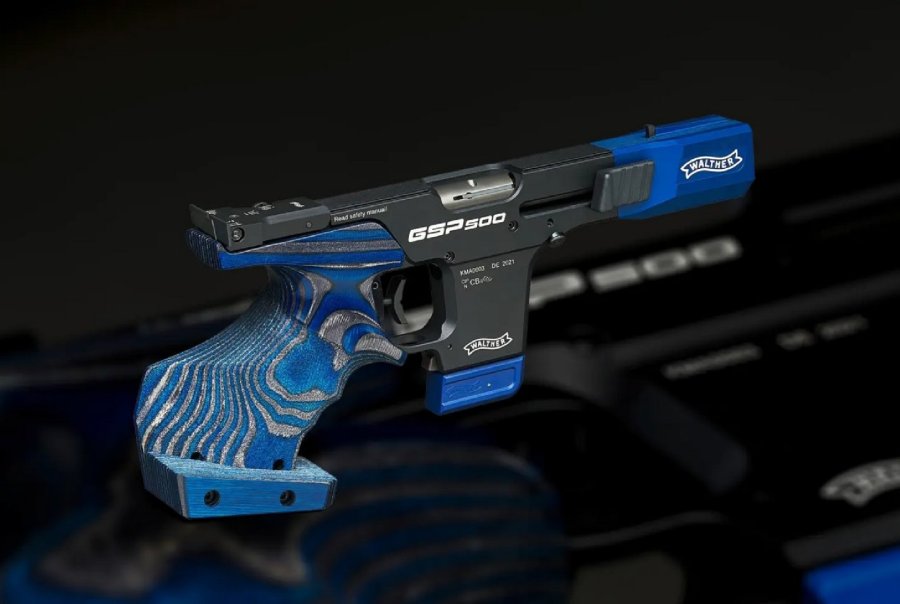
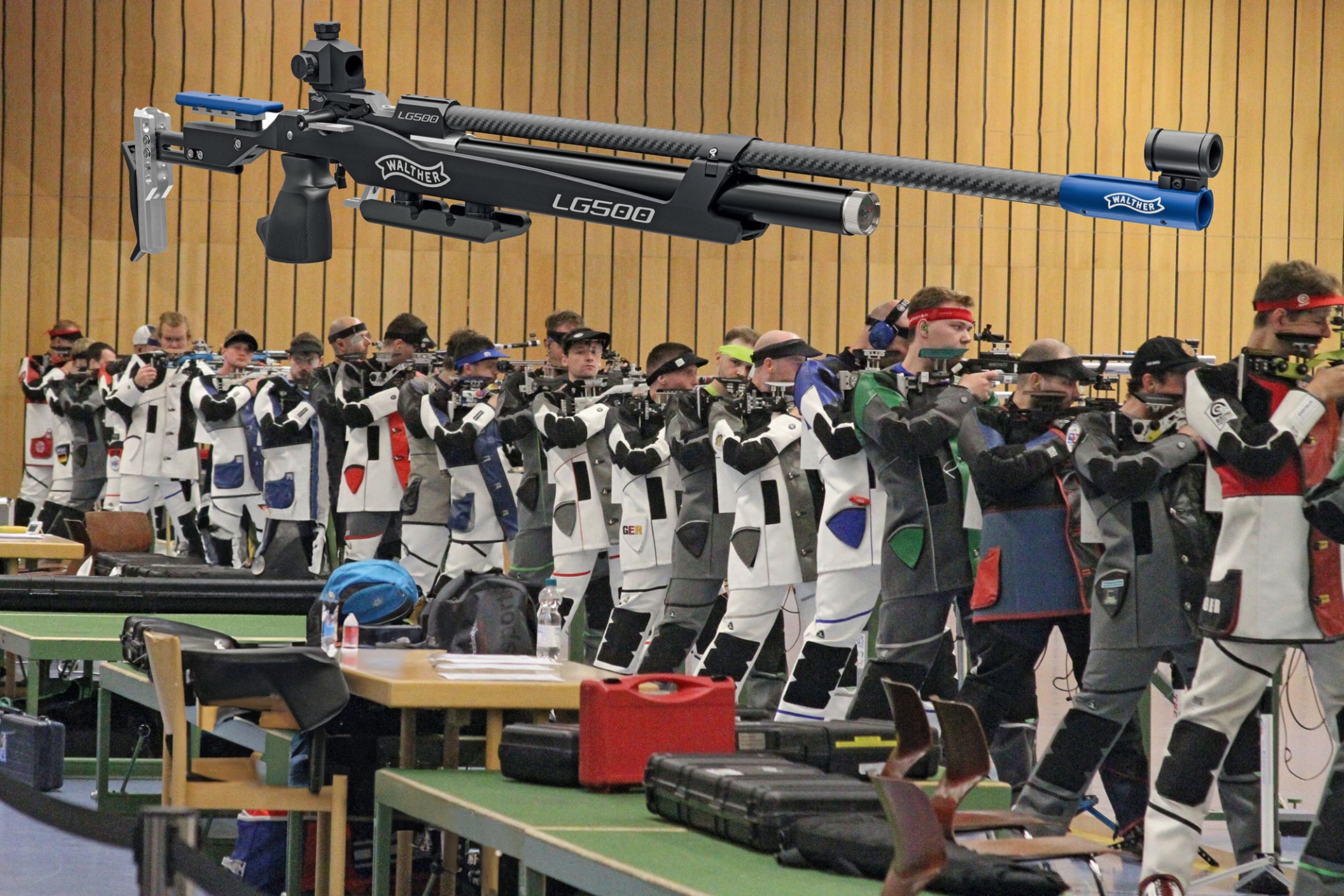
With the planned successor Walther SSP, which could also be supplied with an electronic trigger, the Ulm-based company wanted to continue the success of the GSP in the early 2000s. This only worked to a limited extent because most customers found the pistol, which was equipped with a top-loading center magazine, too complicated and prone to malfunctions. In 2022, Walther therefore launched the new GSP500 as well as the rapid-fire variant GSP500 Rapid Fire. Among the world's best shooters, however, the new 500 has not been able to push its way to the position of favorite. For years, this position has been held almost unchallenged by the Italian brand Pardini, with which most of the finalists in both the Women's Pistol (Pardini SP) and the Men's Rapid Fire Pistol (Pardini SP Rapid Fire) start.
The aged Walther GSP, on the other hand, can score with a second career thanks to its unrivalled popularity. It is already in the possession of thousands of sport shooters worldwide, and second-hand prices are often 50 per cent below the new prices of today's top pistols, which are in excess of €3,000. And there are (still) enough spare parts available, so that a well-maintained Walther GSP or GSP Expert (with regard to the above-mentioned test criteria) can be recommended as a second-hand gun.