
When shooting at objects or, from a hunting perspective, at animals, there is a sort of binary question with only two possible answers: hit or miss. How far a shot has missed the target and why is rather secondary to the question here, as are the hunting consequences of a wounded, non-lethal animal that has to be tracked down. But even when shooting at a simple tin can, sooner or later it becomes a matter of who hit the can in the dead center or just knocked it over with a grazing shot. A more nuanced method of assessment is therefore required as soon as several shooters are competing with each other.
Successful shooting means, another truism, aiming and firing perfectly – and then repeating this sequence as identically as possible and as often as possible. Good shooters are able to place their shots within a tight, circular area. Circular because any deviation, i.e. a group that spreads horizontally or vertically, indicates errors in the shooting process, trigger pull, or hand wobble. A round group, on the other hand, is created by the fact that the muzzle, whether with a rifle or a handgun, can never stand completely still, but finds a relatively reliable, largely identical counter bearing at the other end of the lever arm. The gun muzzle circles, but the holding arm limits the diameter of the circle. In a rifle, this is controlled by the shoulder through the butt plate contact, and this circular motion is slowed down by the second hand supporting the stock – which is the main reason why rifle groups have a smaller diameter than those achieved with a one-handed pistol or revolver.
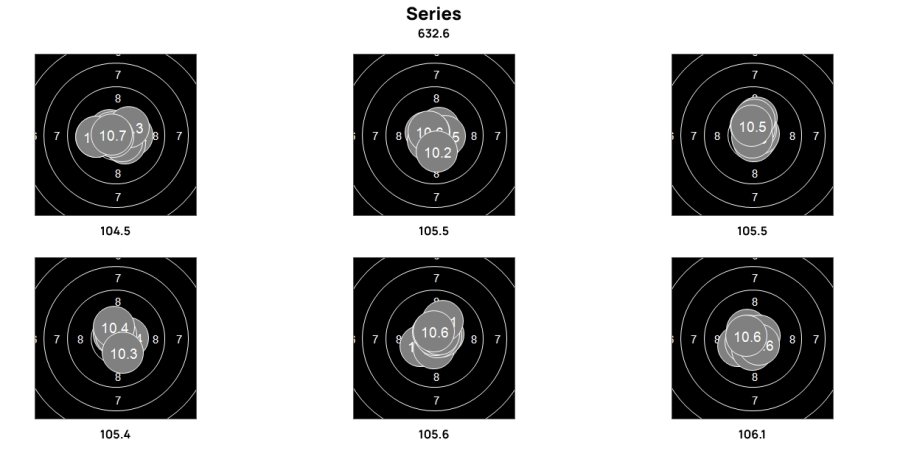
Squaring the circle: ring scoring has become established worldwide, with electronics and with tenths
However, the diameter of a shot group is reduced through practice – in this respect all shooting disciplines are the same. Shot groups are also subject to the rules of statistics: the distribution of hits within the outer diameter of the shot group (the method most commonly used for guns and ammunition tests, for example) will never be uniform: most hits are distributed around the center, with some outliers. This analysis can be carried out using a normal distribution (Gaussian bell curve), and in principle the results of very different shooters can be compared – remember this, it will be important again later.
If the shooter is able to reasonably control his/her vertical and horizontal fluctuations (measurable by the muzzle flipping and side moving), then he/she requires a specific aiming point at the target distance, or, in cases of greater instability, an aiming zone to serve as a reference during the aiming process, thereby ensuring consistent execution. Only in this way shooter can correct deviations, even those within a minimal range; only in this way they can consistently and precisely replicate their shooting position.For this purpose, a simple black shot-hole patch affixed at the target distance to the otherwise white reverse side of a target sheet would naturally suffice. While this approach may be adequate when using a riflescope – where you simply quarter the black spot with the crosshairs, aiming "dead center" exactly where the bullet is intended to strike – the situation differs with a rear aperture sight or a diopter. In such cases, the diameter of the aperture must precisely match the diameter of the shot-hole patch; otherwise, it becomes impossible to center the patch within the aperture, making it exceedingly difficult to shoot with the necessary consistency and repeatability.
The aforementioned shooting patch can be either hit or missed. However, this is still far too imprecise a method for deciding whether shooter A or shooter B can shoot better. Humanity is resourceful, and so, several hundred years ago, marksmen came up with the idea of using rings: concentric circles around the actual target, allowing everyone (including spectators) to see who can place their shots (the more, the better) in the tightest space. The hits on printed rings can also be calmly analysed after the shooting and, as a rule, the tangible evidence prevents any disputes. After all, video assistant referees haven't proven effective in the much more dynamic sport of football either.
From the perfect ten on printed cardboard to electronic tenth ring scoring: Higher scores require finer evaluation methods
Like everything in evolution, however, the knowledge and practical application of ring scoring did not stand still. The better the shooting technique, but also the more sophisticated the technical equipment, the sights and the ammunition to match the barrel, the more difficult it became to differentiate between the performances of shooters of equal ability. This can be easily understood by comparing the historical shooting targets and their ring dimensions. For example, in the original German special competition with the air rifle. Here you can literally see the development of performance on the targets: after the Second World War, shooting in Germany was revived with simple air rifles, often shot in the back rooms of pubs. Initially, the Allies did not allow manufacturers such as Walther, Anschütz or Diana to use rifled barrels, which made shooting more difficult.

Before the war, paper discs printed with twelve concentric rings were sufficient. The twelve-ring had a diameter of 9.5 mm, more than double the 4.5 mm caliber. When rifled and more precise barrels were introduced in 1953, the targets used internationally were reduced to ten rings and the ten-ring to 4.5 mm: a well-placed shot took up the entire inner center. In 1958, the German Shooting Association introduced a ten-ring target with a ten measuring only 2 mm. They were also used internationally from 1967. The ten was then one millimeter in size for a few years, until it shrank to 0.5 mm worldwide in 1988. That's about the size of a pinhead. This brought with it the problem that the bullet was nine times larger. Hitting a ring has not been possible for a long time; "visibly touched" has been the motto ever since: a ring value is considered achieved when the bullet hole touches the higher circle. This was sometimes barely recognizable to the naked eye and led to the use of standardized scoring gauges.
The history of air rifle shooting is unfortunately also one of tricksters and cheats. The targets, made of wood-pulp paper, were supposed to have perfectly round bullet holes. With a bit of criminal intent, one could improve the punching process by increasing the humidity, for example, discreetly placing a damp cloth on the stack of targets. This was because the paper targets were transported to the pellet trap by a pulley system and changed by each shooter themselves. If two or even five shots were fired per target, a full shot circle could no longer be found anyway, especially with skilled shooters. Different paper qualities, excessively humid storage conditions, and a muzzle velocity that was too low also affected the size of the bullet holes. One master marksman, once caught cheating, had a kind of conductor's punch in his jacket pocket; for a while, this also helped to compensate for a lack of accuracy.
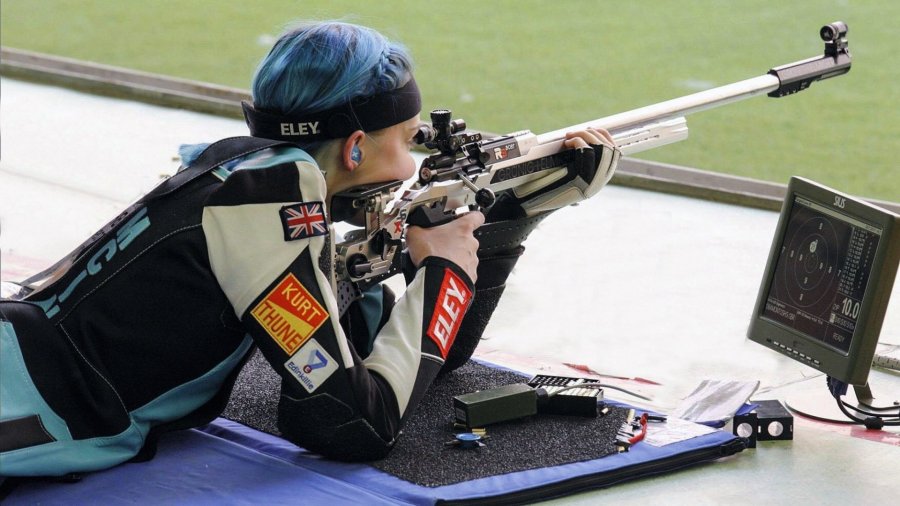
The advantages of electronics: constant evaluation, fast results without waiting times, control for the shooter and information for the spectators
Shooting on paper targets, at least in high-performance shooting, came to an end due to several factors. It took up to an hour for all the results of a round to be analyzed and posted. This delay was ill-suited to the growing media popularity of competitive shooting, which began to rise – albeit initially on a modest scale – in the 1970s. Competitors did not know who had won for a long tim, forcing them to wait around – a particular burden for those who had traveled long distances to attend. Target retrieval systems were expensive and maintenance-intensive, as were the paper targets, and with scores constantly climbing to ever-higher levels, the world governing body for shooting sports (then the UIT, now the ISSF) realized it needed to devise a solution. Naturally, there are few options available for differentiating performance levels when the field is so tightly contested. One could increase the number of shots fired; however, within the fixed timeframes typical of championships, this would result in fewer competitive rounds – and consequently higher qualifying scores – while simultaneously reducing revenue from entry fees. Extending the distances is now impossible in terms of shooting range infrastructure, so you have to reduce the size of the targets.
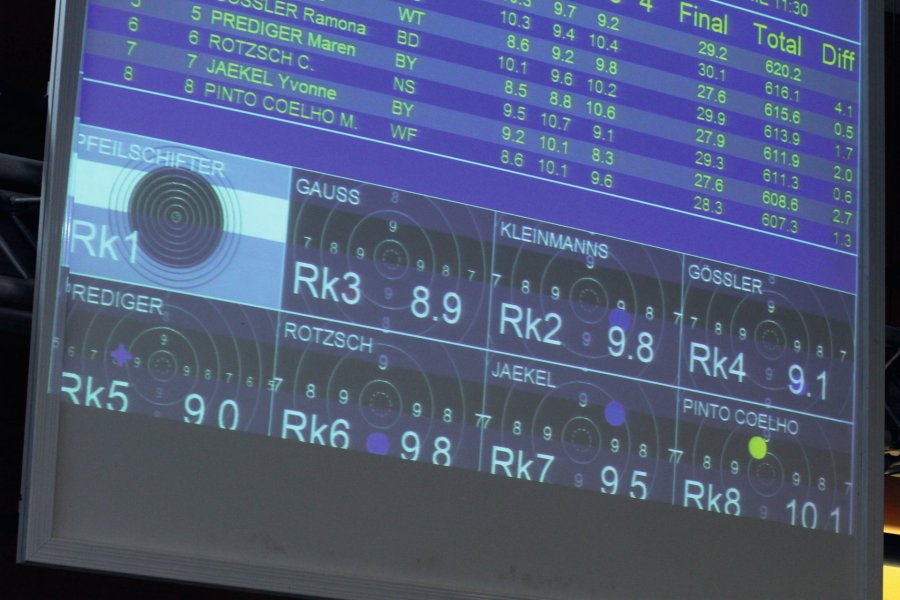
From 1988, an international final was introduced in which the best eight shooters from the preliminary competition had to shoot again for the medals. This was intended to even out the closely matched results. On the ten-ring target, each ring was again invisibly divided into tenths of a ring, to be measured only with special machines. Since there are also full or only partially hit tens, the ten-ring is also divided into tenths, with the new best value being 10.9. However, this also meant the end of the round, easily understood ring scores like "599 out of a possible 600 rings."
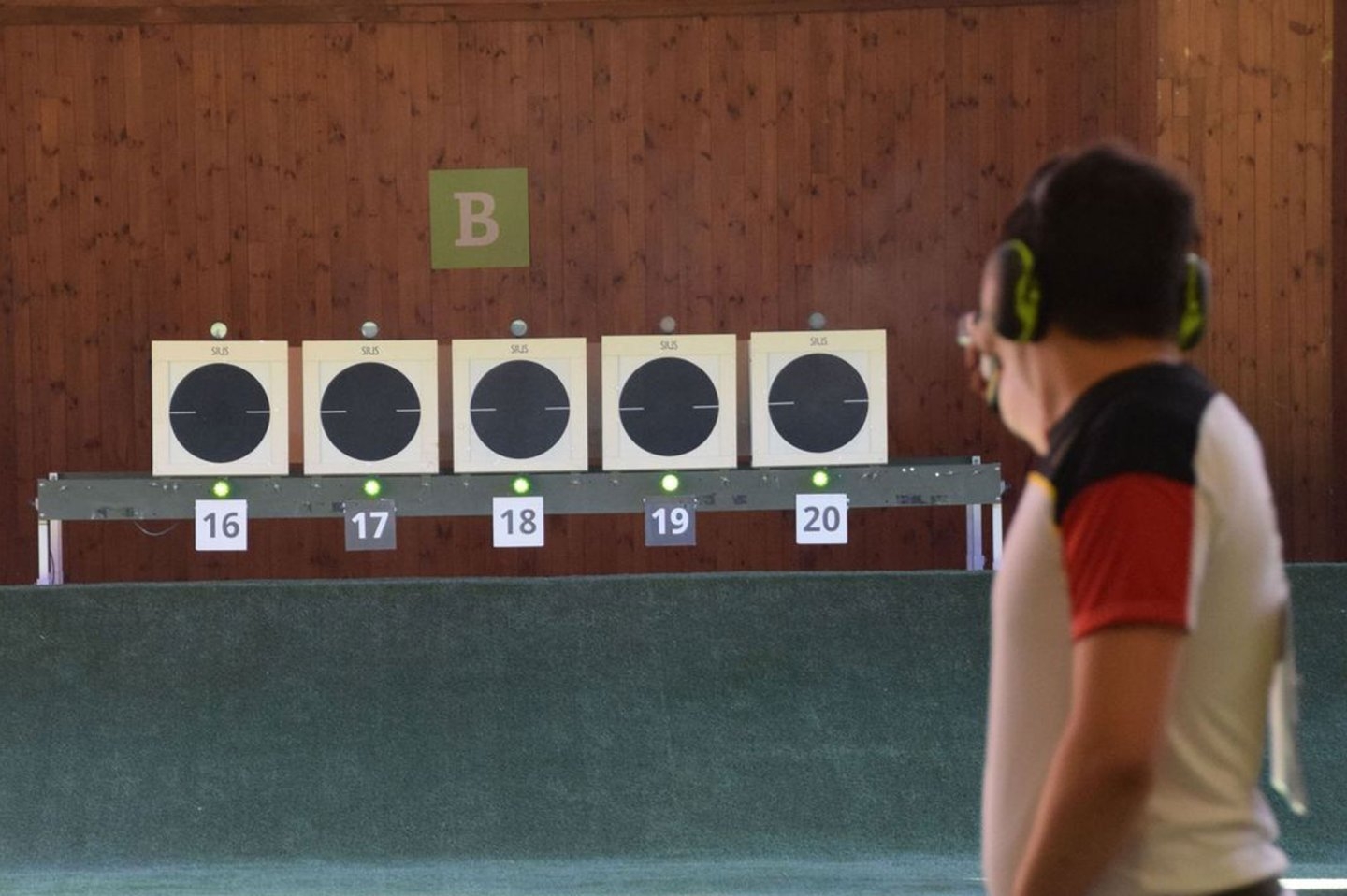
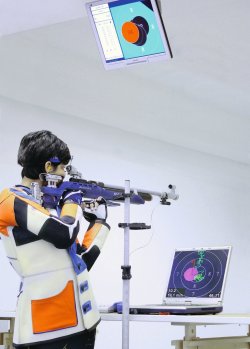
Somehow, however, sporting development seemed to progress faster than technology. And the rules were always lagging behind anyway. From 1992 onwards, new target types were used for the first time at the Olympics, which gradually replaced the paper targets. The target image from the shooter's perspective still consisted of a white square with a dark circular center. However, the shooter now fired through a cutout at black paper. And microphones at the top, bottom left and right recorded the sound of the paper being pierced. The time delay caused by the sound, which travels uniformly in all directions, reaching the microphones can be measured. If the sound reaches the left microphone first and the right one later, this indicates a left-handed shot. The same principle applies to the height and the precise positioning of each shot. Equally important, especially for the media and spectators, was the simultaneous display of the hits on monitors, both at each shooting position and on large screens for the spectators. The winner was immediately decided with the last final shot.


The increasing level of competition also applies to other events of the ISSF (International Shooting Sport Federation). For example, in rimfire rifle competitions, where almost the maximum possible score is achieved in the three-position event (3x20 shots) – from 595 out of a possible 600 rings upwards – because only full points are awarded in the preliminary qualification round. Tenths of a ring are only added in the final, yet even today the medal positions are separated by only a few tenths of a ring.
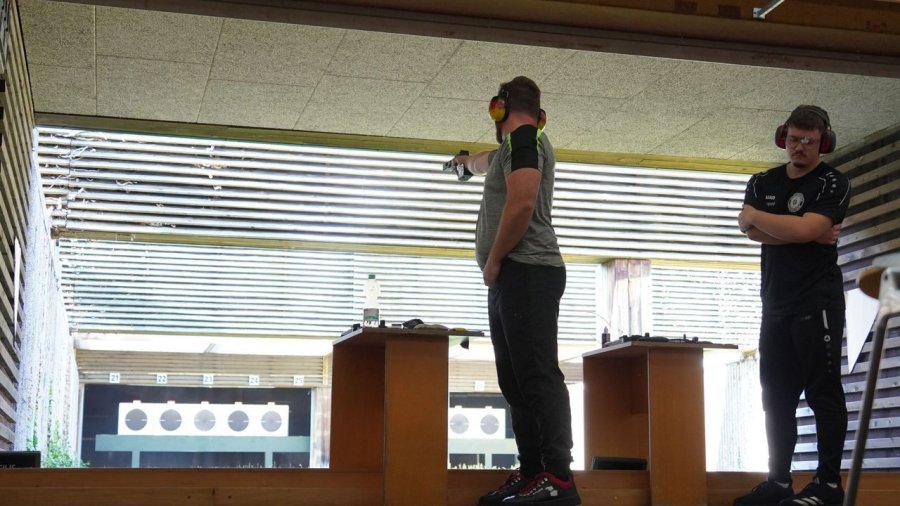
The situation is similar in the handgun competitions: In the Olympic rapid-fire pistol, only shots better than 9.7 (the ten has a diameter of 50 mm) count as "hits" in the final; anything less is a "miss". In the 25m pistol event, women even have to achieve at least a 10.2 for a hit. The athlete with the most hits wins. So in the end, it's back to the simple digital evaluation: hits or misses, just like the old tin can...
How could performance measurement in shooting be made fairer than with a ring measurement, even with tenths?

- Suggestion 1: Statisticians know that it would be fairer not to add up inaccurate ring values (even with tenths), but instead to calculate the absolute distances of each shot from the center down to thousandths of a millimeter. This is a method used in the earlier mechanical scoring gauges that determined shooting champions – it's just far too time-consuming.
- Suggestion 2: In principle, a smaller overall shot group around all hits would also be a ranking criterion (just as test groups are usually measured here at all4shooters.com): Anyone with too many outliers can't compensate for this with any number of tens, while someone with a nice, round overall group would actually have hit more consistently, i.e., better.
- Proposal 3: If the electronically measurable center points of a shot hole were evaluated instead of its outer ring, the results would be comparable regardless of the caliber. This is how it is done in centerfire shooting, for example, when different calibers are permitted in the same class. In muzzleloader shooting, at least half the caliber diameter must be within the higher ring. A uniform scoring system based on the rings is probably impossible due to the differences between the individual disciplines.