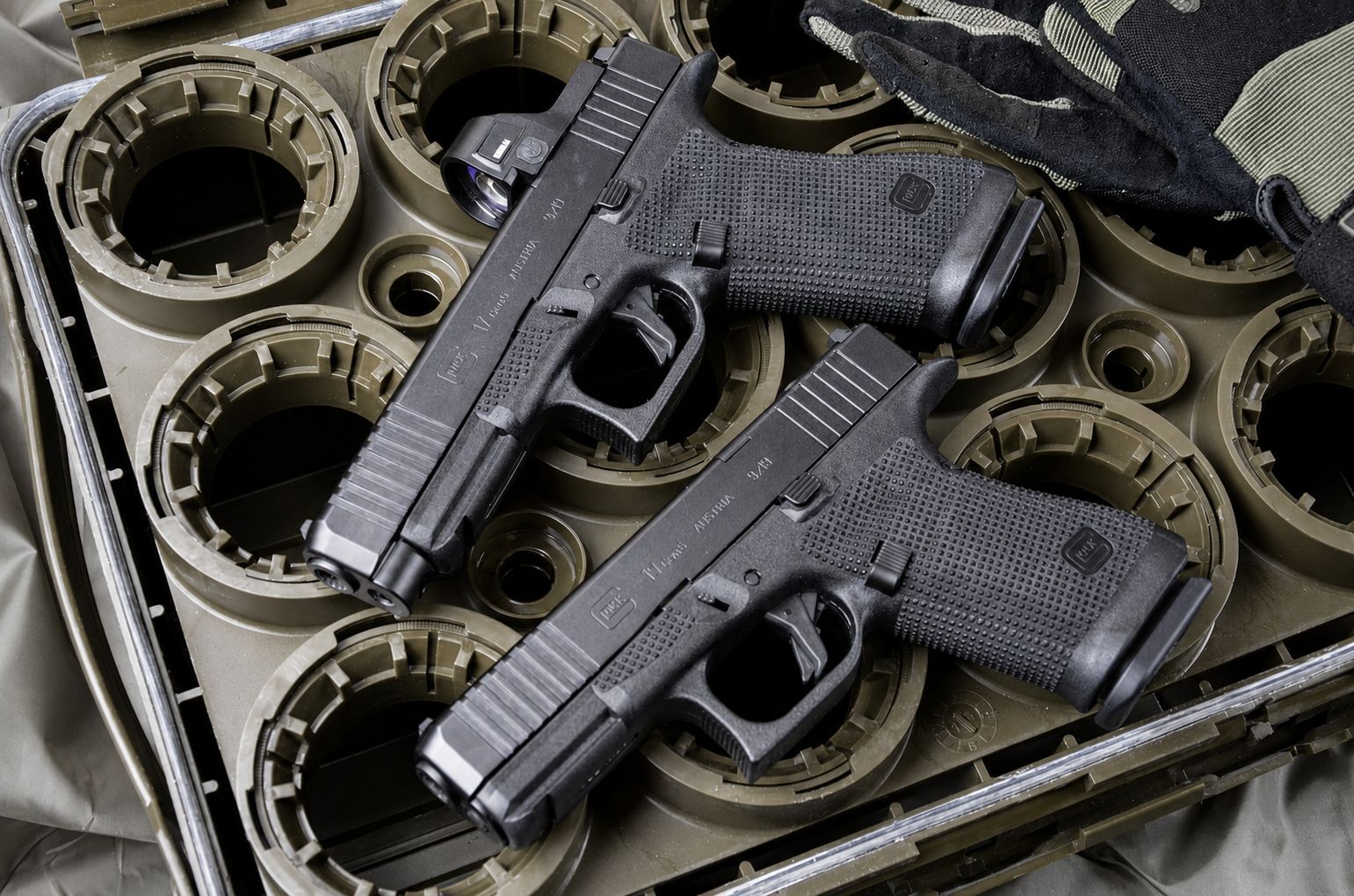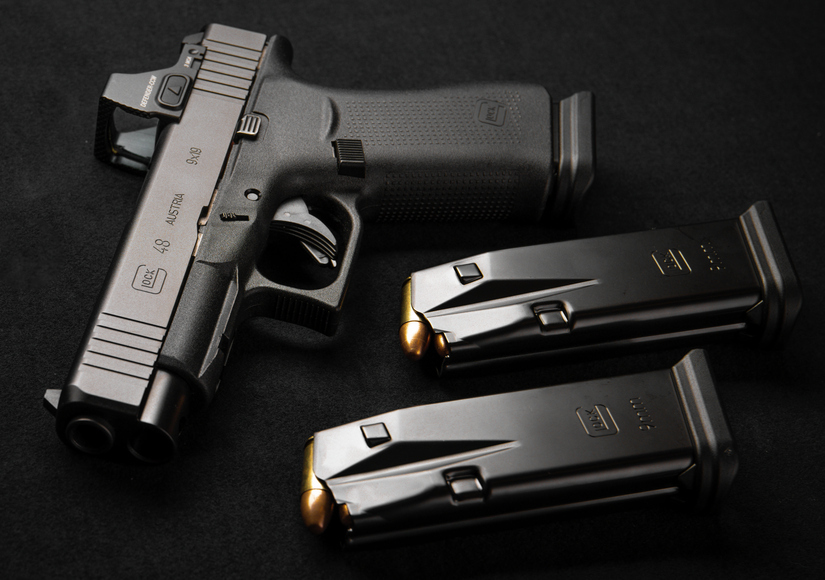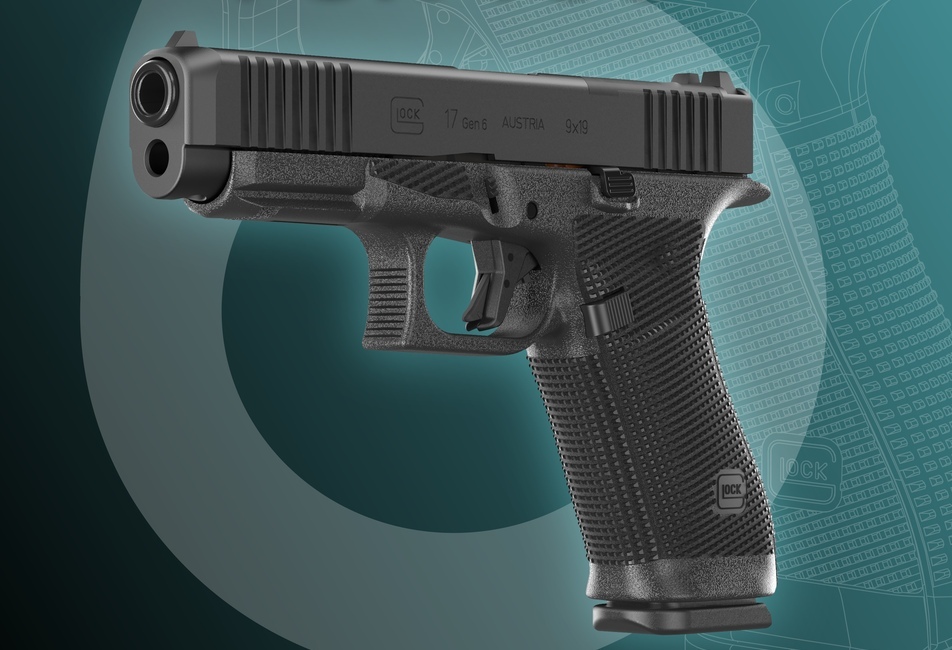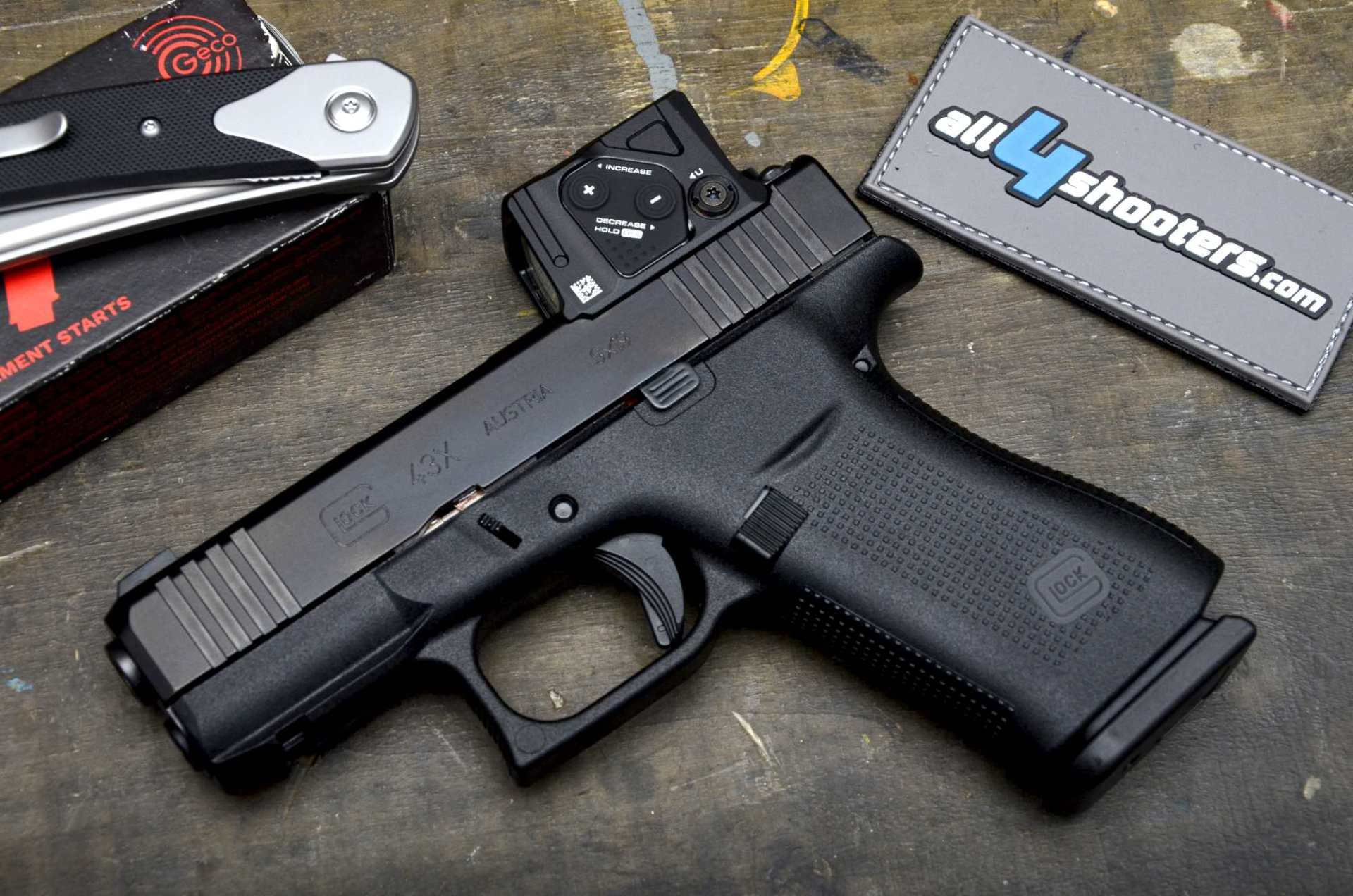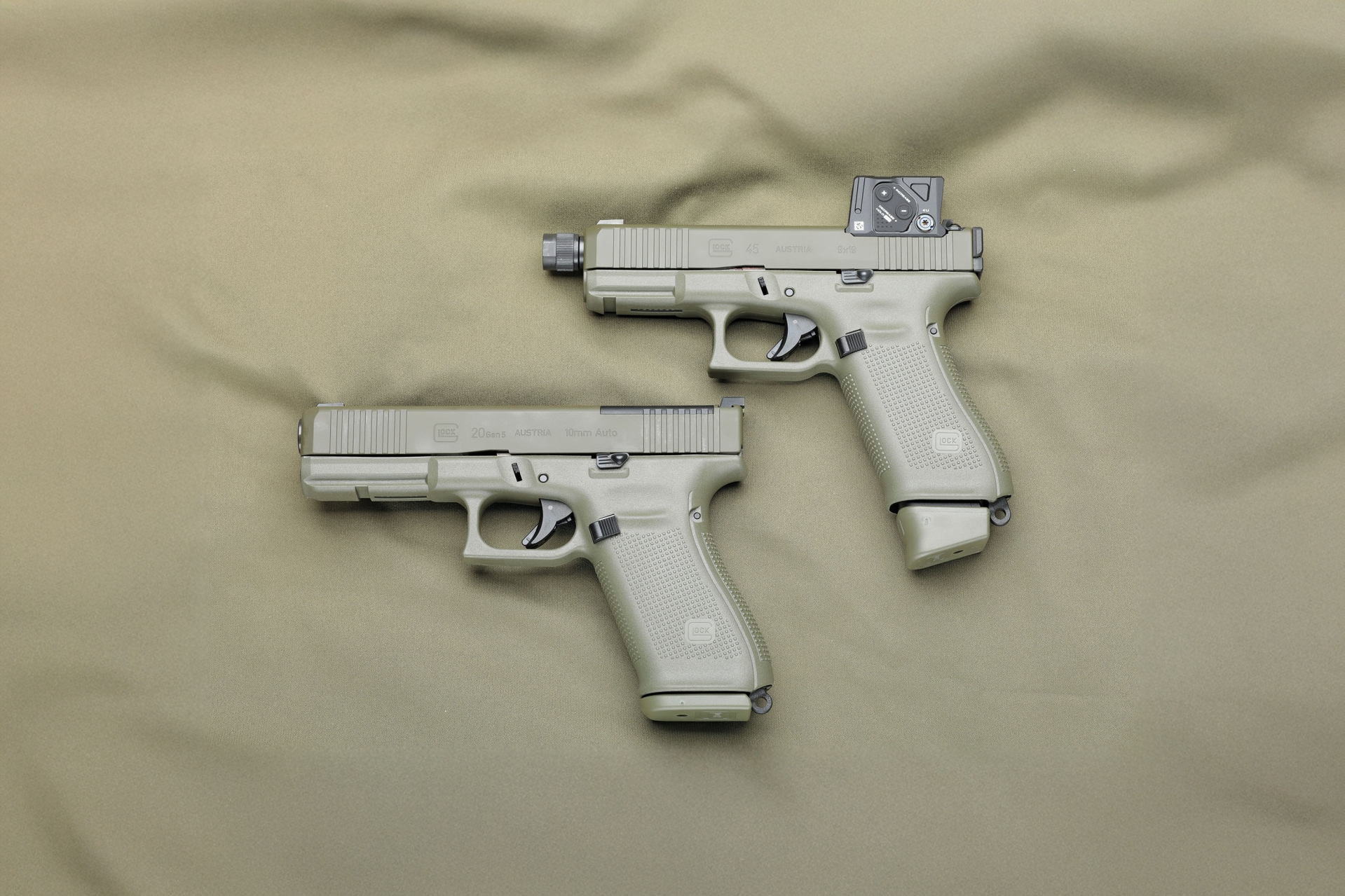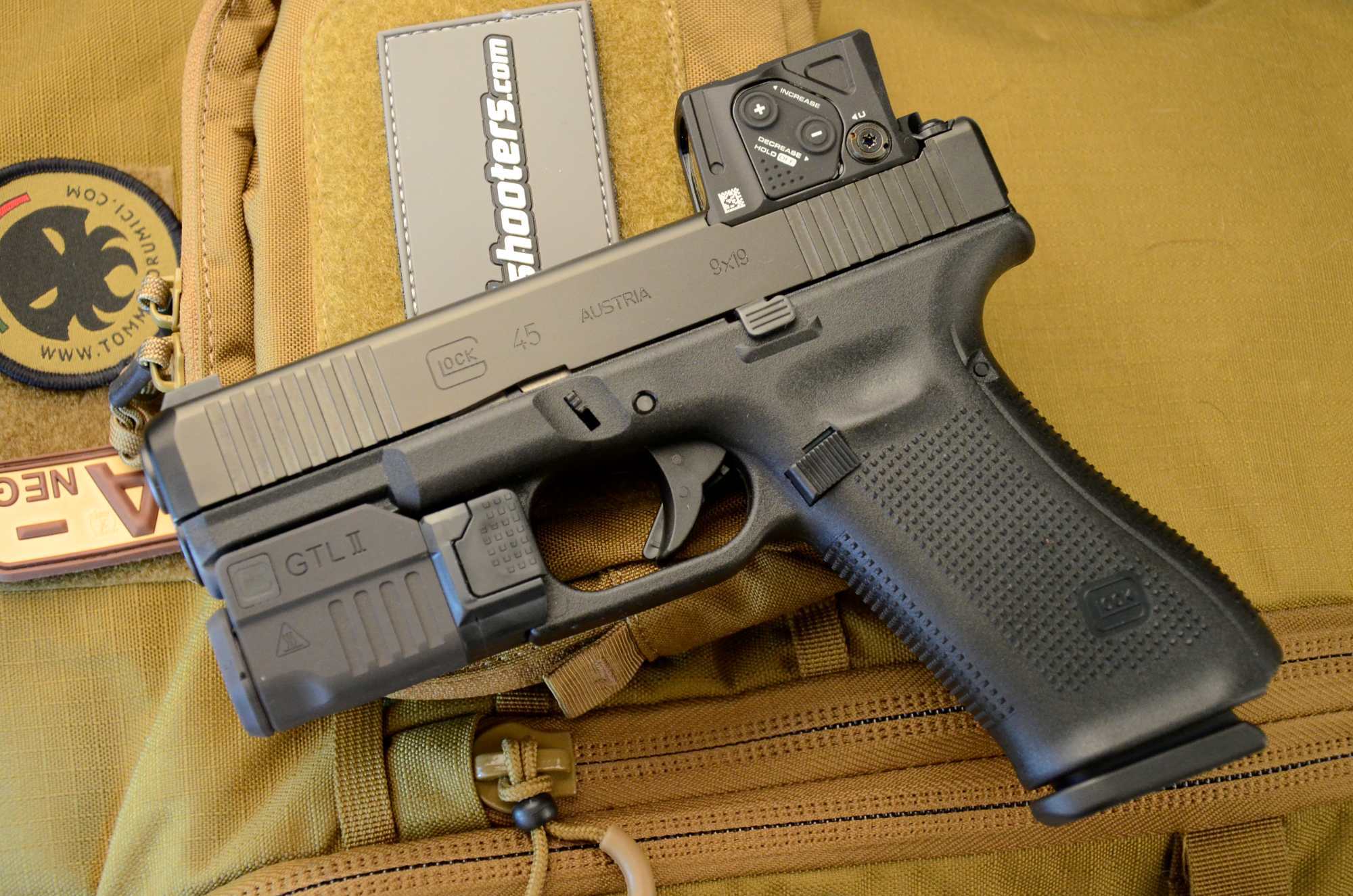

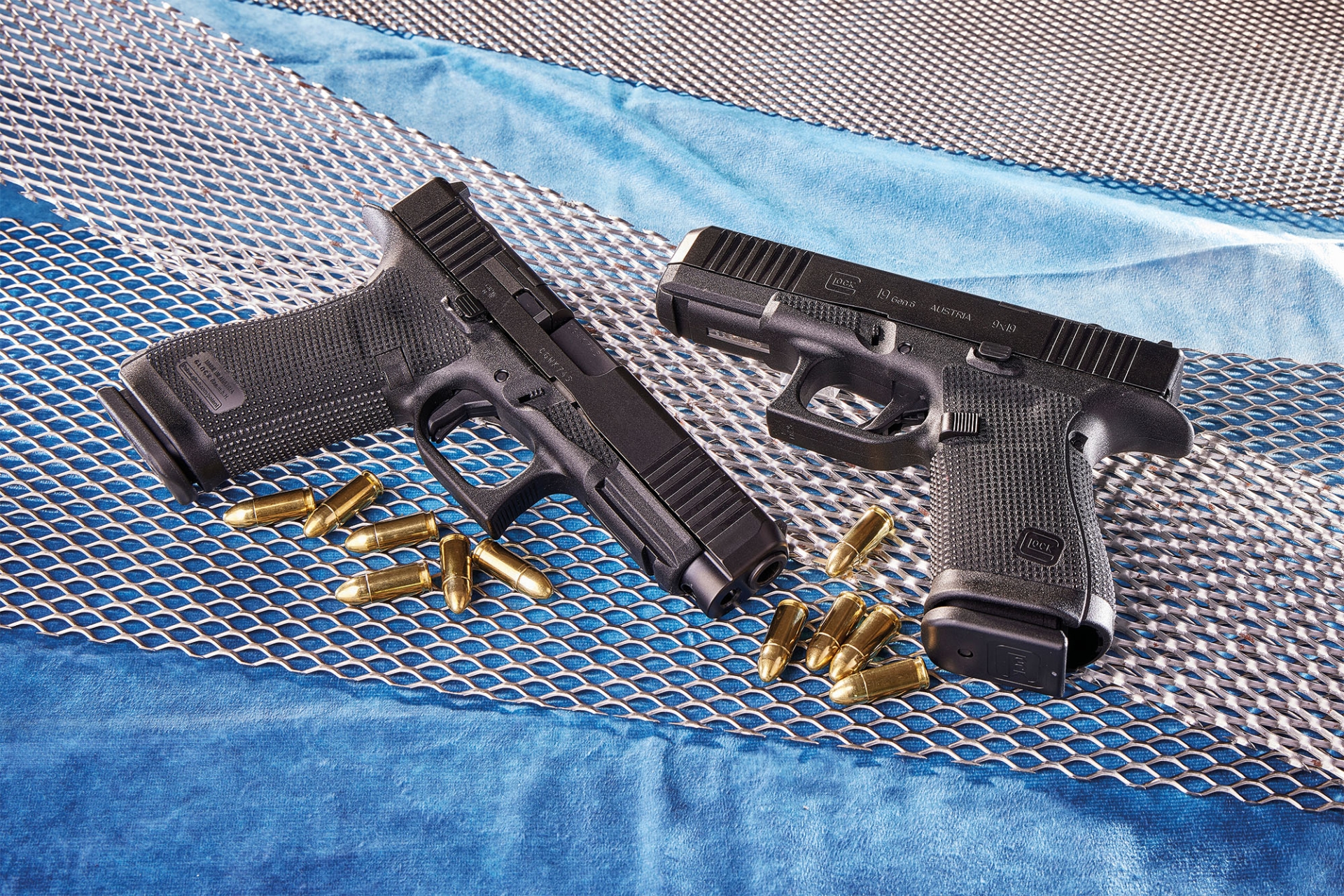
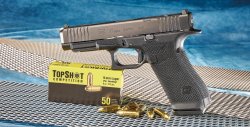
For this test we chose a GLOCK 17 Gen6 and its smaller sibling GLOCK 19 Gen6. Both pistols come well packaged in the familiar GLOCK plastic cases. Included are two magazines, a loading aid, a cleaning rod and an instruction manual. Two differently-sized backstraps are also included. With the introduction of the "Next Generation", which always comes as Optics Ready, three plastic adapter plates for different red dot sight footprints are also included. All in all, a thoroughly appealing complete package. Before we go into detail about these models, let's take a look at the GLOCK Gen6 models currently available.
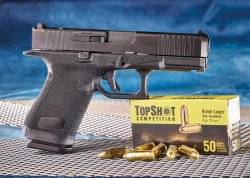
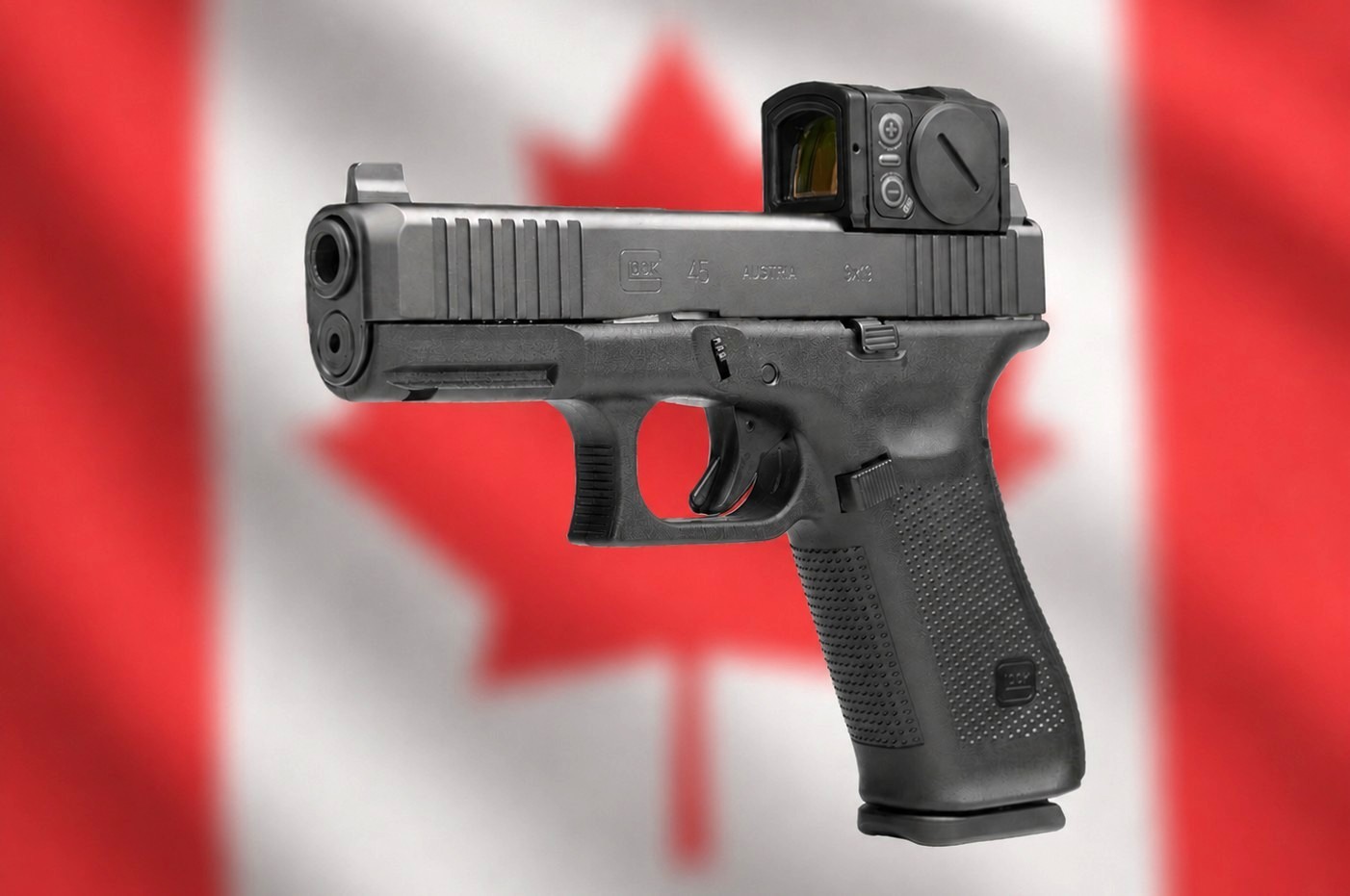
In addition to the GLOCK 17 Gen6 and GLOCK 19 Gen6 models already mentioned, the GLOCK 45 and GLOCK 49 variants of the sixth generation are also available. Strictly speaking, these are two basic models and two crossovers, resulting in two further variants. A GLOCK 17 Gen6 with a GLOCK 19 Gen6 slide becomes a GLOCK 45 Gen6, and vice versa, a GLOCK 19 Gen6 grip combined with a GLOCK 17 Gen6 slide becomes the GLOCK 49 Gen6. This should initially cover the basic requirements. All variants are chambered in 9mm Luger and are equipped as standard with an optics ready slide. It is speculated that this will eliminate the need for MOS models in the future. Whether and when other models in different calibers will be released is still unclear.
Ergonomics and trigger of the new GLOCK Gen6
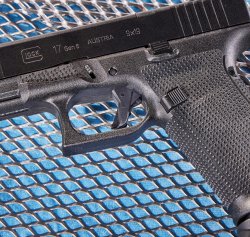
But now let's take a look at the new features. The most striking feature is the new surface texture, which has been extended to other areas of the pistol. GLOCK itself calls this RTF6. This texture is a further development of the previous series and is significantly more grippy than that of Generation 5, without being unpleasantly abrasive. In the sixth generation, the RTF6 texture extends almost to the slide and culminates in a newly designed thumb rest on both sides. This is the subject of intense debate in various forums, with both supporters and opponents. Ultimately, this is a matter of taste, but both the texture and the rest harmoniously complement the overall picture and provide the shooter with a secure grip and thus better control of the pistol.
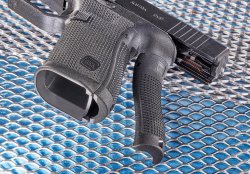
The grip geometry has changed slightly compared to its predecessors. The trigger guard now has a deep undercut which, in conjunction with the enlarged beavertail that is now also standard, allows the hand to be positioned higher, just below the barrel bore axis. This guarantees significantly better control of the pistol when firing. A very beneficial effect, for example when firing a quick string of shots. Another new feature is the thumb or "gas pedal" located in the front third of the frame, which also has the RTF6 texture. A subtle but small detail that enables the shooter to maintain a high degree of consistency in hand position and finger placement. With the aforementioned beavertail, two grip backstraps are now sufficient to adjust the size of the grip to the shooter's hand. These are supplied in 2 mm and 4 mm thickness and, as usual with GLOCK, are simply slipped onto the grip and secured with a pin beneath the beavertail. The grip itself has been given a slightly convex shape on the sides, making it significantly more ergonomic. This makes the GLOCK a pleasure to hold. The magazine well has been slightly enlarged for quick magazine changes. The last small feature is an enlarged border around the slide stop lever. This is intended to prevent unintentional actuation.
The trigger behavior is similar to that of a standard GLOCK, even though it is now flat-faced. Shooters with smaller hands or shorter fingers in particular will appreciate this, as it shortens the distance from the back of the grip to the trigger blade. After a 5-mm pre-travel, the trigger requires a pull weight of 1,969 grams, determined using a Lyman trigger scale, in order to release the shot after a further two millimeters. The trigger reset is also five millimeters. The springiness of the trigger is striking. In contrast to a metal trigger, GLOCK gives the impression that the polymer trigger is not sufficiently rigid. Of course, this is not the case and reflects the subjective feeling. The GLOCK Performance Trigger is not (yet?) available at this time. The triggers of the previous models are also not compatible, as the internal design has changed. The change also includes the extractor plunger rod, which now no longer runs all the way to the rear cover plate at the end of the slide, but is significantly shortened. This makes it much more difficult to replace, but conversely allows the optics to be screwed directly and deeply enough into the slide.
A view of the target: mounting optics on the GLOCK Gen6
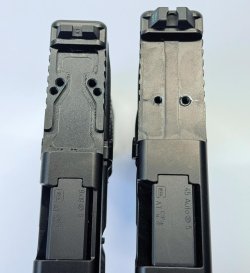
And here is the next big difference. GLOCK supplies three adapter plates made of plastic and about one-millimeter thick with every GLOCK Gen6. With regard to the durability of the small pins of the footprints, the question arises as to how the enormous acceleration forces of the slide can or should be absorbed when firing. Are they able to permanently withstand the enormous shear forces? Or do only the two fastening screws absorb these forces? GLOCK provides satisfactory and reassuring information on request. Based on long-term tests carried out by GLOCK, it has been shown that the two screws are suitable for permanently and precisely holding the red dot sights in place over the long term. In its reply, GLOCK points out that the cover plate screws must not be used due to their length and that in most cases the OEM mounting screws supplied with the optics are acceptable for mounting.
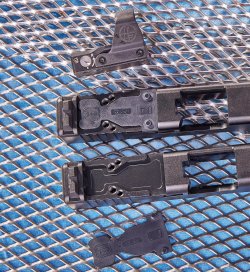
According to the answer, care should be taken to ensure that the screws do not protrude more than 5 mm beyond the optics so that the adapter plates can fulfil a buffer function and thus place the screws under permanent tension. This design places the optics further down, which should increase durability and stability. The adapter plates are supplied in three versions and can be used to mount Trijicon, Holosun (except 509) and Ameriglo as well as C-More and, in the latest version, sights from Leupold and EoTech. As usual, the pistol's standard sights are equipped with a white dot on the front sight and a fine white outline around the rear notch. This allows for quick and easy target acquisition. The 3.8-mm wide front sight combined with the 4.2-mm rear sight notch at 169-mm sight radius produces a comfortable light gap.
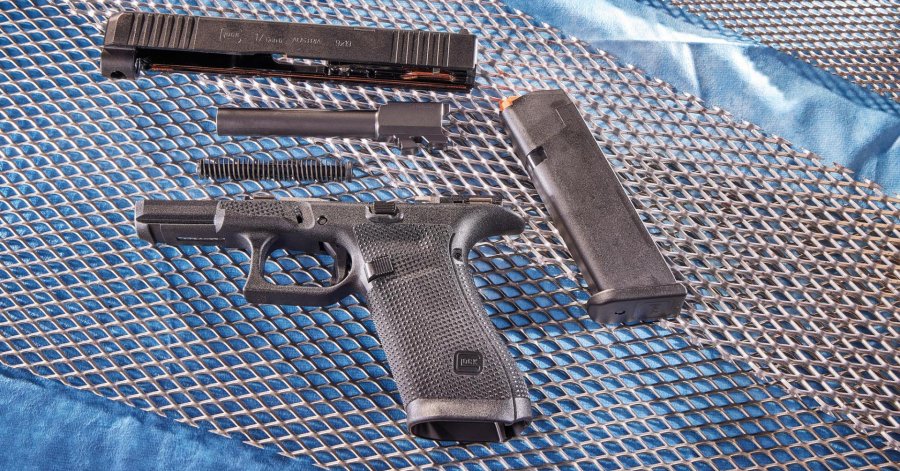
The serrations in the front and rear area of the slide are now milled deeper and thus help prevent slipping even more during manipulation. Front serrations are now always present on all models. The abbreviation "FS", which stands for "Front Serrations", is occasionally used in this context. The dust cover of the GLOCK 17 Gen6 is slightly shorter than in older generations. This means that shorter slides can now be used on a GLOCK 19 Gen6 or GLOCK 45 Gen6 without any problems, as GLOCK does not officially offer interchangeable slide kits. This results in, at least theoretically, greater flexibility of the frame. Compared to the Generation 5, this version would actually be a GLOCK 47. As the front sight is screwed on from the inside with GLOCK, but at the same time the shorter dust cover has to be compensated for, there is a hole on the underside of the slide in the appropriate place to allow access to the screw (when disassembled). Little has changed on the inside. The most obvious feature is the single recoil spring with one-piece guide rod. The last time this was used was in Generation 3. Reloaders will appreciate this, as it makes it much easier or even possible to adapt the gun to their own loads.
Practical test: The GLOCK G17 Gen6 on the shooting range
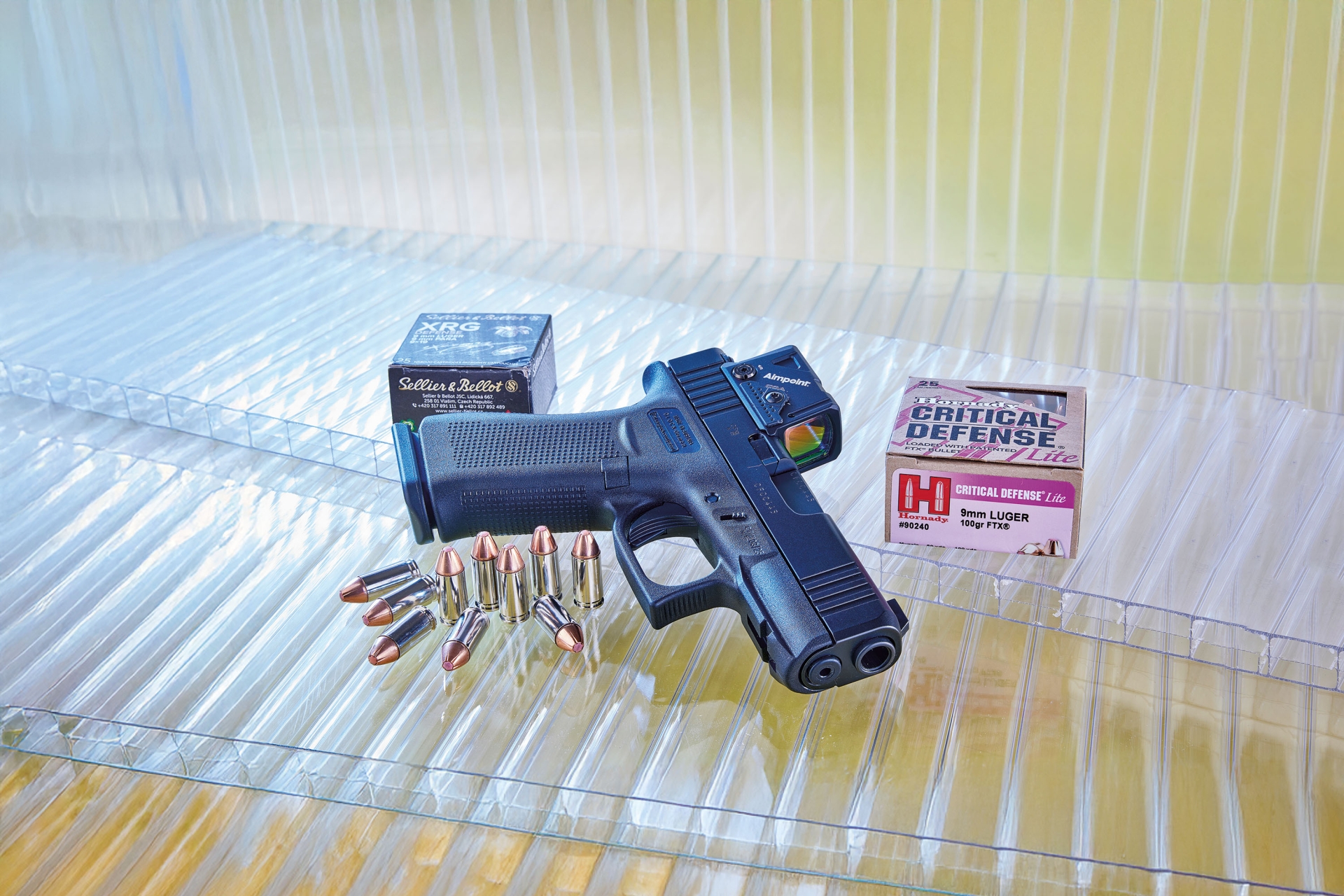
Now it's time to see how the Gen6 behaves on the shooting range. The GLOCK 17 Gen6 will be used as a representative for measuring groupings. A Leupold Red Dot was screwed on for this purpose. This serves two purposes: firstly, to achieve more precise shot groups, and secondly, to see how the new Optic Ready design performs in practice. Eleven types of ammunition from 95 to 124 grains from different manufacturers and bullet types were fired. The GLOCK 17 Gen6 achieved an average grouping of just under 59 mm, fired from a seated and supported position at a distance of 25 meters. The GLOCK 17 Gen6 achieved the smallest group in our test, with a 28 mm diameter, using Hornady Critical Defense cartridges with a bullet weight of 115 grains. While not comparable to a "real" target pistol, this is a perfectly satisfactory result considering the trigger pull and the intended use of a GLOCK pistol.
GLOCK Gen6: G17 and G19 technical specs
Model: | GLOCK 17 Gen6 | GLOCK 19 Gen6 |
Caliber: | 9mm | 9mm |
Capacity: | 17+1 rounds | 17+1 rounds |
| Barrel Length: | 114mm | 102mm |
| Sight Radius: | 169mm | 157mm |
Trigger Pull Weight: | 1,969g | 1,879g |
Weight: | 683g | 643g |
| Dimensions: | 202x34x138mm | 185x34x125mm |
Equipment: plastic case, 2 magazines, cleaning kit, operating instructions. | ||
Conclusion on the new GLOCK Gen6
Calling it a new generation seems quite reasonable given the experience gained with the GLOCK Gen6. The workmanship is as good as ever, and the handling is safe. The new features are well thought-out and offer the shooter some valuable improvements. The feel and the revised geometry of the grip are very pleasant and easy to control. At the same time, the familiar good features of the GLOCKs have been retained. In addition to the new positive features, reliability, safety and handling are also guaranteed. The price/performance ratio seems appropriate for the purpose and it only remains to be seen when the aftermarket will also offer compatible triggers here.
Test and text: Jessica and Frank Stock
Editor: Hamza Mallala
Further information on the sixth generation GLOCK is available on the GLOCK website.