
Born from a project on Kickstarter, the Akaso Sight 300 is an interesting take on the concept of digital color night vision. Above all, it is inexpensive – currently priced at $169, probably among the lowest ever offered for an NV optic that is not a toy.
Akaso is, of course, a Chinese manufacturer based in Shenzhen, but born in the US in 2013; it is known for its action cameras, 360° cameras and at least one previous binocular digital night-vision model, the Seemor 200. Now comes the Sight 300. The manufacturer is a significant presence on Amazon too.
I admit that this monocular is innovative, partly because of its price, and partly because of its performance, which – small spoiler – could be quite good, were it not for some... curious design choices, no doubt made to keep the cost as low as possible.
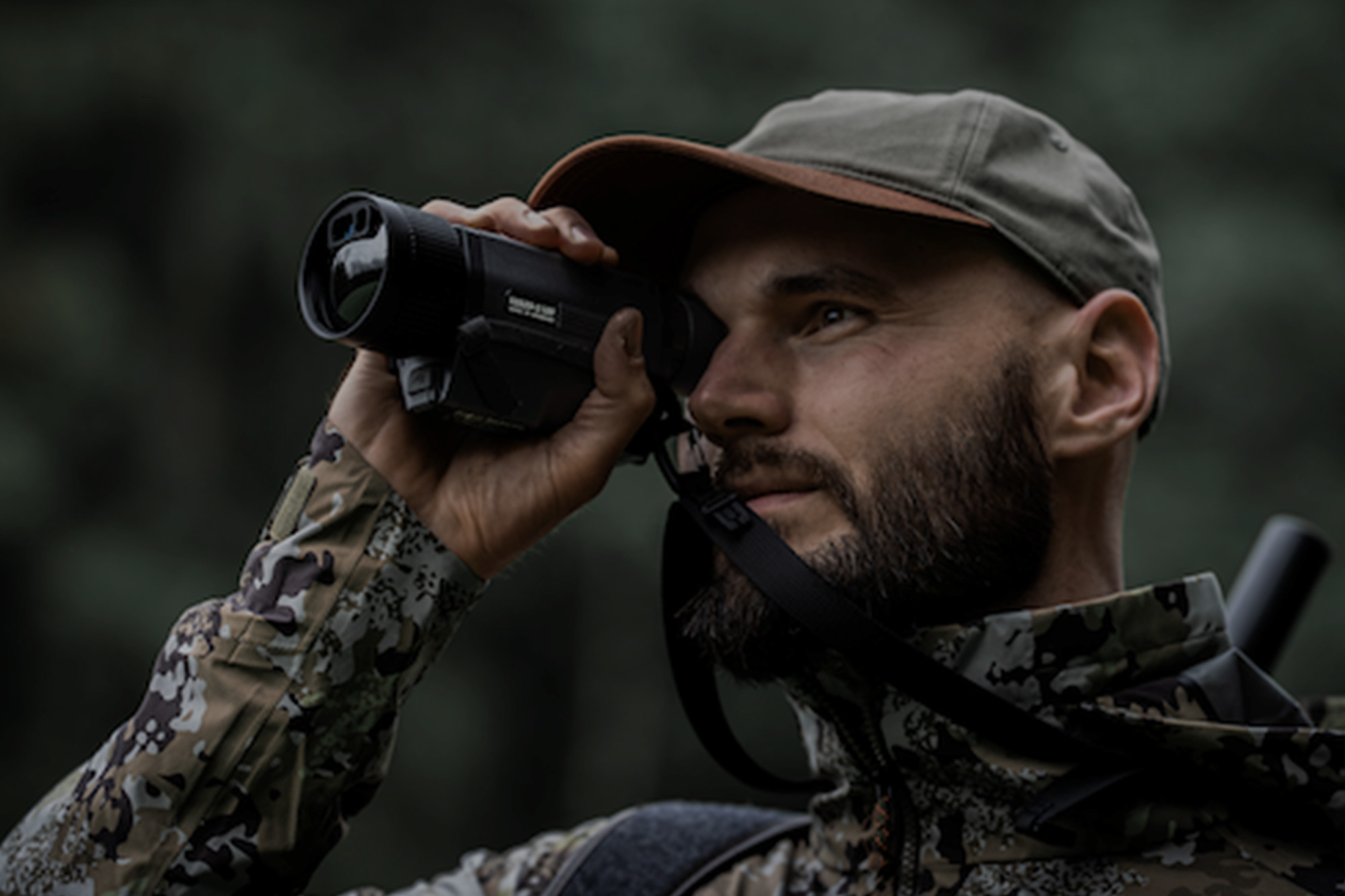
The Akaso Sight 300 is a monocular, reasonably compact – though larger than most current devices – and very light, only 260 g. The body is made entirely of polymer, except for an aluminum mount that is used to fit the optic onto a helmet, offered in the Full Explorer kit, costing $247, which is higher than the basic kit we received.
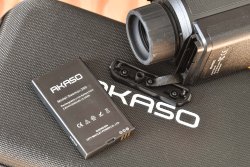
The lens is a wide angle f1.0:1 that can focus from 10 cm to infinity, coupled with a 1/1.79 CMOS sensor with 4K resolution. Officially the optic has 1x magnification and there is an 8x digital zoom. The frame rate is variable from 60 to 15 Hz depending on ambient light and shooting resolution (from 4k up to HD).
The video stream is processed by an AI-powered Image Signal Processor (AI-ISP) based on a 1.3G Hz quad-core Cortex A7 low-power CPU, the same one used in the Nokia C10 smartphone of 2021. So far nothing to say; the specifications, however, make no mention at all of the color microdisplay used in the eyepiece, and for that matter, they don't even mention the latter.
This, because the eyepiece is not really an eyepiece, but rather a "viewfinder," i.e. a single lens placed in front of the device's color screen, with fixed focus, like that used in cheap camcorders.
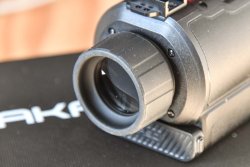
The fact of having to have a considerable distance between the lens and the screen in order to reduce aberrations and geometric distortions as much as possible finally justifies the size, which could have been at least 50% smaller by using a real eyepiece with focus – which on the other hand would have increased the price considerably.
All this, in a housing offering IP67 rating, and powered by a flat lithium (...camcorder) battery lasting up to 4 hours.
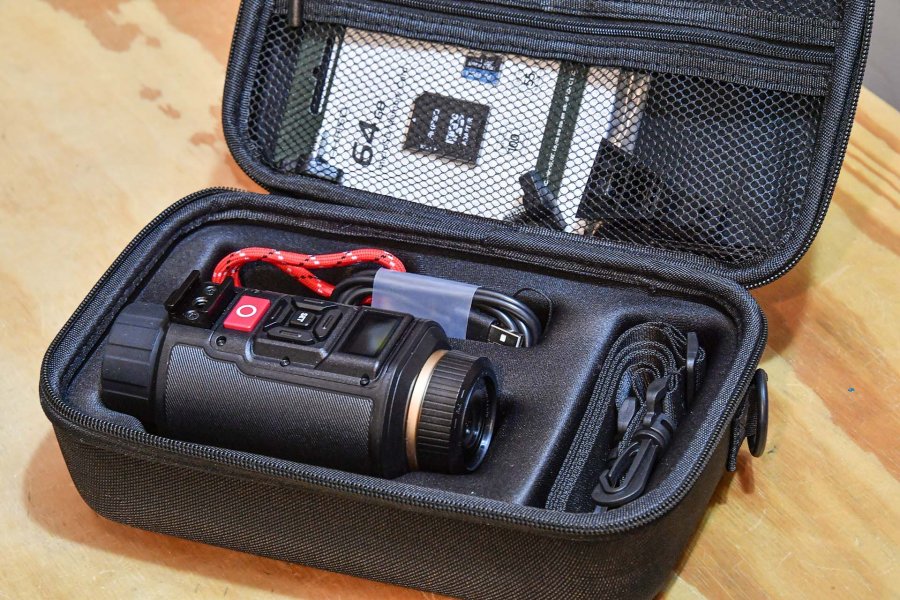
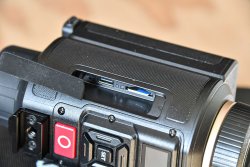
The control panel consists of six keys and a second LCD status display on the top side. It would be possible to record photos and videos on an SD card, which is supplied, also of the Akaso brand and 64 GB. It has the possibility of activating a WiFi connection with an app to be released in the future.
The device comes in a case containing accessories and a brief manual.
But let's put the Akaso Sight 300 to the test: does it work?
Yes, it actually works: I was quite surprised by the low light performance; the colors are there even in extreme light conditions, and the image is generally decent. The extremely simplified eyepiece, however, makes operation difficult, as well as creating an annoying "illuminated tunnel" effect around the display – which is, however, round and not square – because diopters can't be adjusted; furthermore, the device is not really at 1x magnification, but rather .6x wide-angle, so much so that you have to zoom in at 2x to get a real binocular view with both eyes open.
Another factor is that there is a lag of at least half a second between the moment of shooting and the screen display, which can make one feel dizzy. This is despite the fact that "motion" mode, aimed at optimizing and reducing lag and ghosting, was selected from the menu. In "observation" mode, the quality increases slightly at the cost of an even more pronounced lag.
Image quality and definition deteriorate significantly as ambient light drops, eventually making it nearly useless because of noise and artifacts completely covering the image. Like in many other digital NVs, at this point it is possible to switch to B/W infrared mode, which provides a clearer view but does not reach the level of digital optics already on the market.
Undoubtedly the strong point is the AI image-processing algorithm, which succeeds in reconstructing colors, shapes and structure, although with some limitations, as colors sometimes take on a decidedly different hue from what is observed with the naked eye, even at brightness levels where one can see comfortably.
Unfortunately, there are a few issues, which we hope will be solved in the final version, this being a pre-production test sample. The first is the mandatory RAW formatting of the device card, which precludes the recovery of photos and videos by simply reading the card on a PC. It is not possible to connect the Sight 300 with the USB C cable to a PC, and there is no app available. As a result, the only photos are those taken from the eyepiece and we can't show you how the monocular records photos and video...
In conclusion, an interesting device for non-critical purposes, at a price that is difficult to match at the moment, but which in the absolute search for the lowest price sacrifices several essential functions that limit its use.