
There will be eleven new Olympic champions among the world's best biathletes in Antholz in South Tyrol over the next few days. This is because eleven biathlon competitions will be held as part of the 2026 Winter Olympics in Italy – not in and around Milan or Cortina d'Ampezzo where most of the other competitions take place, of course, but at the already classic biathlon venue of Anterselva, which is located 380 kilometres to the north-east and close to the Austrian border. Top biathletes of several generations have been familiar with it from countless World Cups since 1971 and thus for more than 50 years.
Biathlon, a two-discipline sport (from the Greek word "bi-athlon"), was invented at the beginning of the 18th century, initially as a military competition called a "patrol race" in the Scandinavian countries, using centerfie rifles. The first civilian biathlon club was founded in Norway in 1861. Biathlon has been on the Olympic program since 1960 (only since 1992 for women). But it was only in the 1970s that the boom and popularity of biathlon as a mass sport began – not because of high participation numbers, but because of millions of enthusiastic television viewers who followed the exciting back-and-forth between dynamic cross-country skiing and the calm shooting sequences on screen. The switch from centerfire to rimfire rifles and to camera-friendly self-indicating targets, which immediately provide the viewer with a clear indication of hits or misses, contributed to this.
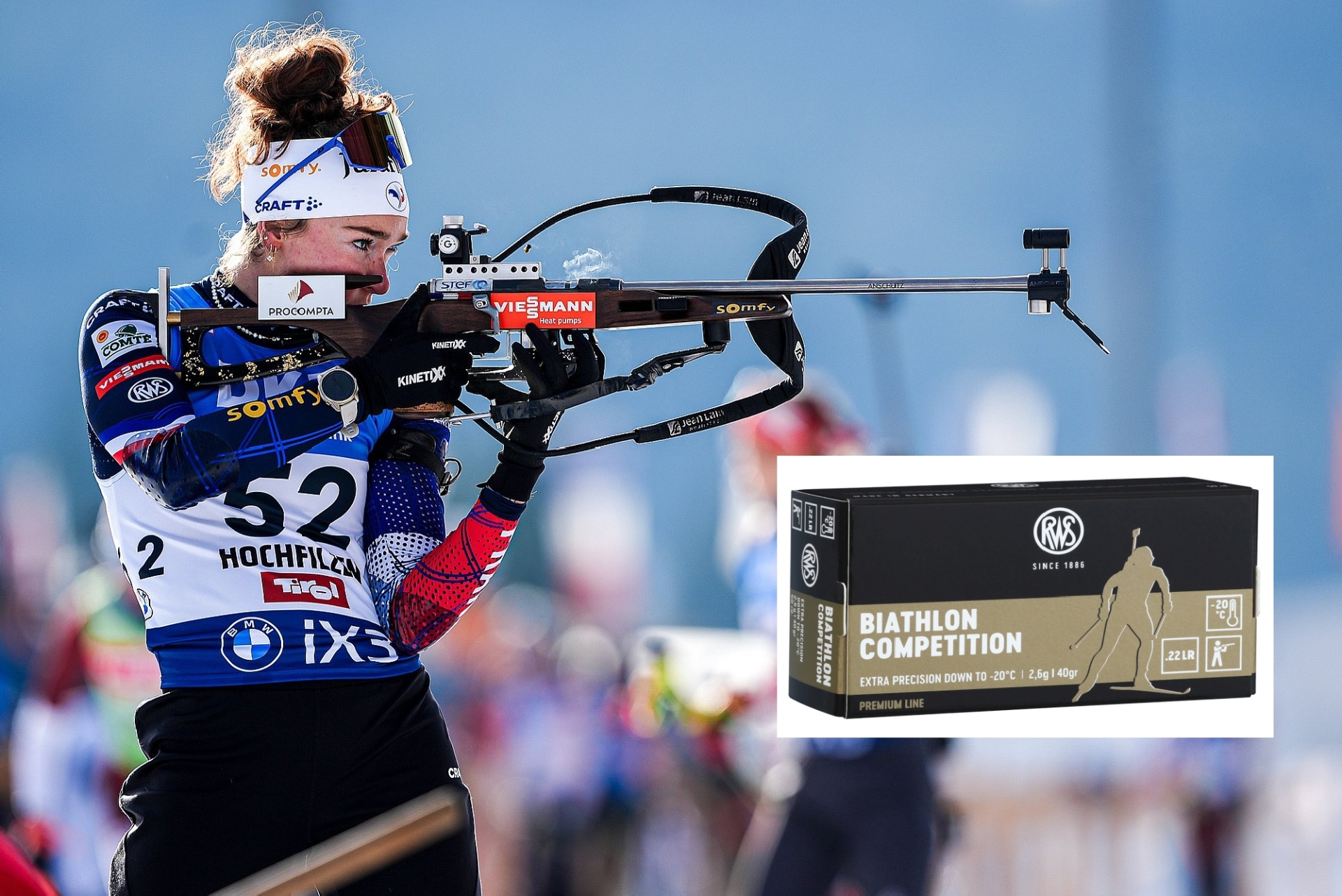
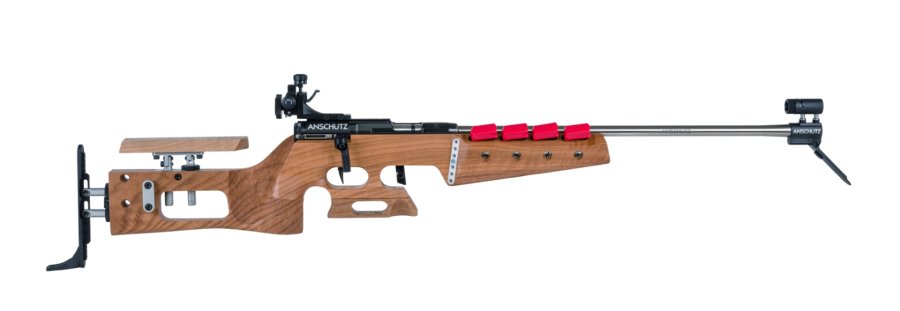
Since the Eastern Bloc collapsed and the few rimfire rifles manufactured in the GDR and the Soviet Union have only been used in the form of refurbished vintage guns, the German manufacturer J.G. Anschütz has dominated the world market. In the 1970s, the then senior boss Dieter Anschütz managed to convince the International Biathlon Union (UIPMB, now IBU) that rimfire rifles would make the sport more popular instead of the previous centerfire military rifles. The switch to five-shot rimfire rifles took place in 1978 – spectators could get closer to the shooting range, organizers could build more compact ranges, and young athletes could be trained more effectively and affordably. Peter Fortner's straight-pull action, which Anschütz began installing in its biathlon rifles in 1985, became a global success due to its faster cycling — currently 97 percent of all biathletes worldwide start with such an Anschütz 1827 "Fortner" in .22 Long Rifle. However, you only see "Viessmann" models on television: for TV adverts, the name of the actual firearms manufacturer is covered with the sponsor's heating systems logo; at the Olympics, only a single manufacturer's name is permitted on the entire rifle anyway.
Biathlon: rules and events
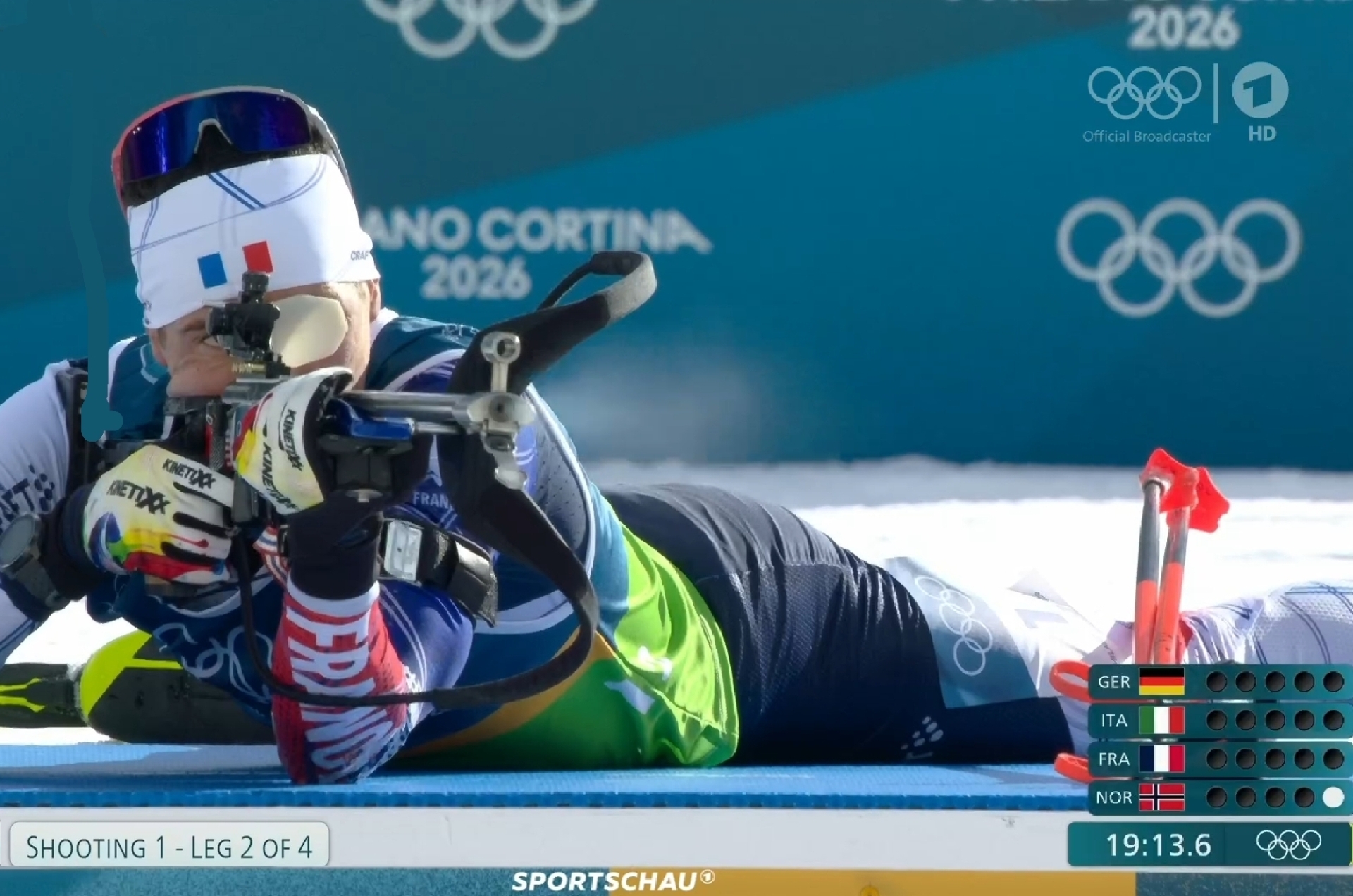
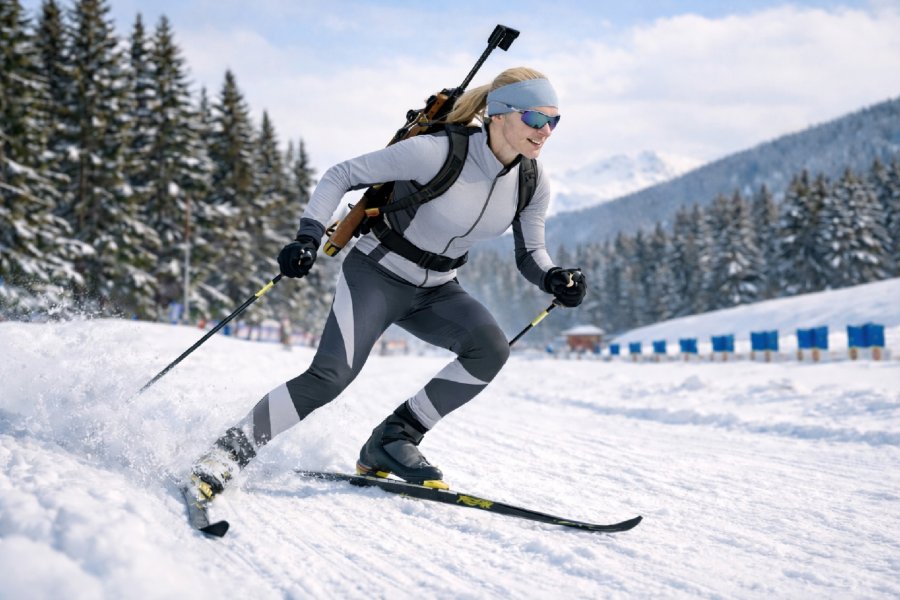
Biathlon consists of cross-country skiing and shooting, with the unloaded rifles being carried on special harnesses on the back along the track. Cross-country skiing races in freestyle technique take place on a track that is covered several times depending on the race length. Each lap, the athletes must complete shooting stages (bouts) at the specially equipped shooting range – standing, prone – and fire five shots each (the number of attempts varies according to the discipline). The black targets react to hits and fall backwards showing a white, clearly visible hit indicator in front of them. During TV broadcasts, the hits are displayed digitally in a similar way.
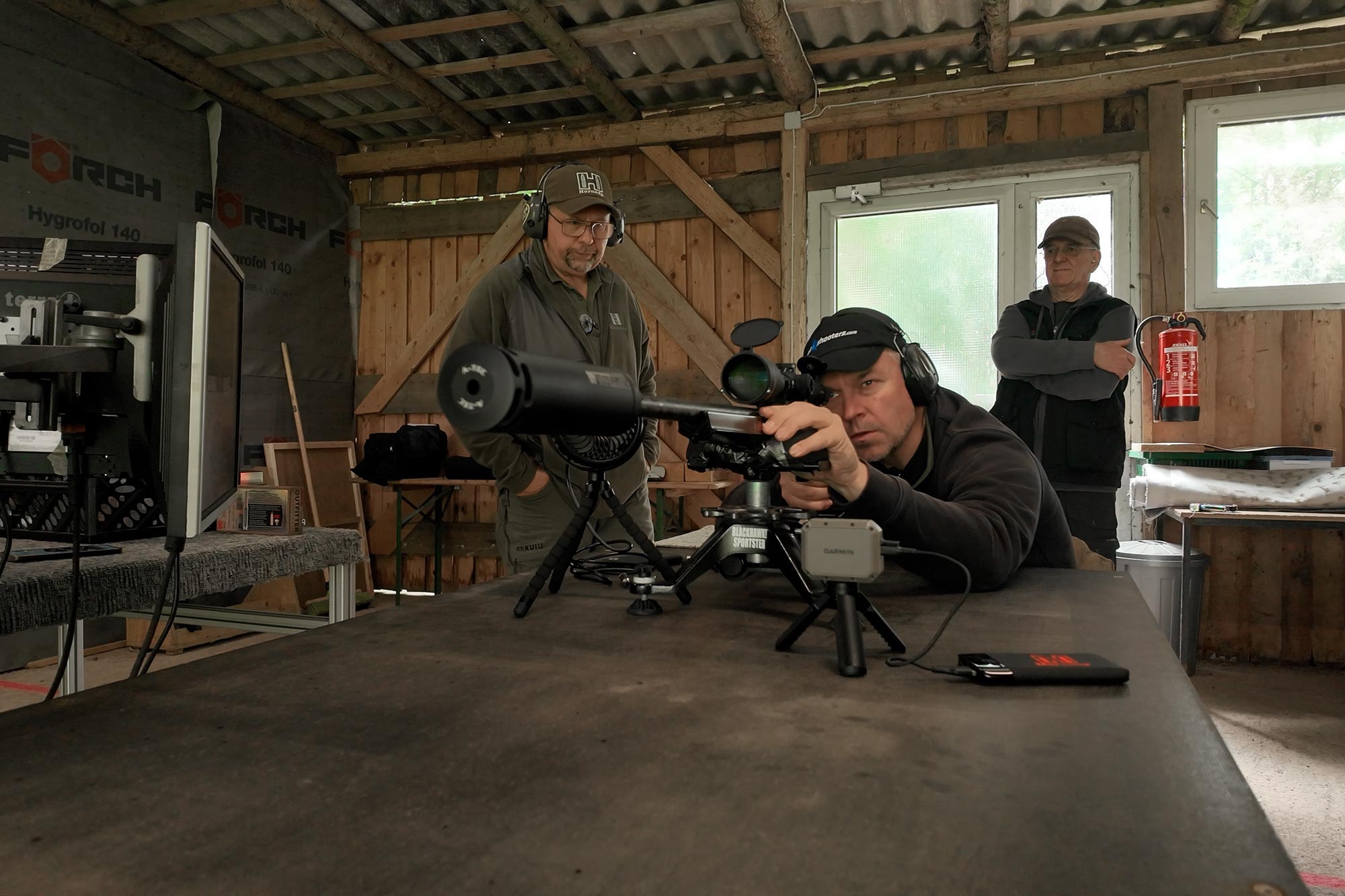
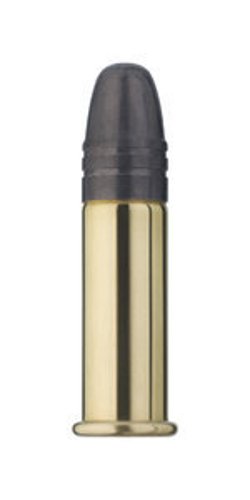
The .22 Long Rifle cartridge has been the prescribed ammunition since 1978. Due to the sensitivity of normal match cartridges to cold, biathlon ammunition is loaded with a different propellant and primer. The tests with the rifles of the top shooters are carried out using cold chambers in which the rifle and ammunition are pre-cooled to practical sub-zero temperatures (down to minus 20 degrees). Ammunition manufacturer RWS in particular made a name for itself with the recently optimised RWS Biathlon Competition cartridge.
The following events will be held at the 2026 Olympics:
Individual: Women over 15 kilometres, men over 20 kilometres. Four shooting bouts between the 5 laps, in which 5 targets must be hit with 5 bullets, first twice prone, then twice standing. A penalty minute is added to the final time for each missed target.
Sprint: For women over 7.5 km and for men over 10 km, three laps each with two shooting bouts, first prone and then standing. One penalty loop of 150 meters for each miss. The first 60 starters in this race qualify for the pursuit.
Pursuit: In the pursuit, the participants' starts are separated by their time differences from a previous race, women over 10 and men over 12.5 kilometres (5 laps each), with four shooting bouts, two prone and two standing. A penalty loop of 150 meters must be completed for each missed target.
Mass start: In the mass start, participants start simultaneously over 5 laps, women 12.5 km and men 15 km, four shooting bouts prone and then standing. A penalty loop of 150 meters must be completed for each missed target.
Relay: Team competition with four men (4x7.5 km), four women, or mixed 2/2, both with four laps of 6 km each. The race begins with a mass start by the first member of each team. There are two shooting rounds of five shots each. However, there are three spare cartridges to be loaded individually in order to hit the 5 targets. A penalty loop of 150 meters must be run for each missed target.
These eleven biathlon disciplines will be held at the 2026 Olympics in Antholz in South Tyrol
- Mixed relay 4 x 6km on 8 February, already finished
- Men's 20km individual on 10 February, already finished
- Women's 15km individual on 11 February
- Men's 10km sprint on 13 February
- Women's 7.5km sprint on 14 February
- Men's 12.5km pursuit on 15 February
- Women's 10km pursuit on 15 February
- Men's 4 x 7.5km relay on 17 February
- Women's 4 x 6km relay on 18 February
- Men's 15km mass start on 20 February
- Women's 12.5 km mass start on 21 February
Informative links about the biathlon Olympic sport
Official biathlon overview page 2026 Olympics in Milan/Cortina d_Ampezzo/Antholz
Information on the venue for the biathlon competitions at the 2026 Olympics