
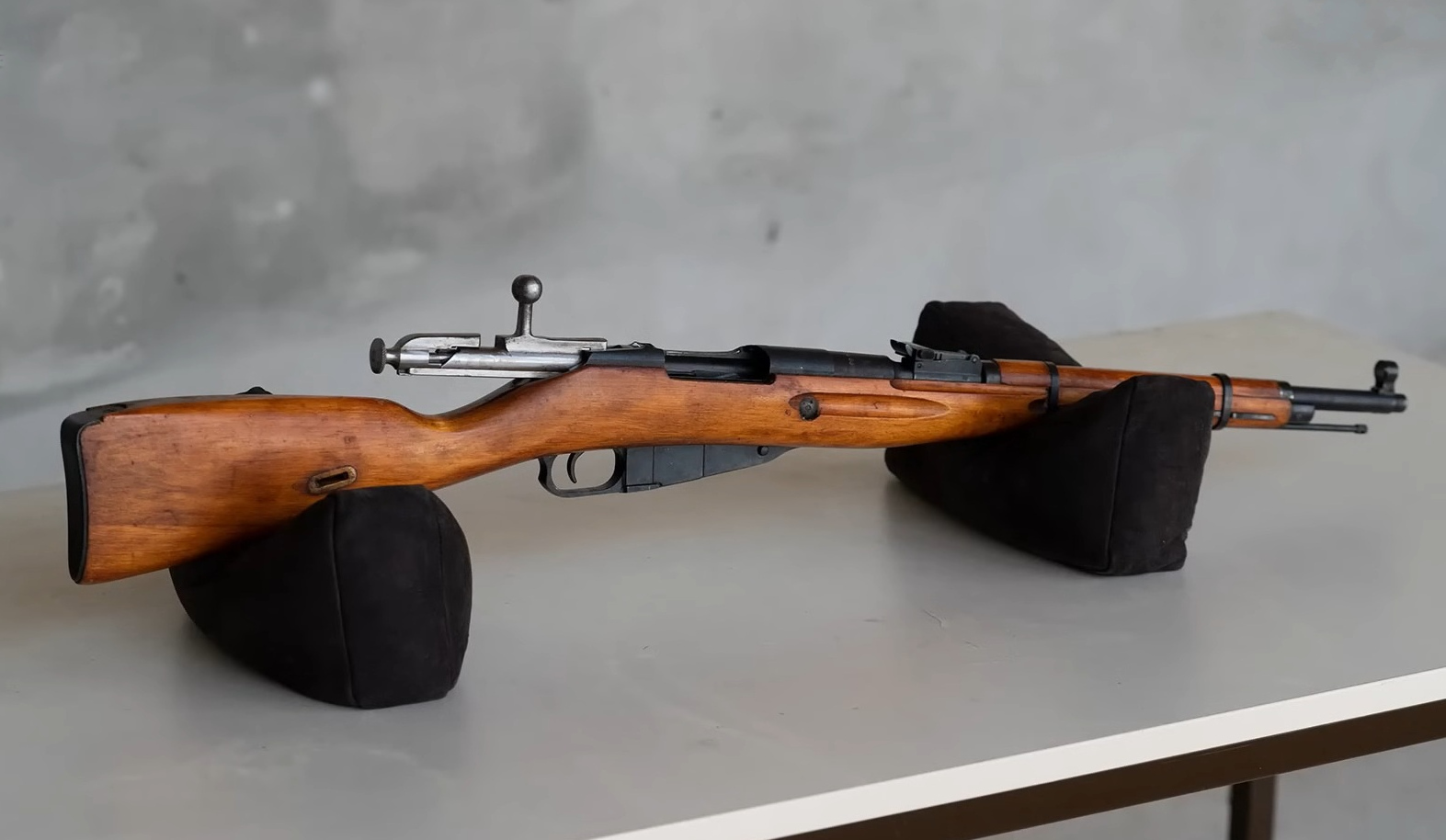
Old weapons exert a special fascination. They are technical contemporary witnesses, often with visible traces of their history, and this is precisely where their appeal lies for many collectors and enthusiasts. Whether a Mosin-Nagant from World War 2, a Swedish Mauser or a Mauser 98, each of these rifles tells a different story. However, if you want to determine their value, you have to take a closer look. This is because the market price of a historical weapon is never determined by a single characteristic, but always by the interplay of origin, condition, function and verifiable history. Together with gun dealer Gert Mürmann from Wittenberg, several historical rifles were not only inspected externally, but also tested on the shooting range. This was precisely the special attraction of this comparison: it was not just about patina and markings, but also about the question of whether an old gun still shoots accurately today – and what this means for its realistic market value.
Identification: Check manufacturer, model, caliber and serial number correctly
The first step in any assessment is clear identification. If you can't clearly identify the manufacturer, model, caliber, year of manufacture and serial number, you are basically flying blind. Especially with military long guns, the difference is often in the details. A Mauser 98 is not automatically the same as another Mauser 98, and even with the Mosin-Nagant, the specific design determines whether you are holding an ordinary utility rifle or a much more interesting collector's item in your hands.
The stamped markings on the barrel and receiver are particularly important. These not only aid in dating the firearm but often also help determine whether it remains largely original or has been modified, rebuilt, or assembled from different parts over time. The serial number plays a central role here. It allows conclusions to be drawn about the production period and origin and is indispensable both for firearms registration and if an expert report is to be drawn up later or a firearm is to be insured.
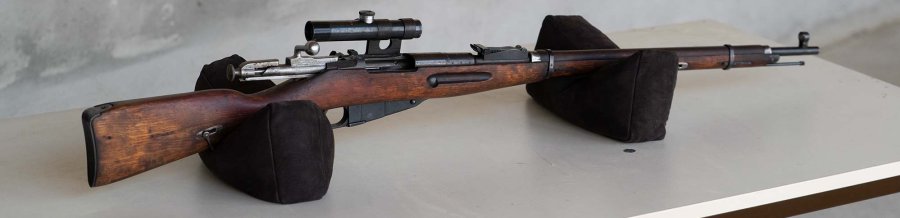
The test clearly showed how important this initial identification is. The Mosin-Nagant from 1939 we tested initially aroused high expectations, not least because of its scope and its possible military past. The Mosin-Nagant from 1942, on the other hand, was more representative of rugged wartime production. The Swedish Mauser, in turn, had a reputation from the outset as a cleanly manufactured and precise action. And the Mauser K98, as a German classic, was naturally also an exciting candidate. Even before the first shot was fired, it was clear that these weapons may appear to be related at first glance, but in terms of value they are not automatically in the same league.
Condition and originality: Why they have such a strong influence on gun value
Old weapons do not have to be as good as new to be valuable. On the contrary: an honest, harmonious patina is more attractive to many collectors than a sloppy restoration. Nevertheless, condition remains the greatest value factor. Rust pitting, bore condition, material fatigue, worn actions, damaged stocks or non-period-correct replacement parts often have a greater influence on the price than the model designation alone.
The decisive question is always what type of object is involved. Is it a collectible original, a still usable weapon for the shooting range or rather a restoration project? This is precisely where museum value and shooting value often diverge. A gun can be of great historical interest and still not perform convincingly on the range.
This is exactly what the 1939 Mosin-Nagant demonstrated very impressively in the test. Despite all the fascination that such a piece exudes, it was not possible to achieve a really usable grouping with the rifle. The hits at 100 meters were unconvincing, and the rifle failed to deliver a clean performance at 50 meters either. The suspicion was that the old scope or the whole tuning of the rifle was no longer in order. For the market, such an issue almost invariably translates into a price markdown. This is because a buyer will factor in the necessary overhaul, even if the weapon remains an intriguing historical artifact
Accuracy and shooting performance: What the field test with Mosin-Nagant, Swedish Mauser and K98 shows
In practice, dealers rarely go to this effort. A historical firearm is usually valued according to its external condition, originality and general function, not after a detailed shooting range test with old and new ammunition. Nevertheless, this very test is revealing when it comes to determining a realistic value. Because it is only when the gun is fired that it becomes clear how the barrel, sights and overall action actually work together.
Mosin-Nagant (1939 and 1942)
The 1942 Mosin-Nagant we tested clearly demonstrated the importance of a more nuanced approach. With open sights at 50 meters, the rifle performed better than the 1939 candidate. Especially with new ammunition, the behavior appeared much more predictable. This does not automatically mean that this was already a top gun. But it did show that there is a difference between "historically interesting" and "still usable", which has a direct impact on the price. A weapon that needs work but shows potential is valued differently on the market than a piece that is merely decorative or purely a collector's item.
Mauser K98
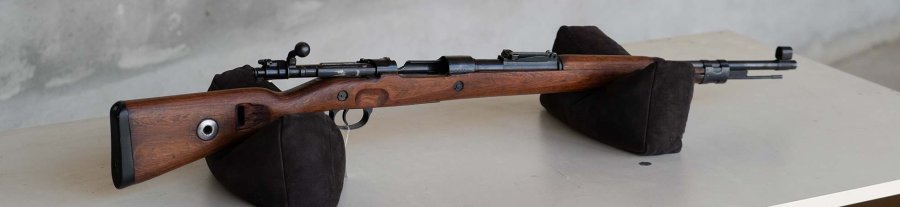
The Mauser K98 was solid, but not flawless either. The shooting performance was decent without really shining. Here, too, it became clear that even a long-established platform does not live by its name alone in the evaluation. Barrel care, mechanics and general state of preservation also determine whether a K98 is merely "usable" or is perceived as a truly convincing example.
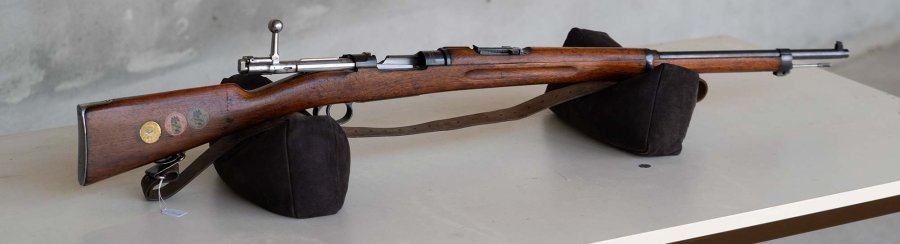
Swedish Mauser in 6.5x55 mm
The Swedish Mauser was the biggest surprise. Ironically, the oldest model in the test delivered the most impressive accuracy. Using the mechanical sights, the rifle produced a 100-meter group that was clearly superior to the other weapons on the day. This highlights an important insight for collectors and buyers: the year of manufacture alone says little. A 120-year-old rifle can be technically superior to a much younger rifle if the workmanship, bore condition and action quality are right. In the case of the Swedish Mauser, this mix of manufacturing quality, well-balanced construction and good state of preservation is reflected in the market value. It is not without reason that Swedish Mausers are consistently among the top contenders in service rifle competitions.
Historical significance, accessories and provenance as value factors
In addition to technology and condition, the history of a weapon plays a significant role. A special military use, a rare design, an early or late production variant or a verifiable history of ownership can significantly increase the price. Especially with historical military weapons, the deciding factor is often whether a piece is merely typical of its time or whether it also possesses a unique story.
One should remain objective. Not every wartime Mosin-Nagant is automatically a high-priced collector's item, and not every old optic makes a weapon more valuable. Accessories only increase the value in the long term if they match the weapon, are contemporary and, ideally, can be traced back to its origin. Original scopes, mounts, bayonets, straps, cleaning equipment or even old packaging and documents often make the difference on the market between a decent and a really desirable offer.
This is precisely why it is worth taking a close look at completeness and coherence. A historical weapon with a clean provenance and matching accessories is much more attractive to collectors than a technically similar specimen without any accompanying history.
How can comparative prices and market values of historical weapons be determined?
Anyone wanting to seriously assess the value of a historical firearm shouldn't be swayed by asking prices. Actual selling prices achieved are the most reliable indicator. Specialist auction houses (such as Hermann Historica), specialized online platforms, collectors' exchanges and discussions with experienced gunsmiths or collectors often provide the best clues here. Specialist literature and price guides further aid in correctly classifying models historically and identifying rare variants.
Looking at comparable pieces is particularly important. A Swedish Mauser in very good original condition with a clean barrel bore and matching accessories is not the same as a reworked or assembled example. The same applies to Mosin-Nagant and Mauser K98. Model name and caliber provide the framework, but the decisive factors are condition, originality and whether a gun is only collectible or also technically sound.
When it comes to inheritances, insurance issues or legally compliant sales, an expert appraisal is often indispensable. A written valuation report provides clarity where personal assessments reach their limits.
What else needs to be considered when identifying old weapons
The valuation includes not only the gun itself, but also everything that makes its history traceable. Proof of purchase, import or export documents, previous appraisals and records of repairs or restorations are far more than mere accessories. They create trust and make an offer more reliable.
Complete documentation pays off, especially in the case of historical weapons. The better the provenance, condition and any modifications are documented, the easier it is to justify the price on the market. A lack of documentation does not make a weapon worthless, but it complicates its classification and often lowers the achievable price.
Conclusion: The value of historical weapons arises from their history, their condition and their substance
The evaluation of historical weapons is always a mixture of technical understanding, historical knowledge and realistic market assessment. The test at the shooting range showed this very clearly. It is not the age alone that is decisive, but the substance. A visually exciting piece can be technically disappointing, while an inconspicuous but well-preserved classic is much more convincing in the end.
The performance of the Swedish Mauser was particularly impressive. The fact that the oldest rifle of all delivered the best accuracy in the test is an example of how closely shooting performance, condition and market value can be linked. The 1939 Mosin-Nagant, on the other hand, is remembered above all as a historically interesting object whose technical condition clearly limits its price. The Mosin-Nagant from 1942 and the Mauser K98 were somewhere in between: both with potential, but both also with a clear need for thorough inspection and, if necessary, refurbishment.
Anyone who wants to buy, sell, or simply realistically assess the value of vintage firearms should therefore always take the same approach: first, accurately identify the firearm, then honestly evaluate its condition, test its functionality as far as possible, research comparable prices, and document its history. This is exactly what creates a comprehensible market value.