
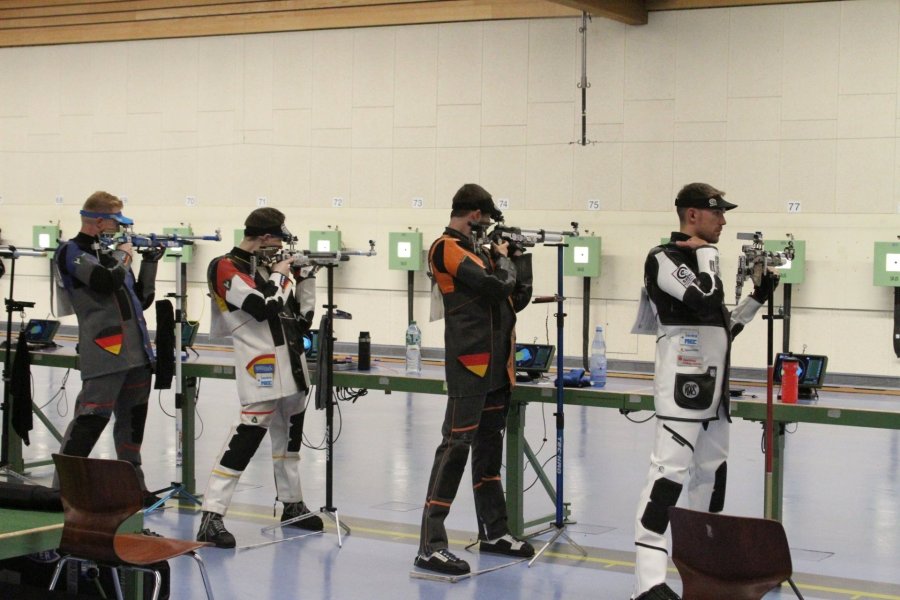
Thick shooting jackets and trousers made of leather or heavy canvas, and shooting boots reminiscent of downhill ski boots, as worn by rifle shooters in the Olympic events for years, are polarizing: they make their wearers look ungainly and almost immobile when they waddle like penguins to their respective positions on the starting line in the images of a final competition shown by television crews. As a layman, you could get the impression that this sports armor makes wobbly aiming and missed shots almost impossible, or that the Olympic champions would certainly not shoot much better than someone at local league level without their customized shooting gear. Nothing could be further from the truth, but for the sake of clarification, let's first delve into the issue that is currently being discussed worldwide.
Why are thick shooting jackets and stiff trousers used in Olympic rifle shooting at all?
The official rules of the International Shooting Sport Federation (ISSF) state:
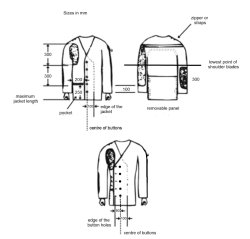
"All shooting jackets, shooting trousers and shooting gloves must be made of flexible material that does not change its physical characteristics, that is become stiffer, thicker, or harder, under commonly accepted shooting conditions. (...) Any lining, padding or reinforcement patches must not be quilted, cross-stitched, glued or otherwise affixed to the outer clothing layer other than at normal tailoring points.All lining or padding must be measured as part of the clothing."
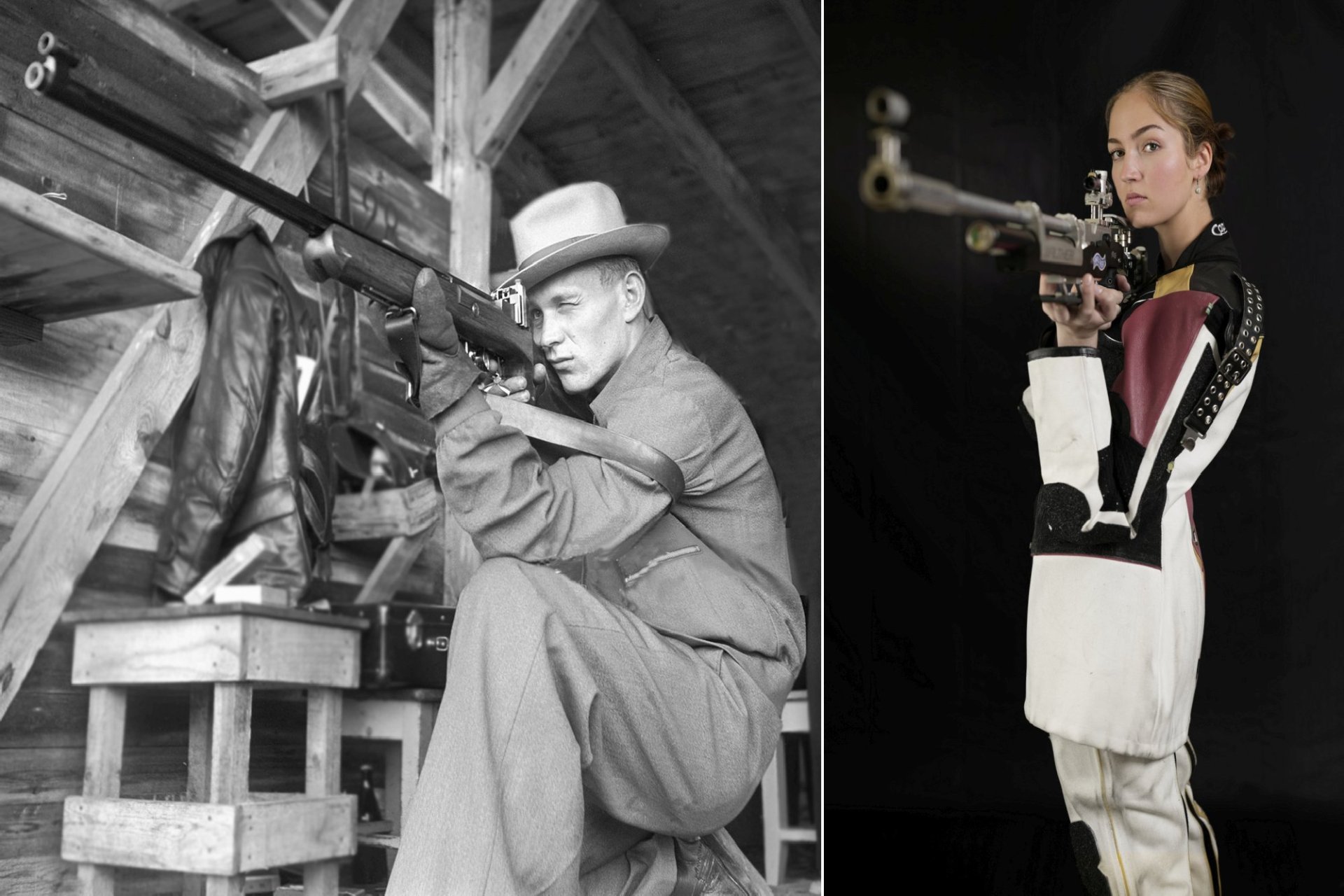
Now, "flexible" is a relative definition, of course, and it can't be defined – at least not in simple words. First and foremost, the shooting jacket is designed to support the back in the standing position as the spine must be twisted toward the target when assuming the stance. This is because the rifle should be positioned vertically and directly over the area covered by the feet to minimize swaying as much as possible. When properly fitted, the jacket gives the shooter the sensation of leaning their back against a solid wall.
Modern shooting jackets are complex garments made from half a dozen different materials – from polyester to leather, and canvas to textured rubber – combined together much like a patchwork quilt. The back, made of several wedges of stiff material, provides support and relieves strain on the muscles. The roughened suede panel on the left front (for right-handed shooters) along with the patches on the right shoulder form non-slip contact surfaces for the elbows and butt plate, while thin and soft fabric inserts, such as those on the inside of the elbows, facilitate the movements necessary for shouldering and loading the rifle. Simple canvas jackets, which are often available on loan from clubs for beginners who do not yet own their own gear, cost from around 100 euros, while custom-tailored jackets can cost upwards of 2,500 euros.
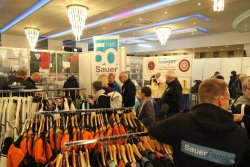
New shooting clothing is naturally and desirably quite stiff. But over time, the material softens due to bending, for example through frequent packing in the equipment bag. Some countries have apparently provided their top shooters with new clothing on a regular basis, evidently to benefit from the "factory" stiffness. The average shooter and smaller associations can hardly afford this, which distorts the starting conditions. The ever-increasing results, especially among junior shooters who have not been training for very long, can't be explained by athletic performance alone.
In the summer of 2025, the ISSF therefore saw a need for action to address the "matter of the seemingly ever-increasing stiffness of jackets and trousers". David Goodfellow, the Chairman of the ISSF Rifle Commission, elaborated on the triggers for the discussion: "It is a fundamental principle in all sport that medal-winning performances should be due to the skill of the athlete without artificial assistance which could be regarded as 'technological doping'. Our existing Rule 6.7.4.2 prohibits the use of, 'special devices, means or clothing, which immobilizes or unduly reduces the movement of the athlete’s legs, body or arms'.”
Maximum thickness limits apply to each garment, and these are checked using special testing equipment under mechanical pressure, as is flexibility. In addition, the soles of the special ankle-high shooting shoes are also inspected. According to the detailed testing regulations, ideally, a complete clothing inspection would require seven (!) judges, who would have to sequentially perform predetermined tasks on jackets, trousers, and shoes (one female judge must also be present).
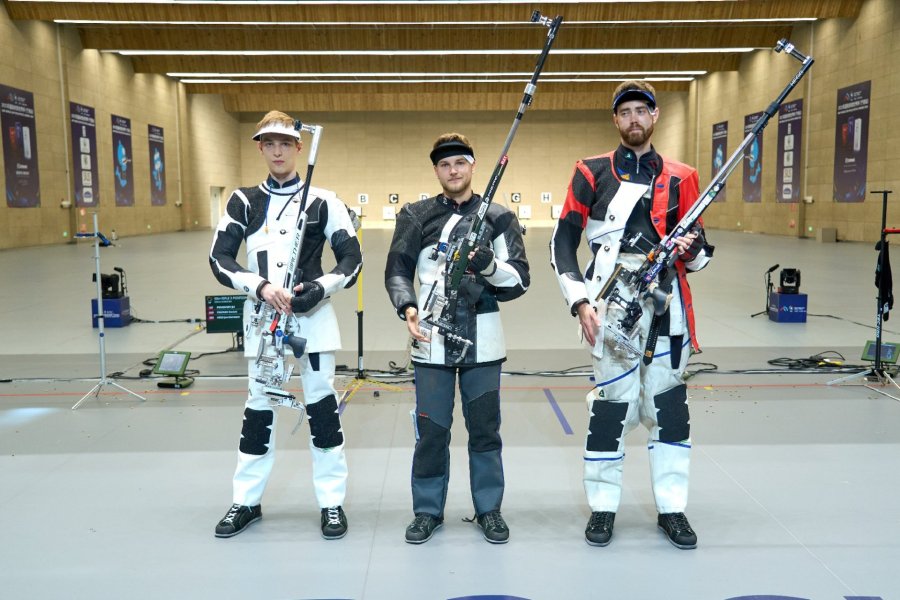
However, such an equipment check before the start of the competition would take 15 to 20 minutes per competitor, which is hardly feasible before major events. Therefore, until now, after a successful test at an official ISSF competition at the beginning of the season, control tags with serial numbers and athlete identification were affixed, in the hope that already inspected and approved clothing would not be secretly altered by its owners. After the match, several competitors are randomly selected for a recheck, and anyone found to be in violation is disqualified (which has never happened in recent years).
The ISSF's announced rule update quickly sparked discussions on the internet as well as within federations and clubs: what happens to clothing that no longer complies with the rules and would become worthless? Would young shooters still be able to keep up financially with this "arms race"? What will happen to existing stock at retailers and manufacturers? The ISSF reassured the public, saying that only a few changes, if any, would be necessary. In any case, a revised edition of the ISSF technical rules was planned for the year after the 2024 Olympics. The new rules are now available, which are also binding for this Olympic preparation period for 2028 (all links can be found at the end of the article).
The global market for shooting clothing is changing: an Indian manufacturer is taking the place of European producers
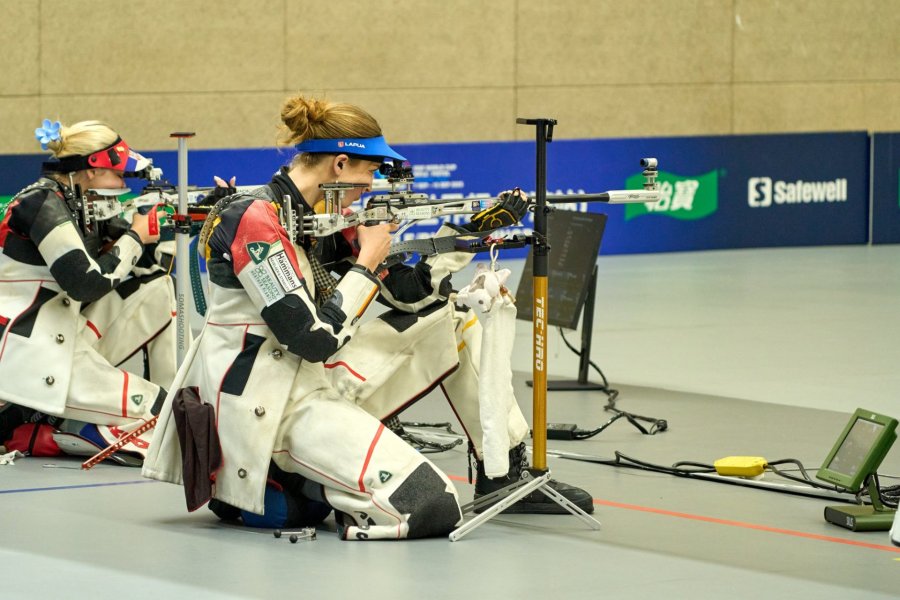
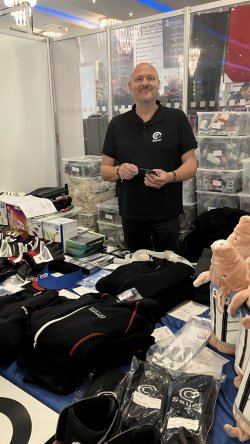
After decades when European manufacturers such as ahg-Anschütz, Gehmann, Hitex, Mouche, Sauer and Thune (listed alphabetically and not exhaustively) dominated the shooting jacket market, things have changed drastically in recent years. The Indian manufacturer Capapie, based near Mumbai, has catapulted itself to the top with its custom-made jackets and trousers, first as an insider tip and then through numerous successes by shooters using them. At the 2024 Olympics, Capapie wearers won five gold and silver medals and four bronze medals. In some finals, all eight competitors wear this clothing, recognizable by the distinctive logo on the sewn-on pocket: a triangle with outwardly curving sides. A significant part of the success (in addition to the lower manufacturing costs) is probably due to the properties of the special "Capitex" synthetic material and the new cut of the jackets: according to fans at least, the material retains its shape better overall than other manufacturers, and over a longer period of wear.
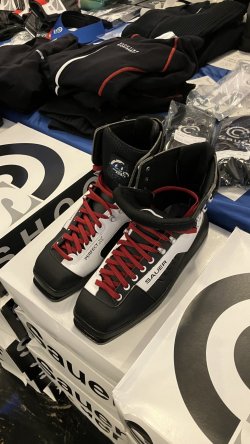
Surprisingly, the draft rules initially omit stricter rules for footwear, although even though it is likely largely responsible for the finalists' waddling gait. The soles still have to be flexible, and there is also a test device for this. However, the ISSF has not yet been able to agree on a limit to the height of the upper, as is the case for pistol shooters (not above the ankle). In future, however, finalists should be able to take their places "in a normal gait", which will be accompanied by many camera teams and photographers. The aim is to create the impression of a telegenic sport.
The maximum thickness values for both jackets and trousers (it must not exceed 2.5mm in single thickness and 5mm in double thickness at any point where a flat surface may be measured) also remain the same. This also applies to undergarments. Previously, the regulations for rifle clothing covered 7 A4 pages, but now require 10 densely printed pages with new clarifications that would exceed the scope of this article. For example, jacket owners are expected to reduce stiffness in the shoulder area by bending and "manipulating" the material themselves to avoid excessive costs from replacements. To ensure that the jacket fits loosely, it must be possible to overlap the jacket by 80 mm (previously 70 mm) at the front during the test.
Further changes to the ISSF rules from 2026, which will also apply to the 2028 Olympic Games in Los Angeles
- All individual finals will now be completed with eight athletes, including shotgun and rapid-fire pistol, both of which previously only had six finalists. In the mixed competitions (air rifle, air pistol, trap/skeet), the four best teams from the qualification will compete together in the final and fight for the medals.
- At televised finals, electronic target tracking systems (such as SCATT or other products) are used to show viewers the path of the muzzle into the target.
- In almost all competitions, the finals will be streamlined.
The ISSF wants to test the new rules at the 2026 competitions and, if necessary, tighten them further after 2028 if they do not have any effect whatsoever. The ISSF's intention with the new rules is to make the finals shorter and more exciting.
Almost everyone agrees that changes to the armor-like clothing worn by rifle shooters need to be discussed in principle. The genie has been out of the bottle for a long time. However, people are also (understandably) a little cautious about changing too much at once. The time between two Olympic Games (the actual "Olympics" of four years) is too short for that, especially as there are numerous other factors at play, such as existing records, tenders, test phases, but also economic reasons such as dealer stocks, patents and utility models.
Further links on ISSF rules and regulations
- ISSF Official Rules and Regulations
- ISSF testing procedure for rifle shooting clothing
- YouTube: The functions of the shooting jacket explained in three minutes by successful rifle trainer Heinz Reinkemeier