

The discovery that a ground glass lens can focus light rays and magnify distant objects is already several centuries old. From spectacle lenses to telescopes and modern binoculars, which use sophisticated lenses in two parallel tubes to provide a seemingly three-dimensional image, the basic principle has not changed much. Illuminated reticles in aiming devices, for example, have been around for over 100 years, as have reflex sights with an aiming point – even if this remained exotic for a long time or was rejected as "not appropriate for hunting" – until hunters were convinced of the advantages.
While state-of-the-art cleanroom manufacturing methods have improved lens coatings and glass quality, allowing for ever-higher light transmission rates and thus a brighter, sharper, reflection-free, and more color-accurate image, it was only the combination with modern electronics that ultimately made the next technological leaps possible.
Binoculars and spotting scopes with laser rangefinder and image stabiliser for a better view and reliable aiming
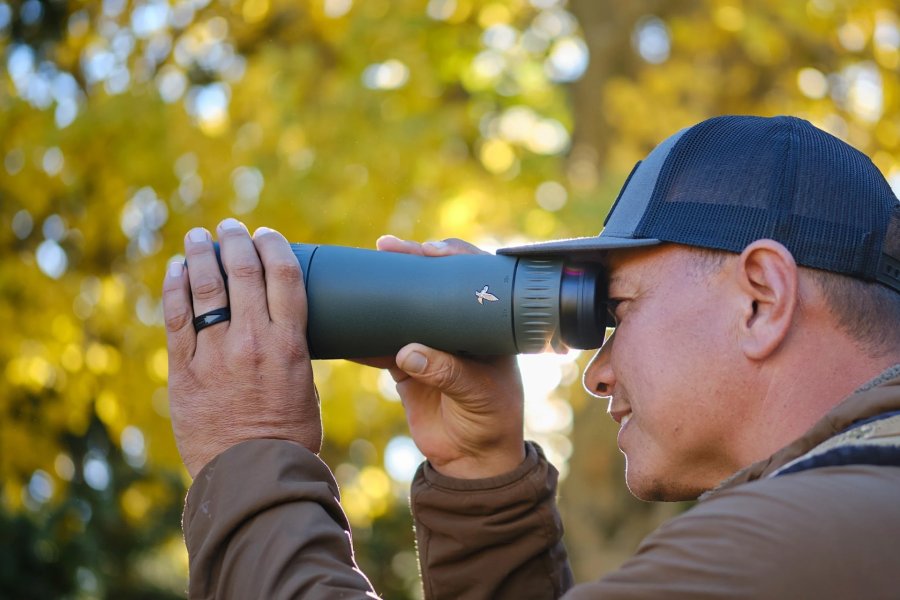
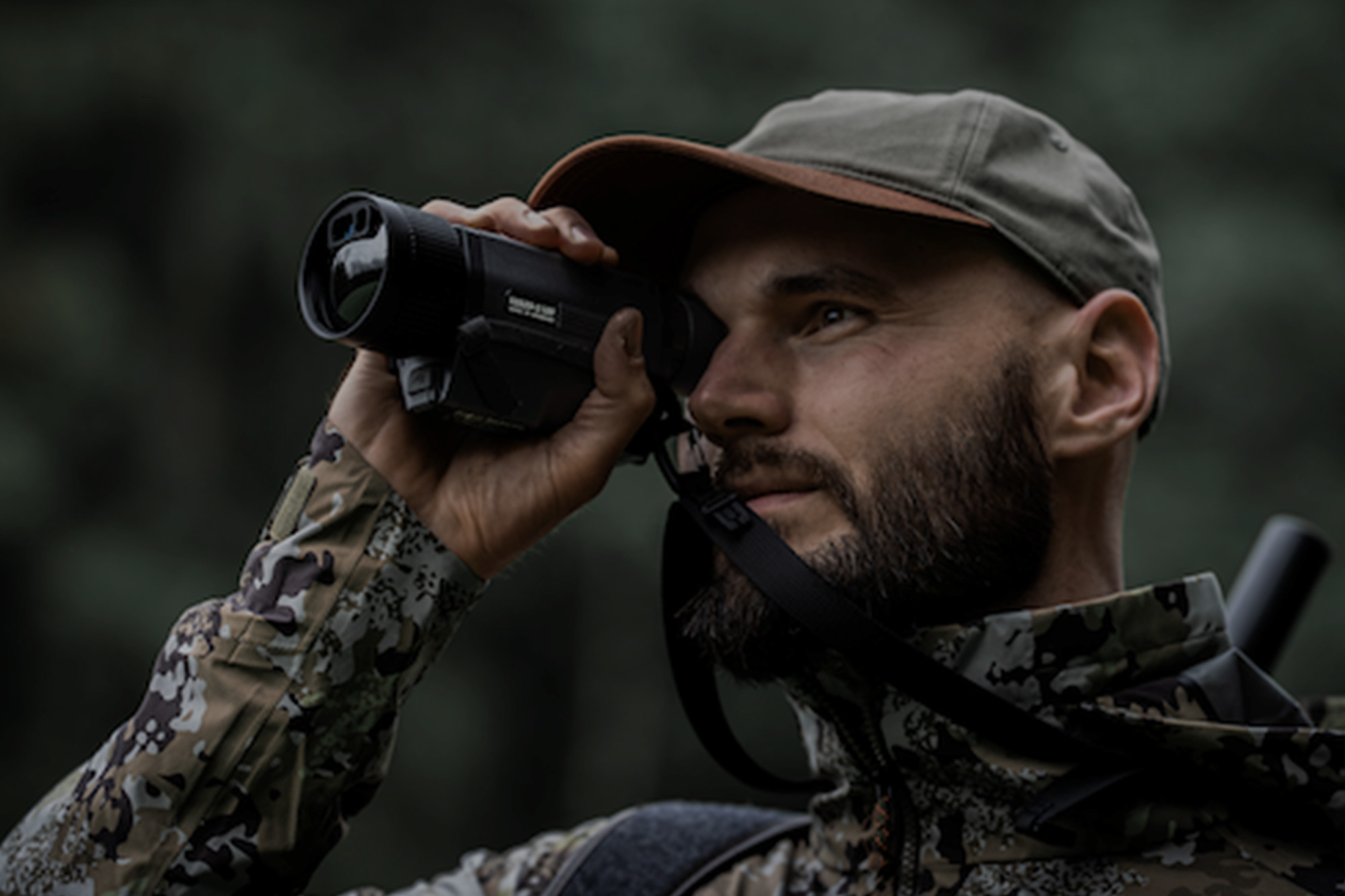
In addition to the three-dimension representation, image stabilisation borrowed from photo camera technology was added. This allows for higher magnifications when used handheld, which in turn permits use at greater distances. Whereas a typical pair of binoculars for night hunting used to have a 8x magnification with a 56 mm objective lens, the EL Range 12x42 from Swarovski Optik, launched in 2025, has a magnification of 12x. In order to provide the smoothest possible image at this high magnification, these binoculars feature an integrated stabiliser as well as a forehead rest. If you want to take an even closer look, whether as a hunter or sports shooter, use a spotting scope - these are now also available with image stabilisation.
Improved detection is particularly beneficial for hunters when identifying game, and the integrated laser rangefinders also allow for more precise distance measurement to the target, especially since angles are also taken into account. The connection (usually via a smartphone app) to a ballistics calculator then facilitates the next step, precise aiming and target hitting. Small, pocket-sized laser rangefinders have been available for some time, and now binoculars with integrated laser rangefinders (LRF) are offered by all major manufacturers.
While early LRF binocular models differed from conventional binoculars in terms of shape and weight, the only difference today is that they are connected to an app for calculating ballistic data. Such an app can be used, for example, to precisely determine terrain features or the presumed location of game that has been shot.
Riflescopes with rangefinder and ballistics calculator: the combination of proven technology also saves weight
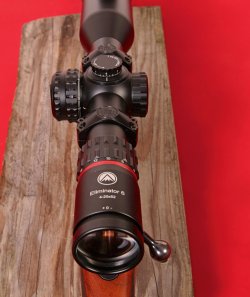
The combination of rangefinder technology and riflescopes was a logical conclusion. In 2010, the US optics manufacturer Burris revitalized the riflescope industry with its angular-looking "Laserscope," which, now in its sixth generation, is virtually indistinguishable from a conventional riflescope and is marketed with even more digital technology as the Burris Eliminator 6 4-20x52 (here is the test at all4hunters.com). Rangefinders have also become essential equipment for modern hunters, and some of the top riflescopes are now equipped accordingly.
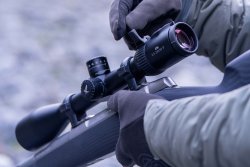
A further technical enhancement on the capabilities of modern riflescopes lies in the prevalence of variable-magnification models, which, with ever-increasing zoom factors, are more versatile than before. This zoom factor expresses the range between the lowest and highest possible magnification of a riflescope. It is calculated using the formula "maximum magnification divided by minimum magnification." A six-fold zoom factor is found, for example, in a riflescope designed for driven hunts with 1-6x magnification, but also in riflescopes with 2-12x or 3-18x magnification. The top models for long-range shooting have at least a 4x or 5x zoom factor and go up to an 8x or even 10x zoom, such as the Z8 series from Swarovski Optik or the riflescopes from the Japanese company March, which are used by the military and in long-range sport shooting and offer the March 6-60x56 Genesis with a 10x zoom factor as a top model.
Modern thermal imaging technology is fundamentally changing hunting optics and riflescope construction
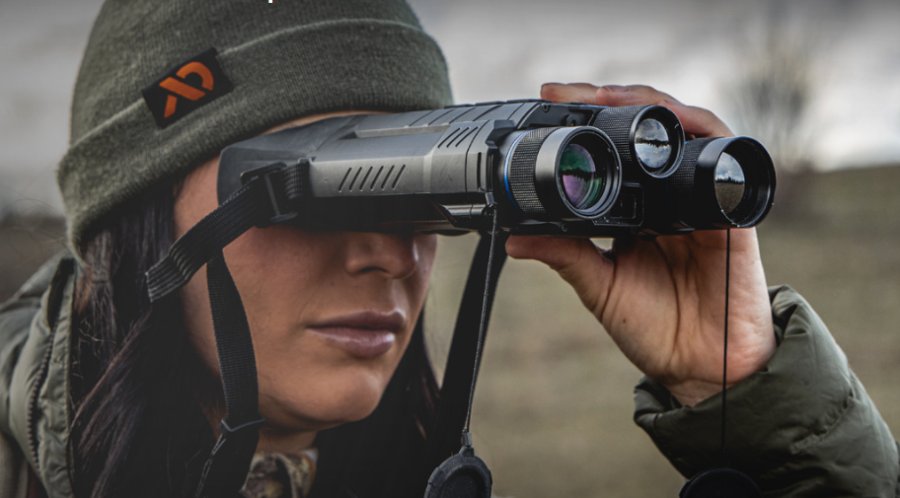
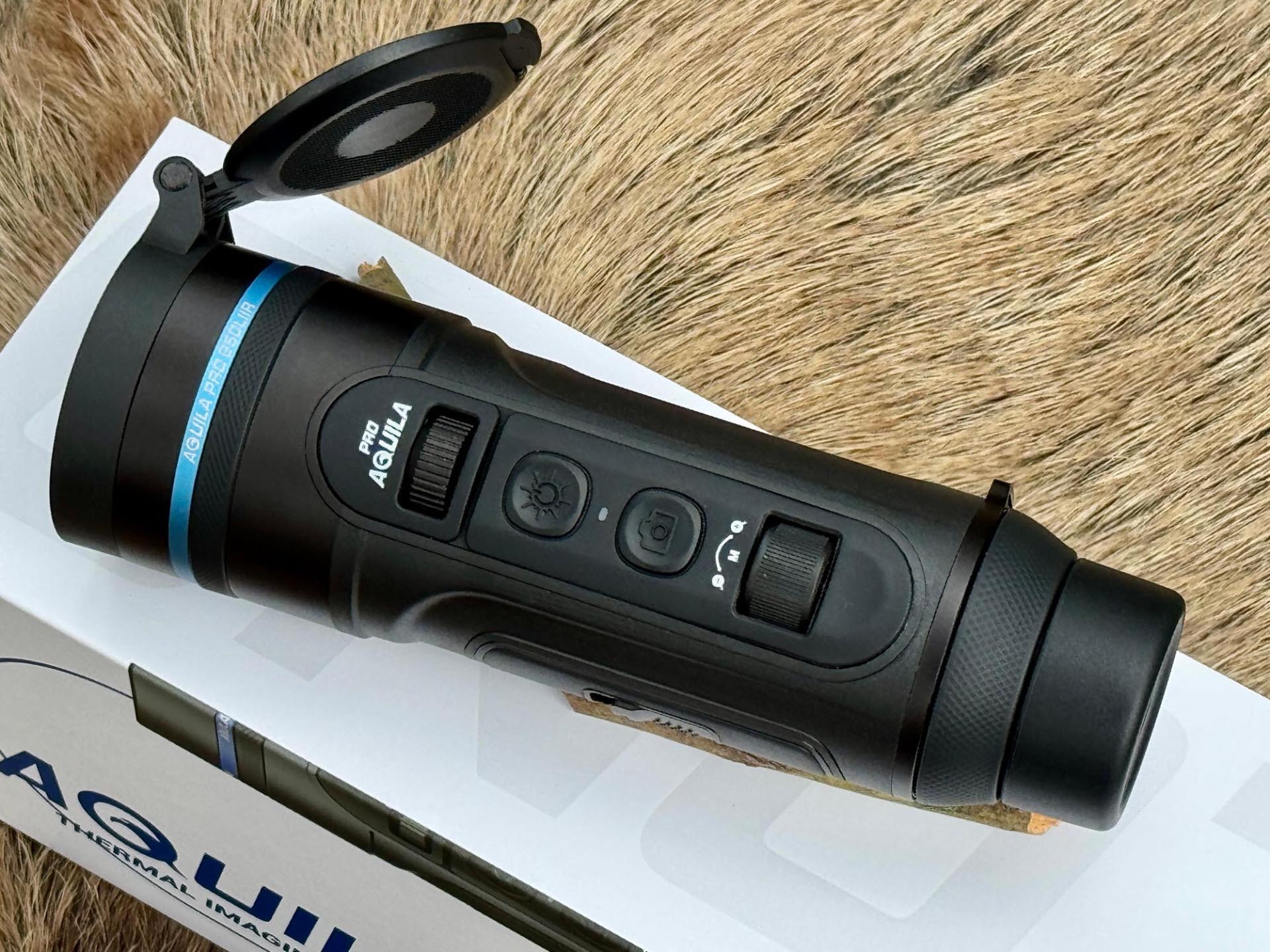
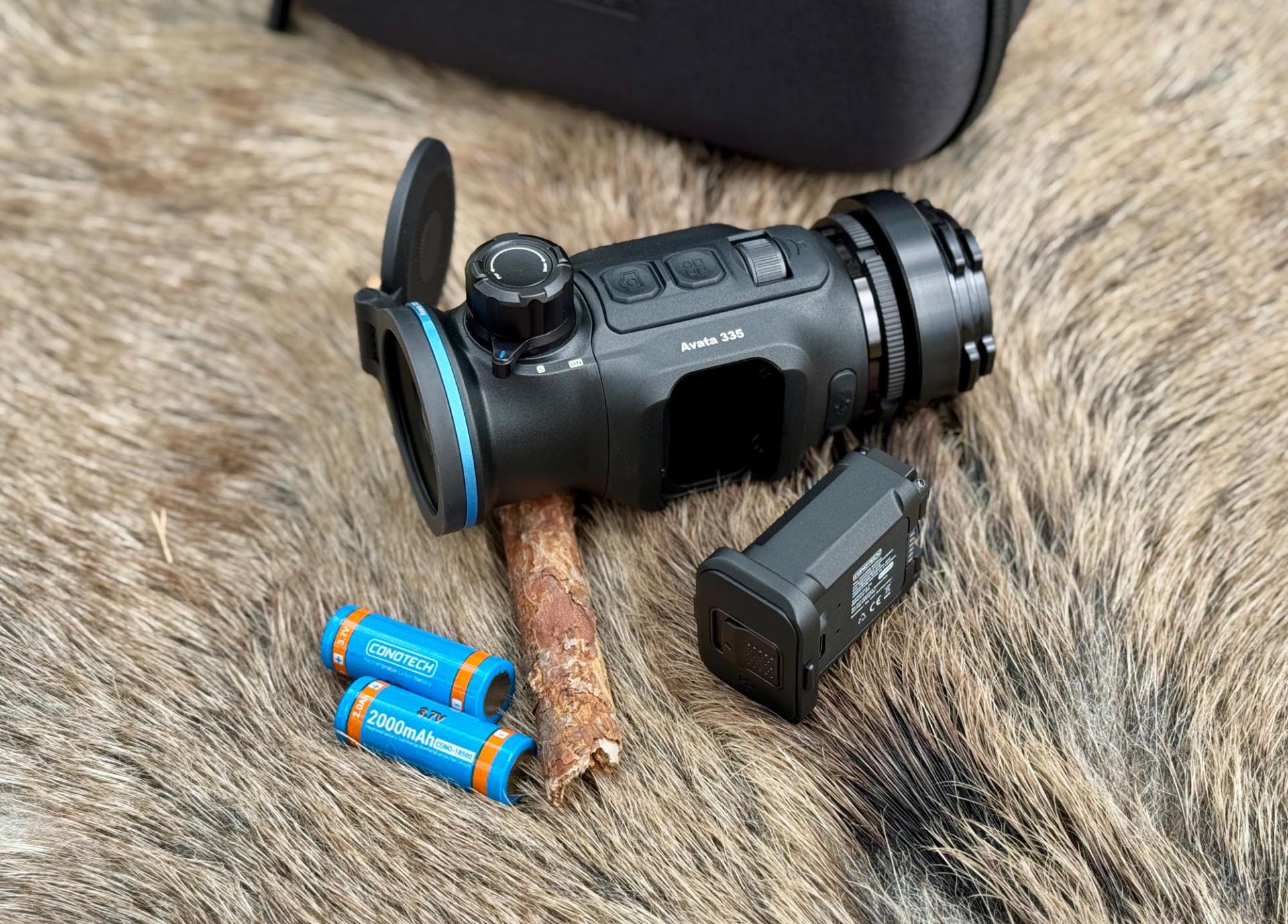
The technology of using light that is not visible to the human eye for long-range detection is over 200 years old. William Herschel discovered infrared radiation in 1800, and Samuel Langley invented the bolometer in 1880, essentially the ancestor of today's thermal sensors. However, it wasn't until the turn of the millennium that sensors requiring no cooling and operating without moving parts became available, allowing their integration into portable devices. Humans can perceive light with wavelengths between approximately 400 nanometers (nm) and 780 nm and recognize structures and colors. In this context, invisible radiation means that it lies above this range, more precisely in the mid- to long-wave infrared range between about 3.5 and 15 μm. Put simply, its reflection from objects and living beings can be measured, converted, and displayed as an image, even from greater distances. In such a compact article, we cannot go into detail about the functionality and differences of the various concepts and refer you to the various test reports and videos on individual devices (links as always below this article).
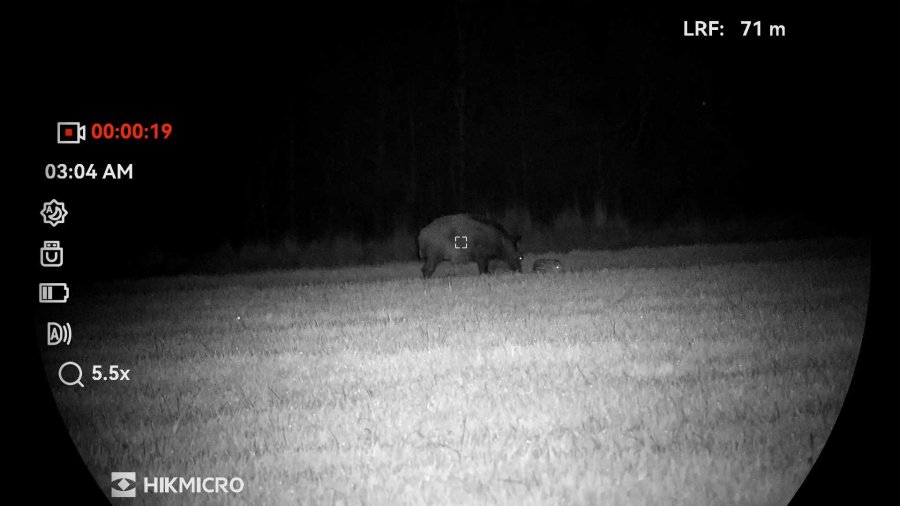
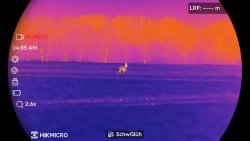
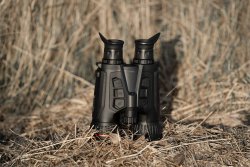
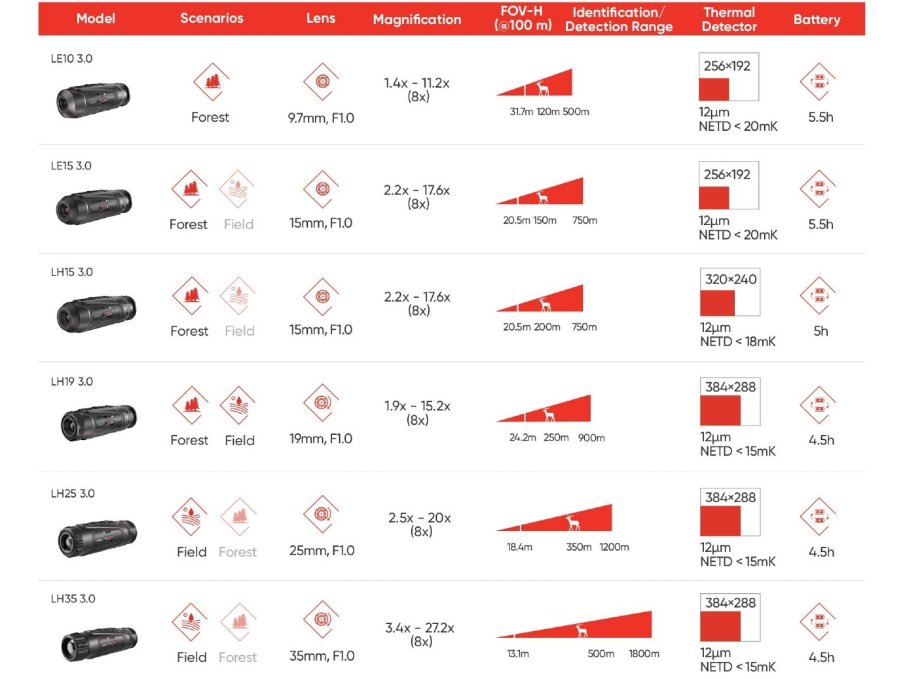
When selecting a thermal sensor, you'll need to familiarize yourself with unfamiliar units and quantities of measurement. There's no simple rule of thumb, but a few key points should be considered. Thermal sensors, also known as detector cells, are defined in micrometres squared (µm). Detectors with a 320x240 pixel resolution typically have a pixel pitch of 25 µm or 17 µm. However, for detectors with a 640x480 pixel resolution, a pitch of 12 µm is a good choice. The detector sensitivity (specified in millikelvin, mK) describes the temperature sensitivity, the crucial metric for assessing a detector's performance. The lower this value, the higher the contrast of the image, and the more clearly even the smallest temperature differences are displayed. These values are also often given as NETD (Noise Equivalent Temperature Difference). Finally, as with televisions, you should also consider the refresh rate. It determines how smoothly the display renders movements or how long one would have to hold the camera still for a clear image. To ensure a safe and ethical shot "live," it should not be 9 Hz (Hertz) as with simpler systems, but at least 25 Hz or, better yet, 50 Hz.
Thermal imaging clip-on or thermal scope?
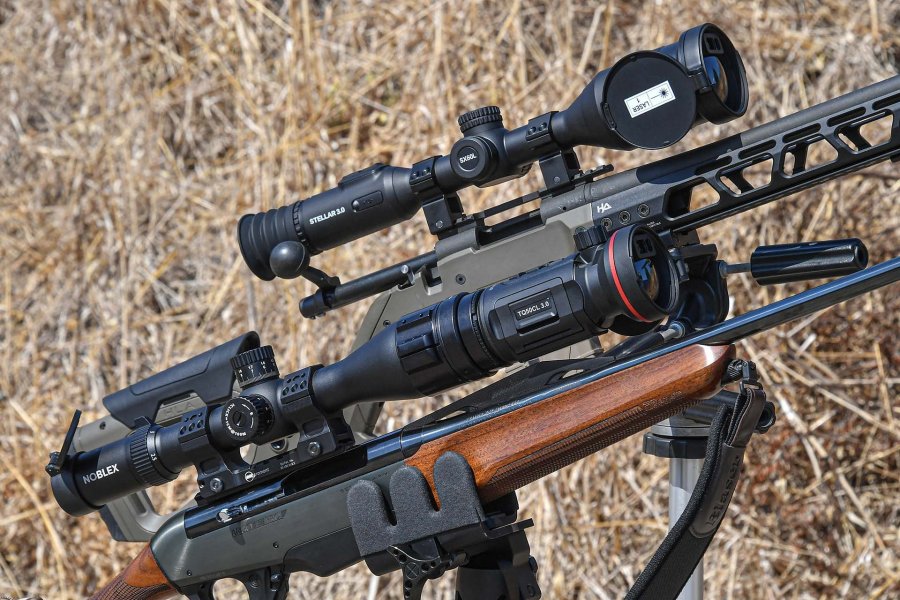
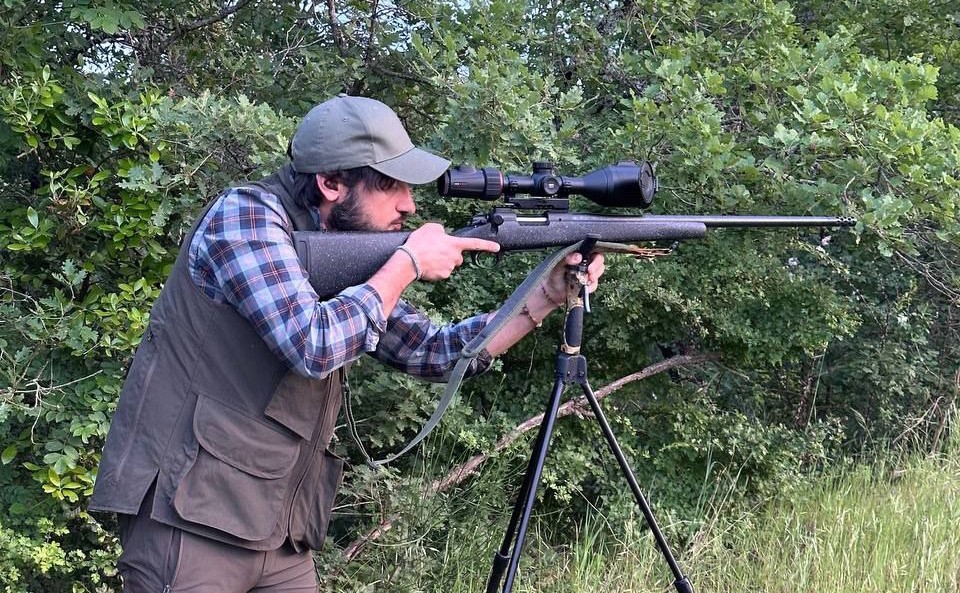
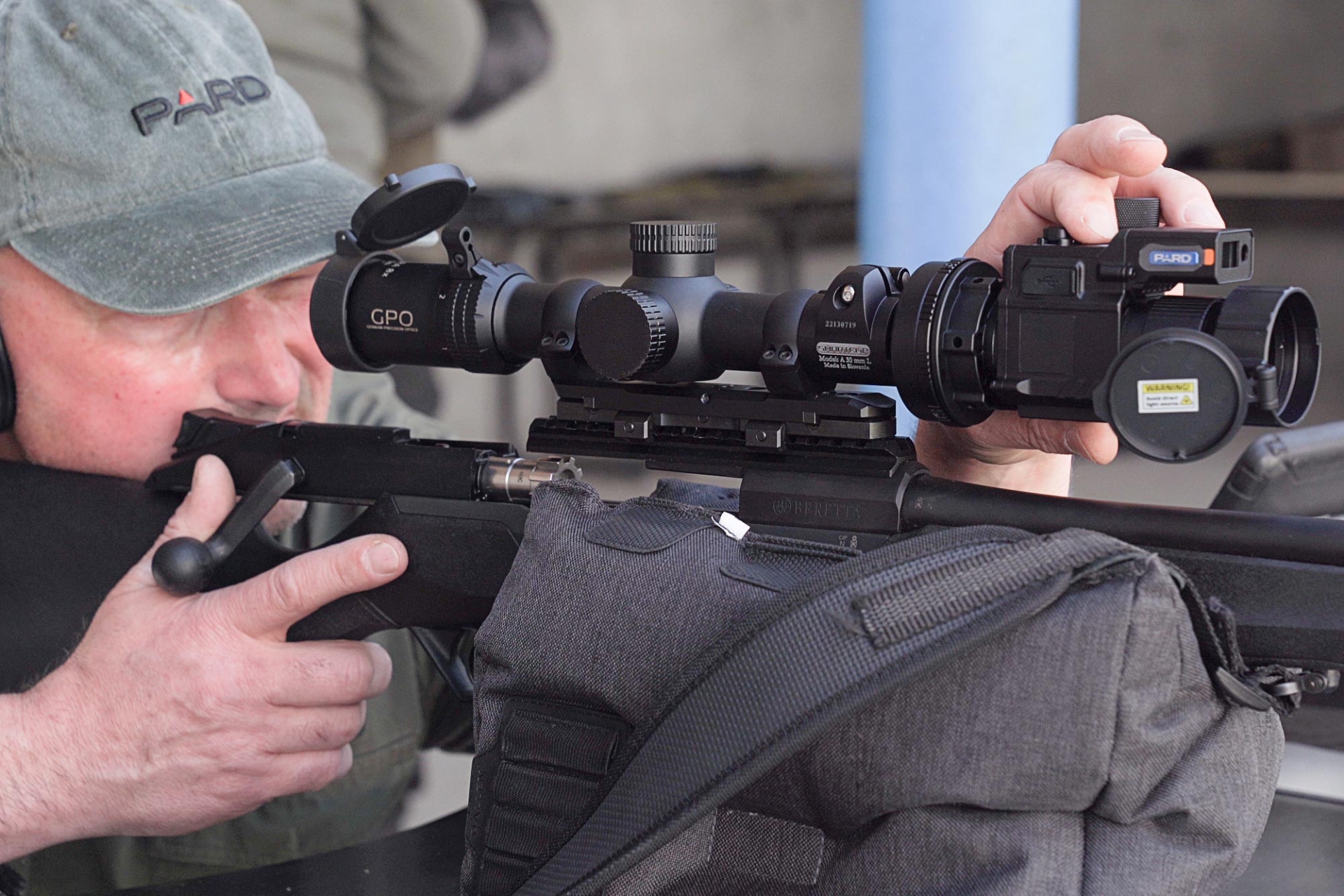
Since clip-on scopes naturally increase the length of the scope, but on the other hand, highly sensitive low-light performance is no longer needed because thermal imaging technology takes over this function, thermal imaging technology has led to a change in scope selection. Today's popular hunting riflescopes are shorter, slimmer and therefore lighter, which in turn reduces manoeuvrability and strain when stalking or in the mountains.
The clip-ons, which can usually also be configured with an app, often also record videos and help to determine the point of impact, which would otherwise be possible directly with a thermal imaging scope.