
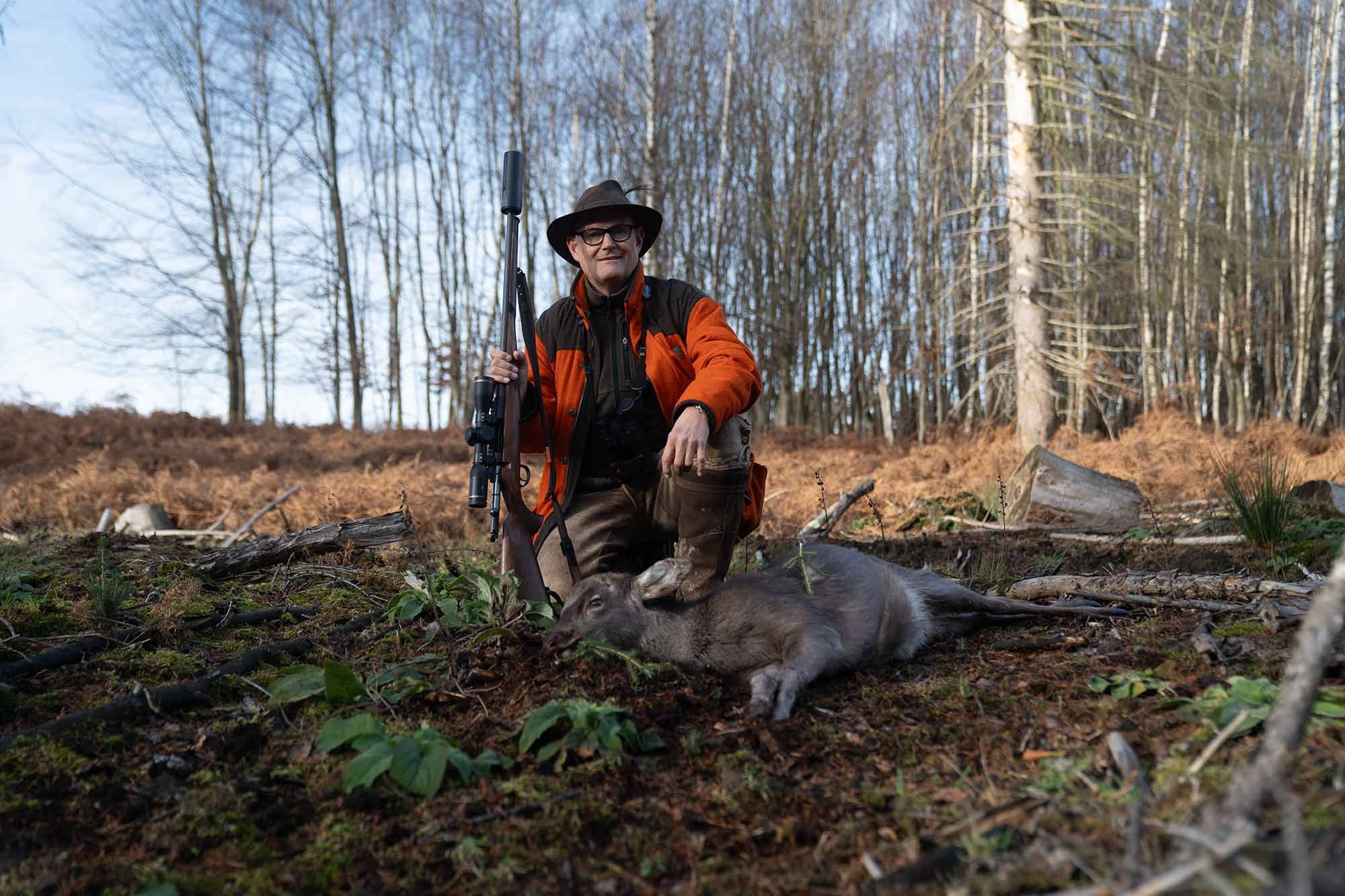

The morning began as many driven hunt mornings begin: with damp cold, dim light and that typical sound when the forest is still "asleep" but everything is already in motion. The stand is set up, the rifle lies still, and somewhere behind the next thicket, the baying of the hounds can be heard, first sporadically, then more decisively. Shortly afterwards, the woods come to life – not hectically, but rhythmically: driving, sightings, brief windows of opportunity, clear decisions.
At the end of the day, there is a harvest bag that can't be ignored: a total of 83 heads of game, including 66 pieces of sika deer, 14 boars and 3 foxes. Such a bag is more than just a number. It is also a reliable basis for discussing bullet effects – not theoretically, but in terms of actual hit patterns, exit wounds, and venison quality.
Practical data on lead-free ammunition
Hunting days like this don't happen by chance. Behind the event is the collaboration between RWS and K&K Premiumjagd – and this is where it gets exciting from a professional point of view. After all, anyone who is able to "analyse" not just a few pieces, but several hundred pieces of game a year in a wide variety of hunting situations gains experience that is rarely gained in normal day-to-day hunting. This is worth its weight in gold for ammunition manufacturers: many real shots, different angles, distances, game species and hunting ground conditions – and thus comparable, practical findings on bullet effectiveness.
Hunting tour organiser Kai-Uwe Kühl from K&K Premiumjagd in Dortmund has been a committed user of lead-free RWS bullets for over 10 years. His company, K&K Premiumjagd, organises over 40 driven hunts in Germany and hunts worldwide that are also relevant for the industry – simply because the database is exceptional. Whether buffalo in Africa, ibex in the Alps or wild boar in Romania: over more than 20 years, a wealth of experience has been gathered that the Dortmund company confidently describes as having "eyes and ears close to the action" when it comes to bullet effectiveness. And right at the forefront: the lead-free solutions from RWS.
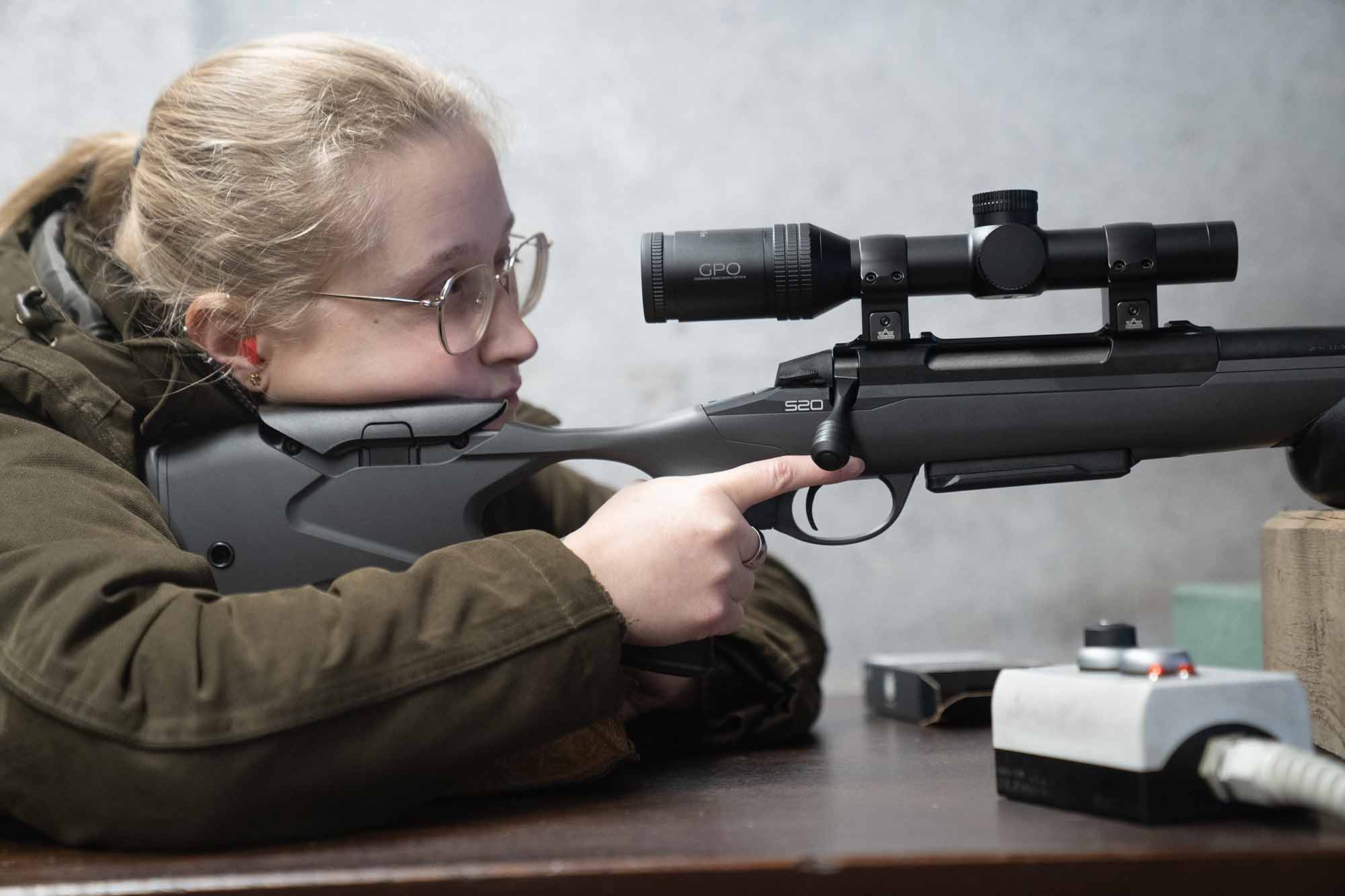
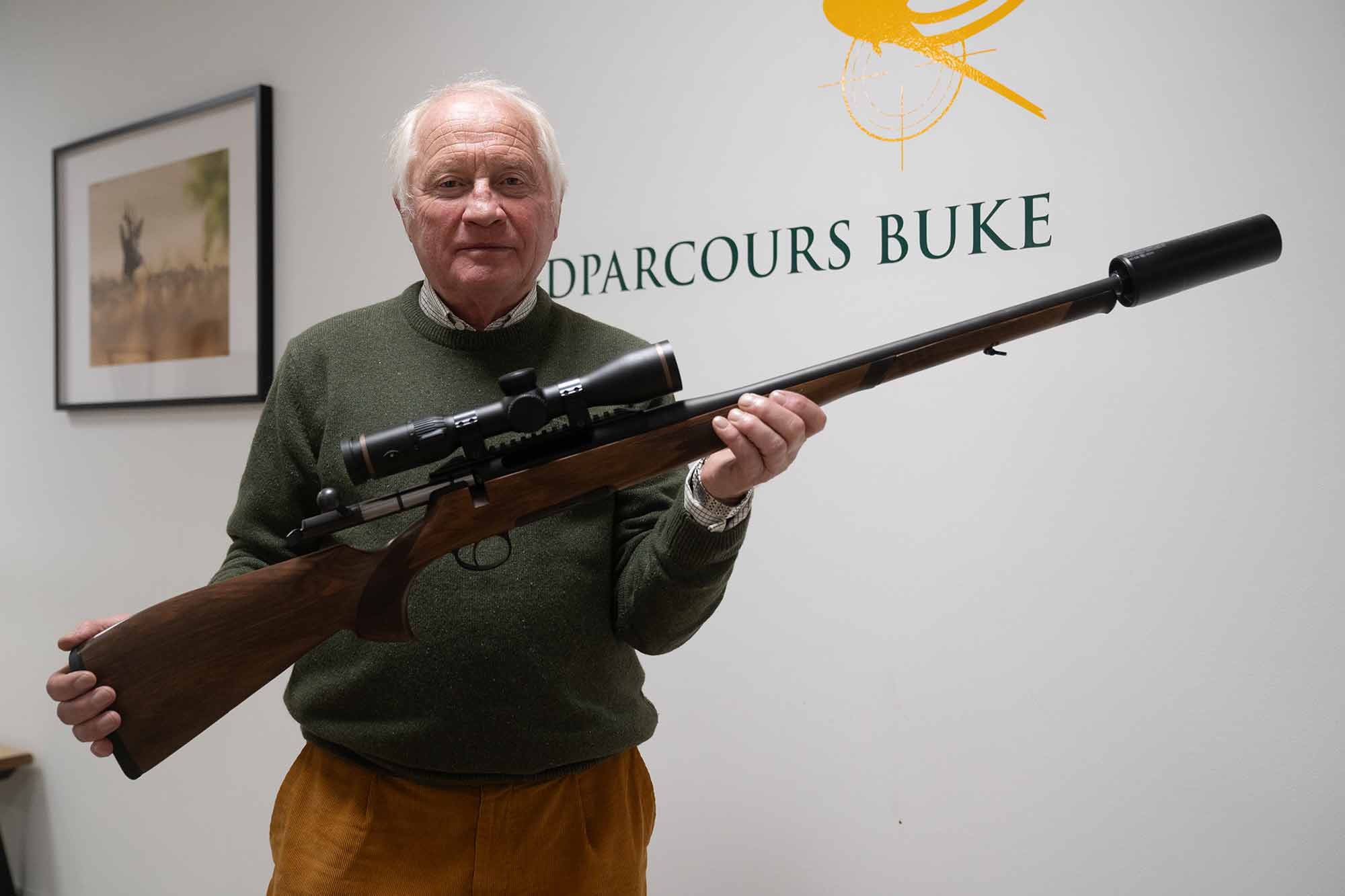
Rössler Signature Stutzen: a classic rifle with JAKT SK 156 XTRM MKII silencer for driven hunts
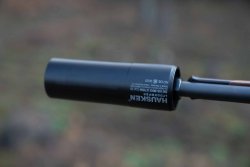
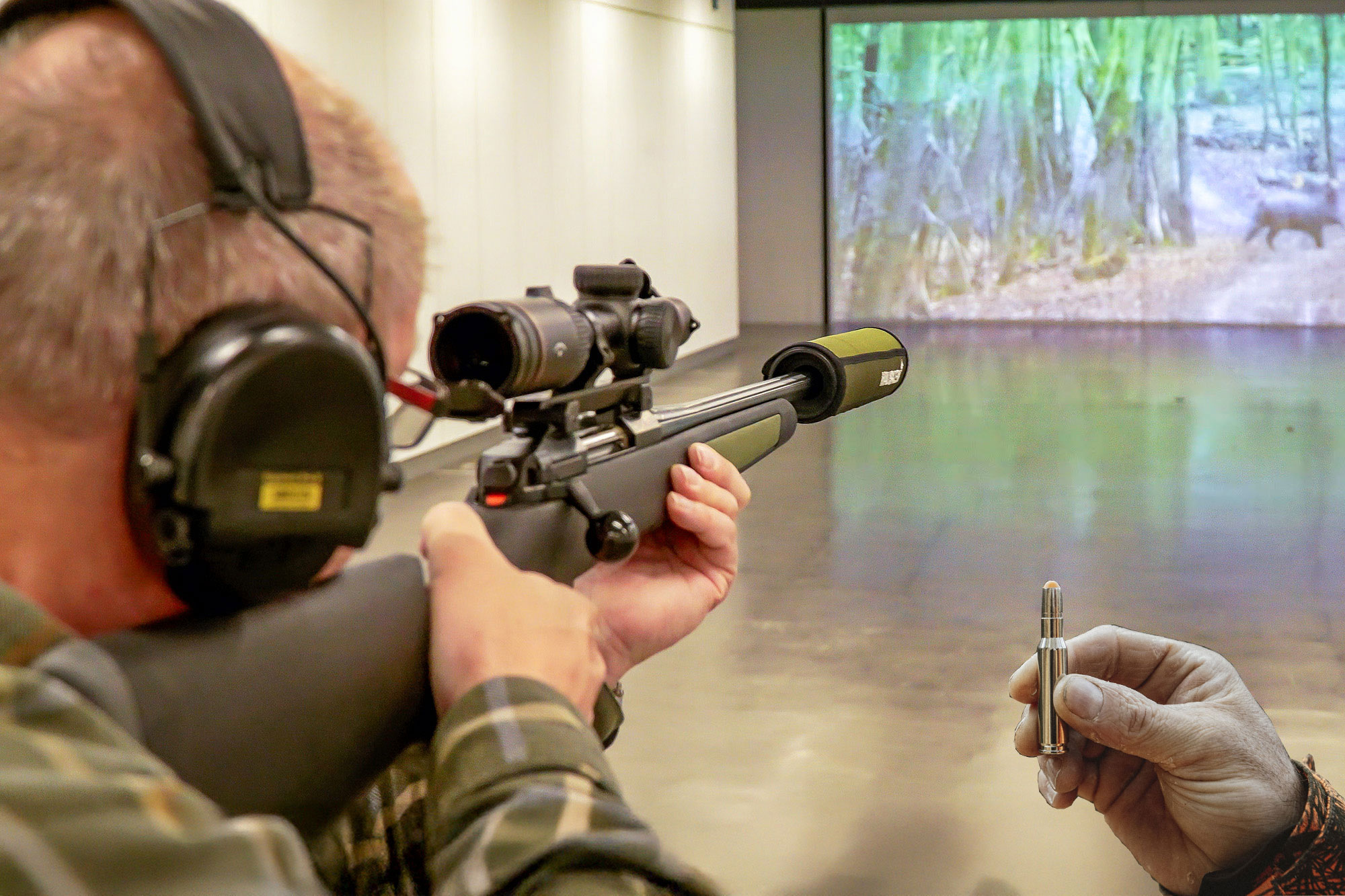
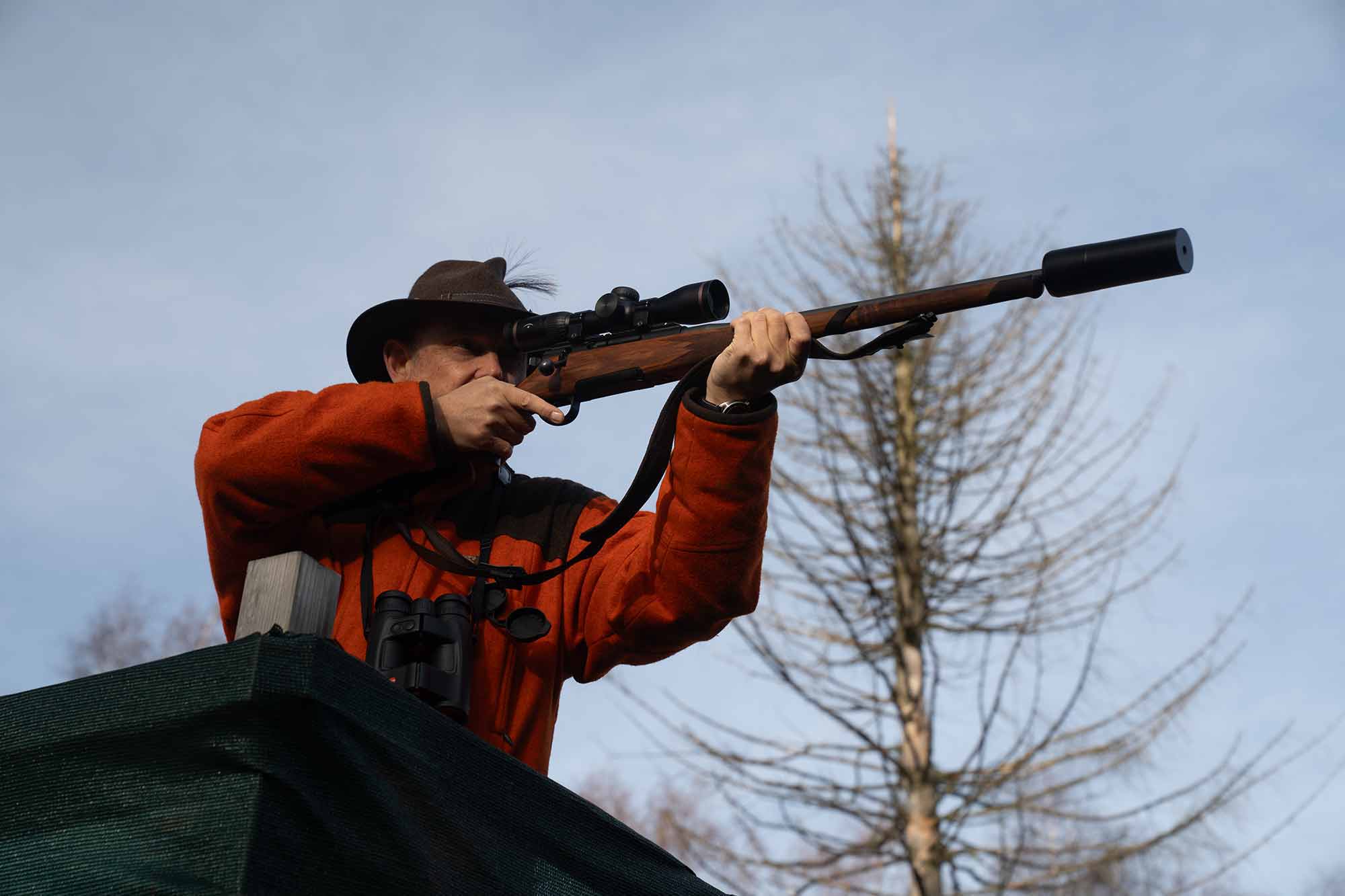
As part of the dealer hunt, the spotlight wasn't solely on lead-free ammunition, but also on a true innovation in the firearms segment: the Rössler Signature Stutzen in .308 Winchester, which Kai-Uwe Kühl carried on the driven hunt. Here at all4hunters.com we have already presented the Rössler Signature Stutzen in detail.
The special feature of this Austrian rifle is the combination with a Hausken JAKT SK 156 XTRM MKII silencer. A silenced Stutzen is still an unusual sight on the hunting ground – but the idea is obvious from a technical and practical hunting point of view: compact with high manoeuvrability, reduced muzzle blast and a setup that emphasises the interplay between handling and shooting comfort on driven hunts. At least this much can be said from practical experience: the Stutzen and silencer "get along", the package is perfect for driven hunts.
And this combo is not just a visual eye-catcher: tested in precisely the environment where short rifles come into their own, it fits perfectly with the actual ammunition focus of this article. After all, anyone carrying short-barrel rifles and suppressors should not only think about ergonomics, but also about the overall ballistic system – and therefore about loads that are made for this application profile.
What lead-free ammunition from RWS means in practice – and what really matters
The design of lead-free hunting bullets differs from that of traditional semi-jacketed or leaded composite bullets. Instead of a soft lead core, mass-stable copper constructions or solutions with tin cores dominate today. The decisive factor here is not the material alone, but the behaviour in the game body: How quickly does the expansion set in? How controlled is it? Is there enough residual weight for penetration power and exit wound? And how does the bullet behave in the event of unfavourable hits – such as heavy bone contact?
In practice, these are precisely the questions that concern hunters. Because reliable bullet effectiveness does not mean "maximum destruction", but repeatable effectiveness with clean game handling. And this is where the three RWS lines clearly differ – not in terms of "good or bad", but in terms of their respective targets.
RWS DRIVEN HUNT: when fast stopping power is required
The DRIVEN HUNT is clearly positioned as a driven hunt bullet: a lead-free deformation bullet made of copper with a large flat nose tip and deep hollow point, designed for very quick expansion directly after contact with game. As a consequence, this means a pronounced shock effect – especially where fleeting game offers short shooting windows and the priority is on quick energy release in the body of the game.
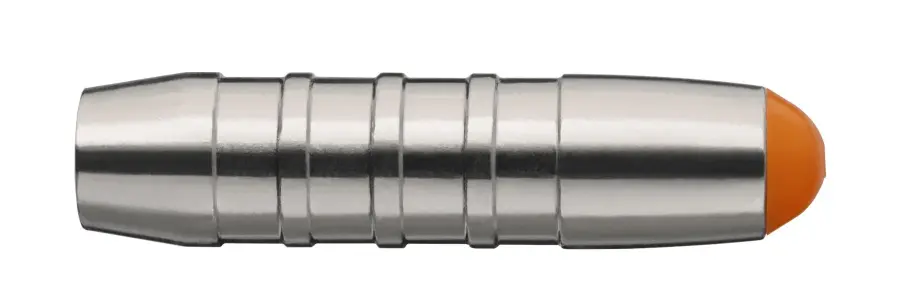
In practical terms, the DRIVEN HUNT is therefore particularly useful at short to medium distances – classically for wild boar, but also for stronger roe deer when fast action is the priority.
Lead-free: RWS DRIVEN HUNT and RWS DRIVEN HUNT Short Rifle at a glance
| Feature: | RWS DRIVEN HUNT | RWS DRIVEN HUNT Short Rifle |
| Projectile Type: | Deformation bullet (copper) | Deformation bullet (copper) |
| Field of Application: | Driven hunting | Driven hunting |
| Target Game: | Roe deer to wild boar | Roe deer to wild boar |
| Bullet Structure: | Solid copper | Solid copper, short rifle-optimised |
| Effect: | Very fast expansion, high stopping effect | Safe expansion with lower V₀ |
| Penetration Power: | Medium | Medium |
| Meat Damage: | Low to moderate | Low to moderate |
| Recommended Barrel Length: | ≥ 51 cm | ≤ 51 cm |
| Available Calibers: | .308 Win., .30-06 Spring, .300 Win. Mag., 8x57 IS, 9.3x62 | .308 Win., .30-06 Spring. |
| Special Feature: | Ideal for quick shots at short ranges | Perfect for guns with short barrels and silencers |
EVOLUTION GREEN: controlled partial fragmenting for stand hunting, stalking and moving game
The EVOLUTION GREEN is designed differently: technically sophisticated, with a dual-core structure and an effect that focusses more on controlled energy release with a stable depth effect. The two cores are made of food-safe tin and are functionally matched; the front section is designed so that the bullet responds quickly and reliably, even when the distance increases.
In terms of hunting classification, the EVOLUTION GREEN is therefore the versatile middle ground: a bullet that works both from the hunting stand and when stalking, and in many driven hunting situations, because it responds quickly but works in a controlled manner overall.
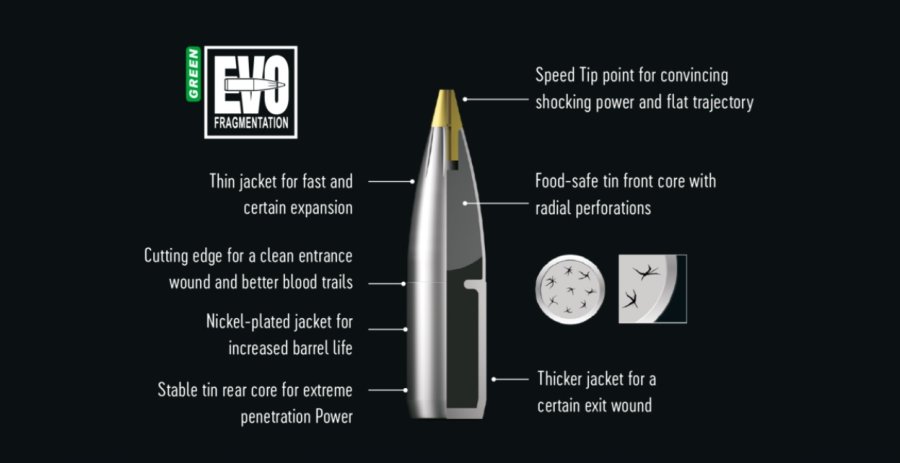
Lead-free: RWS EVOLUTION GREEN and RWS EVOLUTION GREEN Short Rifle
| Feature: | RWS EVOLUTION GREEN | RWS EVOLUTION GREEN Short Rifle |
| Projectile Type: | Partially fragmenting | Partially fragmenting |
| Field of Application: | Hunting stand & stalking | Hunting stand & stalking |
| Target Game: | Roe deer to big game | Roe deer to big game |
| Bullet Structure: | Dual tin cores | Dual tin cores, short rifle-optimised |
| Effect: | High energy output, reliable penetration | Safe effect despite short barrel length |
| Penetration Power: | High | High |
| Meat Damage: | Moderate | Moderate |
| Recommended Barrel Length: | ≥ 56 cm | ≤ 51 cm |
| Available Calibers: | .243 Win, .270 Win, 7x64, .308 Win, .30-06 Spring, 8x57 IS | .308 Win., .30-06 Spring. |
| Special Feature: | Very balanced for stronger game | Optimised for reduced muzzle velocity with short barrels |
RWS HIT: mass stability, deep penetration and safe exit wound
– especially for heavy game
The HIT is aimed at hunters who want a particularly mass-stable, fragmentation-free deformation bullet with a high residual weight and correspondingly deep penetration. Designed as a solid bullet, the HIT favours controlled deformation instead of fragmentation and is designed for reliable penetration right through to a safe kill – even when bone contact comes into play.
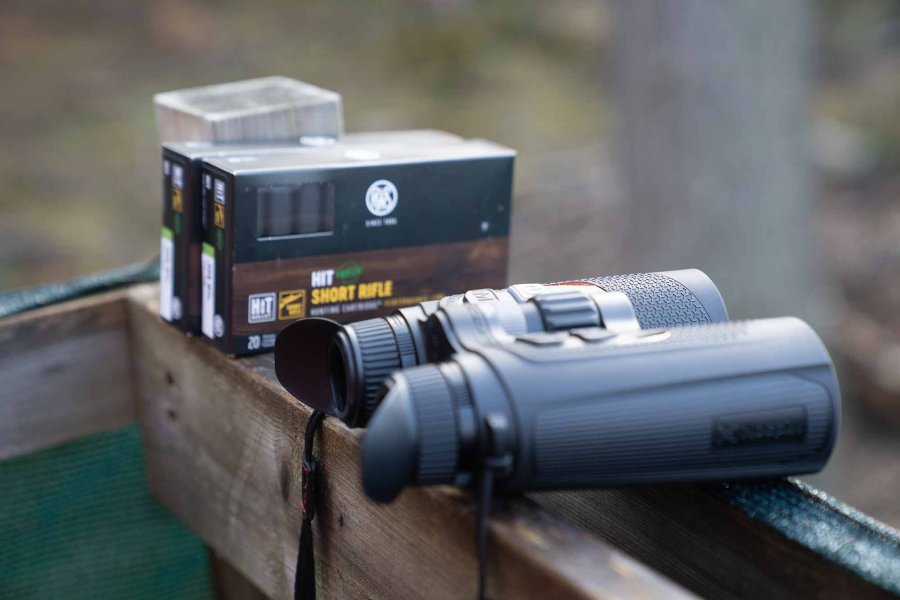
In practice, this makes the HIT a predestined bullet for larger game and situations in which a safe exit wound is particularly important – for example on boars or big game, but also where the angle of impact is not always "picture-perfect".
Lead-free: RWS HIT and RWS HIT Short Rifle at a glance
| Feature: | RWS HIT | RWS HIT Short Rifle |
| Projectile Type: | Deformation bullet (solid copper) | Deformation bullet (solid copper) |
| Field of Application: | Universal: stalking, stand, driven hunt | Universal: stalking, stand, driven hunt |
| Target Game: | Roe deer to big game | Roe deer to big game |
| Bullet Structure: | Monolithic copper | Ballistic Short Rifle-optimised |
| Effect: | Controlled expansion, very high reject rate | Reliable expansion despite low V₀ |
| Penetration Power: | Very high | Very high |
| Meat Damage: | Low | Low |
| Recommended Barrel Length: | ≥ 56 cm | ≤ 51 cm |
| Available Calibers: | .222 Rem, .223 Rem, .243 Win, 6.5 Creedmoor, 6.5x55 SE, .270 Win, 7x64, .308 Win, .30-06 Spring, 8x57 IS, 9.3x62 | .308 Win., .30-06 Spring. |
| Special Feature: | Very accurate all-round bullet | Ideal for guns with silencers and short barrels |
RWS Short Rifle: why short barrels deserve their own tuning
Short barrels and silencers have long been part of everyday hunting practice. Many rifles for driven hunts have barrel lengths of 51 cm or less – ergonomically sensible, but ballistically a challenge. This is because the shorter the barrel, the lower the muzzle velocity, which changes the conditions under which a bullet expands reliably.
This is precisely where short rifle variants come in: the goal is to ensure reliable bullet effectiveness even from short barrels by matching the loading and firing behavior. If you are deliberately travelling with short and muffled barrels – as with the above-described Stutzen setup – this point should not be seen as a detail, but as part of the overall system.

Conclusion: RWS DRIVEN HUNT, EVOLUTION GREEN and HIT lead-free ammunition for driven hunting
The day in Arnsberg Forest with the three loads and bullet designs showed one thing above all: lead-free ammunition works. Lead-free bullet designs also offer scope for customising the cartridge to different requirement profiles. The DRIVEN HUNT shows its strengths where short ranges, movement and fast stopping power set the pace. The EVOLUTION GREEN stands for a controlled, versatile effect across stand hunting, stalking and many movement hunting scenarios. And the HIT is aimed at maximum reliability in terms of penetration and exit – especially where big game or challenging angles of impact are realistic.
It is also worth looking beyond the bullet itself. Compact, silenced guns in particular show how closely the gun, barrel, suppressor and loading are connected – and how much confidence a well-tuned setup can bring on a hectic driven hunt.
We would like to thank the following companies for making this event possible: